Alibaba E-com Peaks, Pins Hopes on AI
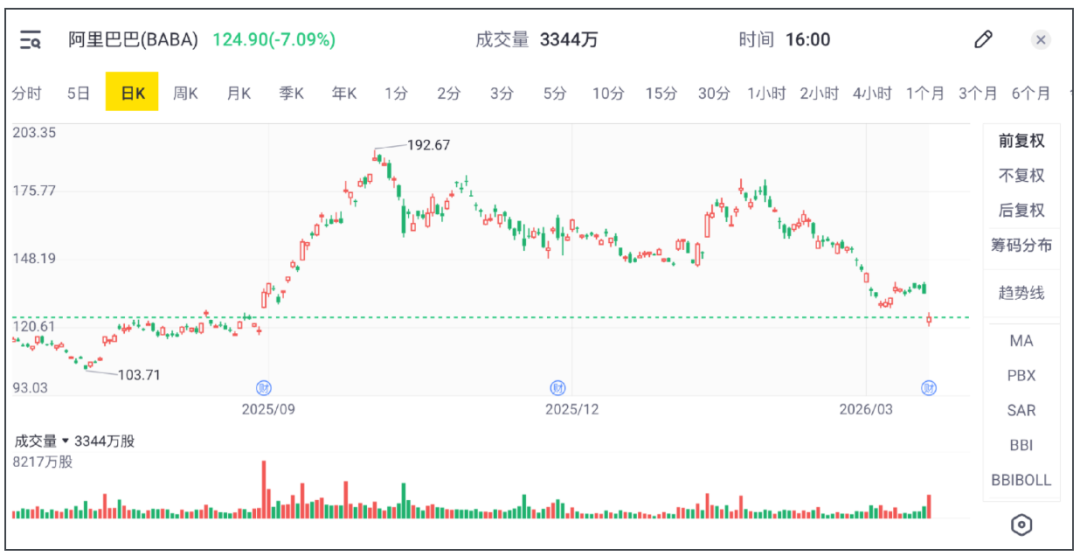
💡Alibaba pivots to AI as e-com stalls – strategy shift for cloud/AI users
⚡ 30-Second TL;DR
What Changed
E-commerce segment reaches saturation
Why It Matters
Highlights maturing e-commerce forcing big tech to double down on AI. May spur Alibaba's AI R&D and partnerships, influencing competitors.
What To Do Next
Test Alibaba Cloud's Tongyi AI models for e-commerce augmentation tools.
Key Points
- •E-commerce segment reaches saturation
- •AI emerges as core growth driver
- •Challenges in Alibaba's business transformation
- •Strategic shift from legacy to AI focus
🧠 Deep Insight
AI-generated analysis for this event — not the original article.
🔑 Enhanced Key Takeaways
- •Alibaba has transitioned its core e-commerce architecture to a 'Model-as-a-Service' (MaaS) framework, allowing third-party merchants to deploy fine-tuned versions of the Qwen LLM for hyper-localized customer service and inventory management.
- •The company has shifted its capital expenditure significantly toward 'AI-Native' data centers, specifically upgrading its Zhangbei and Ulanqab hubs to support massive inference loads for real-time, generative product video creation.
- •Strategic focus has moved from GMV (Gross Merchandise Volume) to 'AI-driven monetization rate,' measuring how effectively generative search and recommendation agents convert user intent into high-margin transactions.
📊 Competitor Analysis▸ Show
| Feature | Alibaba (Taobao/Tmall) | PDD Holdings (Temu/Pinduoduo) | ByteDance (Douyin E-com) |
|---|---|---|---|
| Primary AI Focus | Generative Search & Merchant Tools | Supply Chain Optimization & Pricing | Content-Driven Recommendation |
| Model Architecture | Proprietary Qwen (Tongyi Qianwen) | Distributed Edge Computing | Seed-series / Doubao Models |
| Merchant Support | Full-stack AI Marketing Suite | Automated Low-Cost Bidding | AI-Generated Virtual Livestreamers |
| Cloud Integration | Deep (Alibaba Cloud Ecosystem) | Third-party / Hybrid Cloud | Internal (BytePlus) |
🛠️ Technical Deep Dive
Detailed technical implementation of Alibaba's AI pivot includes:
- Qwen-2.5/3 Architecture: Utilization of Mixture-of-Experts (MoE) to reduce inference latency for the 'Wenwen' shopping assistant, allowing for sub-second response times during peak traffic.
- Multimodal Vector Search: Implementation of a unified embedding space for text, image, and short-video queries, enabling users to find products via complex natural language descriptions of visual styles.
- Hanguang 800 NPU Integration: Deployment of custom AI inference chips across Taobao's recommendation engine to handle 1 billion+ daily active users with 40% higher energy efficiency than standard GPUs.
- Federated Learning: Use of privacy-preserving AI training to allow merchants to train custom models on their own store data without exposing sensitive customer information to the broader platform.
🔮 Future ImplicationsAI analysis grounded in cited sources
⏳ Timeline
Weekly AI Recap
Read this week's curated digest of top AI events →
👉Related Updates
AI-curated news aggregator. All content rights belong to original publishers.
Original source: 钛媒体 ↗
This is a summary, not the original. Read the source, or get the weekly briefing.
Weekly AI briefing
One email a week. Unsubscribe anytime.