Alibaba commits to full-stack AI strategy at VivaTech
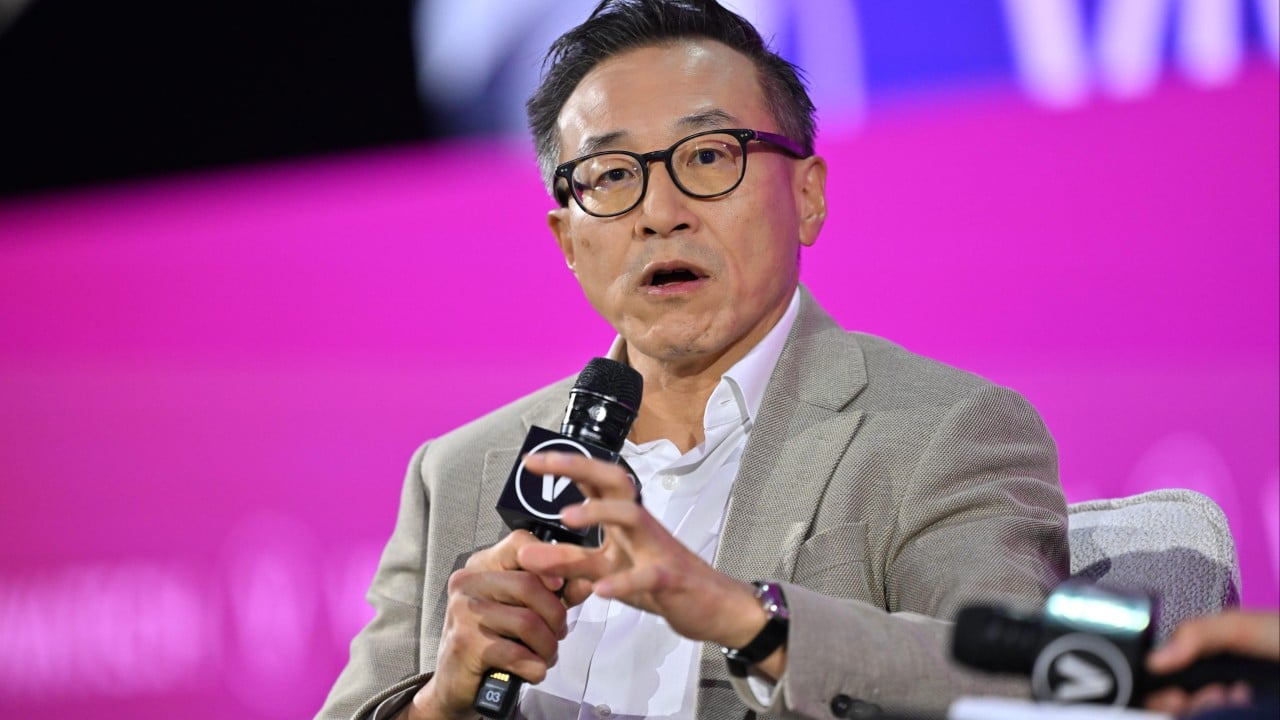
💡Alibaba's 'all-in' strategy signals a major shift in Asian AI infrastructure and cloud competition.
⚡ 30-Second TL;DR
What Changed
Alibaba is adopting a 'full-stack' AI approach covering hardware to software.
Why It Matters
Alibaba's aggressive investment signals a major shift in the competitive landscape for cloud and AI infrastructure in Asia. This move could accelerate the development of localized foundation models and integrated hardware-software solutions.
What To Do Next
Monitor Alibaba Cloud's Qwen model API updates and hardware integration documentation to evaluate their performance against Western alternatives for your enterprise stack.
Key Points
- •Alibaba is adopting a 'full-stack' AI approach covering hardware to software.
- •The company aims to capture value across the entire AI industry chain rather than picking a single winner.
- •Joe Tsai identifies AI as a massive US$50 trillion market opportunity.
🧠 Deep Insight
AI-generated analysis for this event — not the original article.
🔑 Enhanced Key Takeaways
- •Alibaba's 'full-stack' strategy heavily leverages the Qwen (Tongyi Qianwen) model family, which has been open-sourced to encourage ecosystem development and developer adoption.
- •The company is actively developing proprietary AI-optimized hardware, including the T-Head (Xuantie) processor series, to reduce reliance on restricted high-end Western GPU imports.
- •Alibaba Cloud has integrated AI-native infrastructure, specifically its PAI (Platform for AI) suite, to provide end-to-end machine learning lifecycle management for enterprise clients.
- •The strategy includes a significant focus on 'AI for Science,' applying foundation models to accelerate breakthroughs in materials science, biology, and climate modeling.
- •Alibaba is expanding its international AI footprint by establishing data centers and AI service hubs in Southeast Asia and the Middle East to bypass geopolitical constraints in the US and Europe.
📊 Competitor Analysis▸ Show
| Feature | Alibaba (Qwen/Cloud) | Tencent (Hunyuan) | Baidu (Ernie) |
|---|---|---|---|
| Model Focus | Open-source/Developer-centric | Social/Gaming/Enterprise | Search/Autonomous Driving |
| Cloud Integration | Deep full-stack integration | WeChat ecosystem synergy | Baidu Cloud/Apollo platform |
| Hardware Strategy | Proprietary T-Head chips | Third-party/Customized | Kunlun AI chips |
🛠️ Technical Deep Dive
- Qwen-Max/Qwen-2.5 Architecture: Utilizes a dense Transformer-based architecture with Mixture-of-Experts (MoE) variants for improved inference efficiency.
- PAI-EAS (Elastic Algorithm Service): Supports high-concurrency, low-latency deployment of large models with automated model compression and quantization techniques.
- T-Head Xuantie: RISC-V based processor architecture designed to handle edge AI workloads and offload specific neural network operations from the CPU.
- Model-as-a-Service (MaaS): Alibaba's platform architecture allows users to fine-tune foundation models using LoRA (Low-Rank Adaptation) and P-Tuning on proprietary datasets within a secure cloud environment.
🔮 Future ImplicationsAI analysis grounded in cited sources
⏳ Timeline
Weekly AI Recap
Read this week's curated digest of top AI events →
👉Related Updates
AI-curated news aggregator. All content rights belong to original publishers.
Original source: SCMP Technology ↗
This is a summary, not the original. Read the source, or get the weekly briefing.
Weekly AI briefing
One email a week. Unsubscribe anytime.