Alibaba Cloud Shifts to AI-Centric Business Model
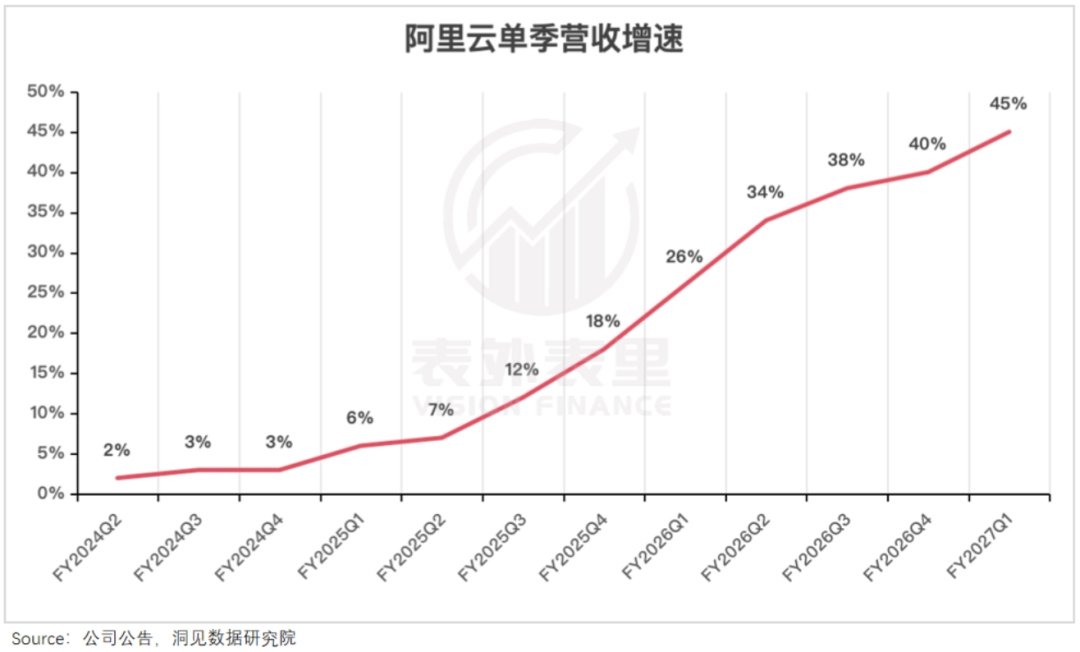
💡Alibaba Cloud's shift to token-based billing highlights the new standard for AI infrastructure monetization.
⚡ 30-Second TL;DR
What Changed
Transitioning from traffic-based to token-based revenue models.
Why It Matters
This shift signals a major change in how cloud providers monetize AI workloads. Developers should prepare for token-based billing structures across major cloud platforms.
What To Do Next
Review your cloud infrastructure budget to account for the shift from bandwidth-based to token-based billing for AI inference.
Key Points
- •Transitioning from traffic-based to token-based revenue models.
- •Focusing on AI-native cloud infrastructure services.
- •Strategic shift to capture value in the generative AI era.
🧠 Deep Insight
AI-generated analysis for this event — not the original article.
🔑 Enhanced Key Takeaways
- •Alibaba Cloud has integrated its proprietary Qwen (Tongyi Qianwen) large language model series as the core engine for this new token-based billing architecture.
- •The transition includes the deployment of specialized 'AI-native' data centers that utilize high-bandwidth interconnects specifically optimized for GPU-to-GPU communication rather than traditional storage-to-compute traffic.
- •Alibaba is introducing a tiered 'Token-as-a-Service' (TaaS) pricing structure that differentiates between input tokens, output tokens, and reasoning-intensive compute tasks.
- •This shift is supported by the 'PAI' (Platform for AI) upgrade, which now automates model fine-tuning and deployment pipelines to reduce the operational overhead for enterprise clients.
- •The company is actively phasing out legacy 'pay-as-you-go' storage and bandwidth contracts in favor of long-term AI compute reservations to stabilize revenue predictability.
📊 Competitor Analysis▸ Show
| Feature | Alibaba Cloud (Token-Based) | AWS (Bedrock/SageMaker) | Microsoft Azure (AI Infrastructure) |
|---|---|---|---|
| Primary Metric | Token-based compute/inference | Hybrid (Token + Instance/Hour) | Hybrid (Token + Consumption) |
| Model Focus | Qwen-centric optimization | Model-agnostic (Titan/Claude/Llama) | OpenAI-centric (GPT/o-series) |
| Infrastructure | AI-native interconnects | Elastic Fabric Adapter (EFA) | InfiniBand/NVLink clusters |
🛠️ Technical Deep Dive
- Implementation of a unified tokenization engine that standardizes billing across multimodal inputs (text, image, audio).
- Utilization of proprietary 'Deep-Link' technology to reduce latency in distributed inference clusters.
- Integration of a new scheduling algorithm that prioritizes token-generation tasks over background batch processing to ensure real-time responsiveness.
- Adoption of FP8 and INT4 quantization standards by default for all hosted models to maximize token throughput per GPU cycle.
🔮 Future ImplicationsAI analysis grounded in cited sources
⏳ Timeline
Weekly AI Recap
Read this week's curated digest of top AI events →
👉Related Updates



AI-curated news aggregator. All content rights belong to original publishers.
Original source: 钛媒体 ↗
This is a summary, not the original. Read the source, or get the weekly briefing.
The weekly digest
One email a week. Unsubscribe anytime.