Alibaba Bids $1.5B for Pupu to Challenge Meituan
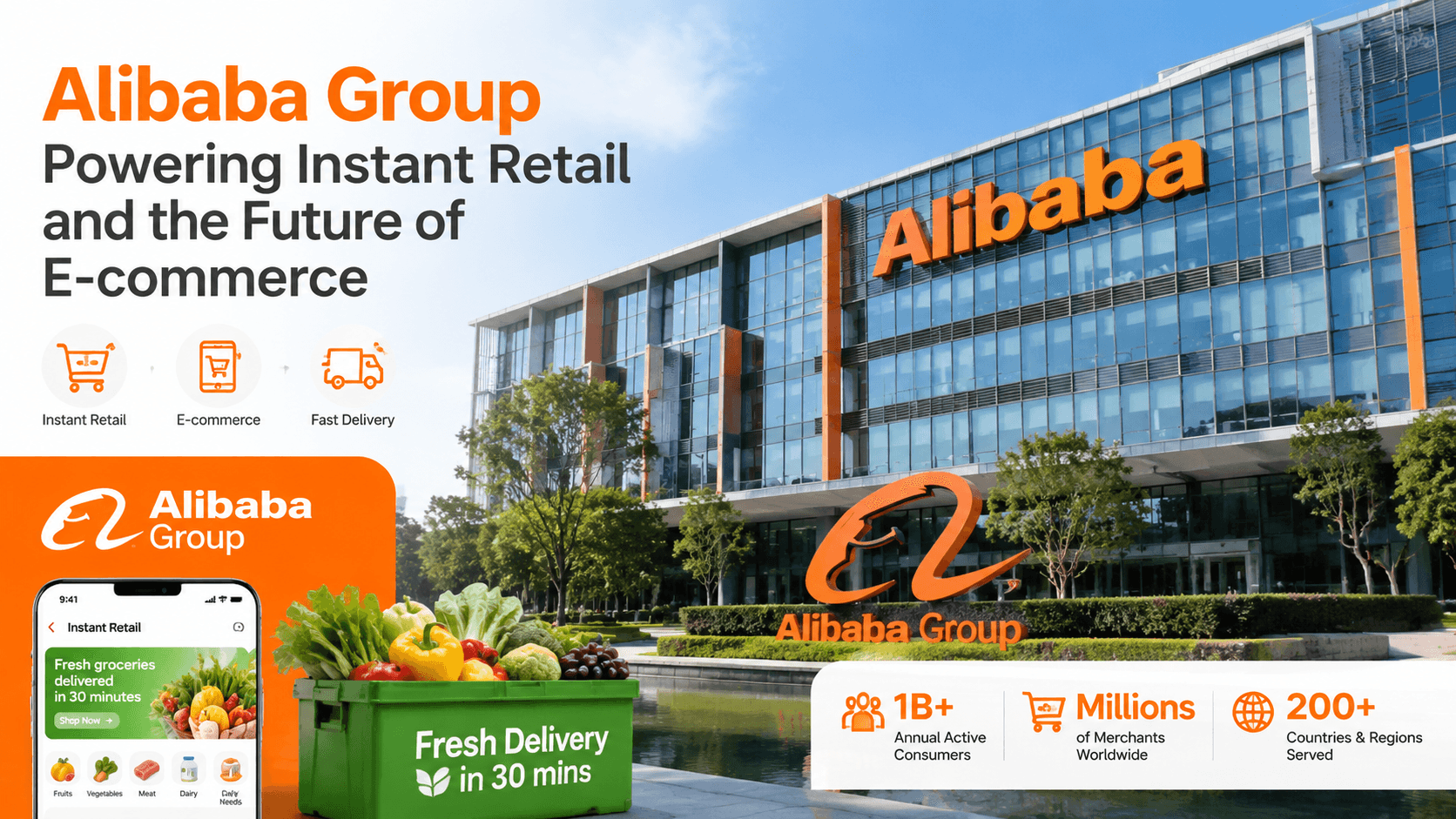
💡Understand how big tech consolidation in China's retail sector impacts AI-driven supply chain and logistics strategies.
⚡ 30-Second TL;DR
What Changed
Alibaba submitted a $1.5 billion acquisition bid for Pupu Supermarket.
Why It Matters
This acquisition could significantly reshape the instant delivery landscape in China, potentially integrating Alibaba's AI-driven logistics with Pupu's supply chain.
What To Do Next
Monitor Alibaba's logistics API updates, as this acquisition may lead to new integration opportunities for retail automation.
Key Points
- •Alibaba submitted a $1.5 billion acquisition bid for Pupu Supermarket.
- •The move targets the competitive Chinese instant retail market.
- •Pupu Supermarket is a major player in fresh food delivery.
🧠 Deep Insight
Background and context from public sources — not the original article. 20 sources cited.
🔑 Enhanced Key Takeaways
- •Alibaba's $1.5 billion bid for Pupu Supermarket significantly surpasses an earlier $600 million offer from Sun Art Retail, indicating an aggressive pursuit for one of China's last independent online grocery platforms.
- •Pupu Supermarket achieved its first full-year profitability in 2024, reporting annual revenues exceeding 30 billion yuan (approximately $4.2-$4.4 billion), making it a rare profitable entity in the capital-intensive fresh food e-commerce sector.
- •Pupu operates a distinctive 'large-warehouse model' with front warehouses typically spanning 800-1,000 square meters and stocking 6,000-8,000 SKUs, which contributes to fulfillment costs over 30% below the industry average and enables its 30-minute delivery promise.
- •The company has successfully developed a robust private label business, with own-brand sales surpassing 5 billion RMB (approximately $700 million) in 2024, representing 17% of its total revenue and featuring nearly 1,000 own-brand products by 2025.
- •This acquisition bid follows Meituan's agreement to acquire Dingdong Fresh's China business for $717 million in early 2025, highlighting a broader trend of consolidation among major tech giants in China's instant retail market.
📊 Competitor Analysis▸ Show
| Feature / Company | Alibaba (with potential Pupu) | Meituan | JD.com |
|---|---|---|---|
| Primary Instant Retail Model | Front-warehouse (Pupu), Store-warehouse hybrid (Freshippo/Hema), Platform-based (Taoxianda) | Platform-based (Meituan Flash Buy), Front-warehouse (Meituan Maicai, Meituan Select) | Platform-based (JD Daojia) |
| Key Strengths | Pupu: Profitable, low fulfillment costs, high SKU count, strong private labels, regional density in Southern China. Alibaba: Extensive e-commerce ecosystem, strong logistics network (Ele.me). | Dominant market share in food delivery (65-70% in 2024) and non-food instant retail (50% in 2024), comprehensive 'super app' ecosystem, strong rider network. | Logistics depth, reputation for dependable fulfillment, partnerships with local retailers. |
| Delivery Speed | Pupu: 30-minute delivery network. | Meituan: '30-minute delivery' for Meituan InstaMart, 95%+ instant retail order fulfillment rate in 2023. | Typically 30 minutes to one hour for instant retail. |
| Market Coverage (Pupu) | Approximately 10 cities across Fujian, Guangdong, Sichuan, and Hubei provinces. | Extensive coverage across mainland China, expanding into lower-tier cities. | Expanding aggressively into county-level markets. |
| Annual Revenue (Pupu) | >30 billion yuan (approx. $4.2-$4.4 billion) in 2024. | Meituan: 337.6 billion yuan in 2024. | N/A (specific instant retail revenue not found) |
| Recent Acquisitions | Bid for Pupu Supermarket ($1.5 billion). | Acquired Dingdong Fresh's China business ($717 million) in early 2025. | Denied involvement in Pupu acquisition talks. |
🛠️ Technical Deep Dive
- Pupu Supermarket's 'Front-Warehouse' Model: Pupu utilizes a 'large-warehouse model' with front warehouses (dark stores) ranging from 800 to 1,000 square meters, significantly larger than typical micro-fulfillment centers. These warehouses are strategically located within neighborhoods to enable 30-minute delivery.
- Extensive SKU Management: Pupu's large front warehouses stock 6,000 to 8,000 SKUs, covering a broad range of daily household needs, which is a higher product diversity compared to most peers.
- Integrated Supply Chain: Pupu employs a 'Direct Source – Central Warehouse – Front Warehouse' supply chain system. In core markets like Fujian, over 80% of fresh produce is directly sourced, allowing for rapid transit (e.g., leafy greens from field to shelf in six hours) and reduced perishable loss rates (around 3.5%).
- Cost Efficiency: Pupu's operational model has resulted in fulfillment costs that are more than 30% lower than the industry average, contributing to its profitability.
- Meituan's 'Lightning Warehouse': Meituan employs a 'Meituan Lightning Warehouse' model, which is a distributed intelligent warehouse network. This system leverages dynamic inventory algorithms and automated sorting equipment to compress fulfillment times.
- AI for Logistics Optimization (Meituan): Meituan invests in AI technology for dynamic capacity allocation, using historical delivery data and weather forecasting models to optimize rider deployment, reducing rider idling rates and delivery costs.
🔮 Future ImplicationsAI analysis grounded in cited sources
⏳ Timeline
📎 Sources (20)
Factual claims are grounded in the sources below. Forward-looking analysis is AI-generated interpretation.
Weekly AI Recap
Read this week's curated digest of top AI events →
👉Related Updates


AI-curated news aggregator. All content rights belong to original publishers.
Original source: Pandaily ↗
This is a summary, not the original. Read the source, or get the weekly briefing.
The weekly digest
One email a week. Unsubscribe anytime.