AI's Role in Film Production: Human Value Persists
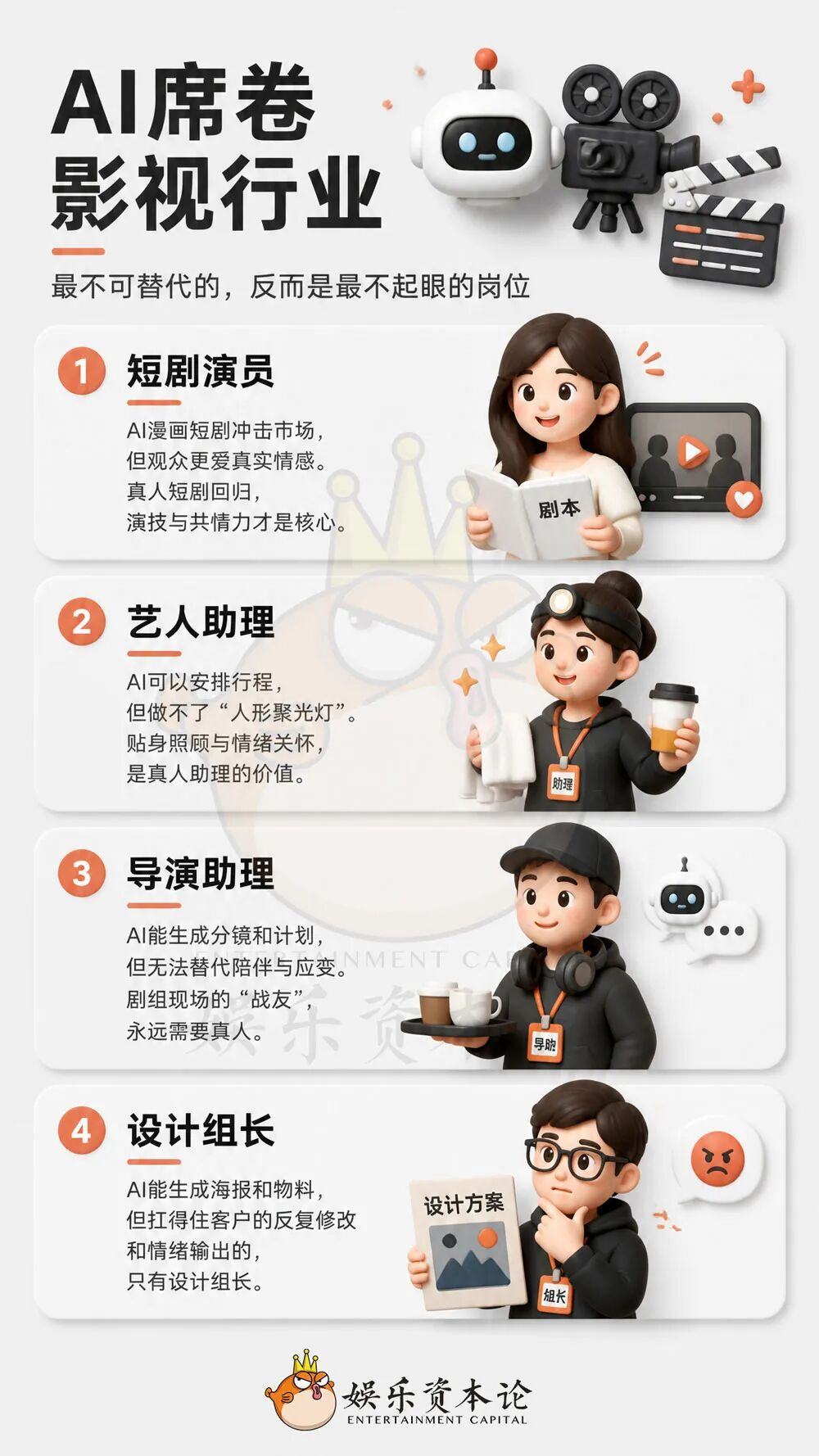
💡Understand why human-centric roles in creative industries are proving resilient against AI automation.
⚡ 30-Second TL;DR
What Changed
AI effectively handles technical tasks like image editing, scriptwriting, and storyboard generation.
Why It Matters
AI is forcing a re-evaluation of entry-level film roles, pushing professionals to focus on soft skills and complex coordination rather than purely technical execution.
What To Do Next
Identify repetitive, non-creative tasks in your workflow and automate them with LLM APIs to free up time for high-value human-centric creative work.
Key Points
- •AI effectively handles technical tasks like image editing, scriptwriting, and storyboard generation.
- •Human roles in film crews are shifting toward 'emotional labor' and on-site coordination that AI cannot replicate.
- •Directors and producers use AI as a tool for efficiency, but still prioritize human presence for creative collaboration and atmosphere.
- •The 'human touch' in high-pressure environments remains a critical, non-quantifiable asset.
🧠 Deep Insight
Background and context from public sources — not the original article. 38 sources cited.
🔑 Enhanced Key Takeaways
- •AI tools are enabling end-to-end filmmaking workflows, integrating script, storyboard, video, audio, and editing into single platforms, significantly reducing production time and complexity.
- •Beyond basic tasks, AI is now used for advanced applications such as de-aging actors, generating realistic crowd simulations, automating motion capture, and localizing content through AI voice cloning and dubbing.
- •The integration of AI in post-production streamlines tedious tasks like editing, color grading, and automatically generating short social media snippets, allowing human editors to focus on creative refinement.
- •Advanced AI storyboard generators can maintain character consistency across multiple frames and automatically detect scene breaks from screenplays, offering precise shot composition and animatic creation.
- •The film industry is actively addressing the impact of AI on labor, with unions like SAG-AFTRA and WGA mandating AI disclosure frameworks in contracts to distinguish between authorized AI tools and non-consented replication.
📊 Competitor Analysis▸ Show
| Feature/Tool Category | Examples | Key Capabilities |
|---|---|---|
| All-in-One Platforms (Pipeline Tools) | LTX Studio, mStudio, Melies, Google Flow, ImagineArt, Saga | End-to-end workflow from script to final video; script generation, storyboard, image/video/audio generation, timeline editing, character consistency. |
| AI Video Generators | Google Veo (Veo 3.1), Kling AI, OpenAI Sora (Sora 2), Runway (Gen-4, Gen-4.5), Luma AI (Ray 3.14), Pika Labs, Seedance, Doubao-PixelDance, Doubao-Seaweed | Generate videos from text/image prompts, often with specific strengths in motion realism, cinematic quality, or short-form content. |
| AI Image Generators | Midjourney, Adobe Firefly, Google Imagen 4 & Gemini 2.5 Flash Image, Luma AI (Photon), Leonardo AI | Create cinematic frames, character designs, concept art, mood boards, generative fill, and image enhancement. |
| AI Scriptwriting Tools | ChatGPT, Anthropic Claude (Sonnet 4), Squibler, Final Draft, Sudowrite, Writesonic, Rytr, Junia AI | Brainstorming, idea generation, outline creation, dialogue refinement, character development, industry-standard formatting. |
| AI Storyboard Generators | Drawstory, Krock.io, Boords, Katalist, Higgsfield Popcorn, Adobe Firefly Boards, Shai Creative | Convert scripts/text into visual frames, character consistency, camera angle controls, animatic creation, project management integration. |
| AI Audio Tools | ElevenLabs, Udio, Suno, Papercup, SOUNDRAW | Voiceovers, dubbing, voice cloning, music generation, sound effects. |
🛠️ Technical Deep Dive
- Scriptwriting: Utilizes Large Language Models (LLMs), Natural Language Processing (NLP), and Machine Learning (ML) trained on vast datasets of existing scripts and literature to analyze patterns in dialogue, scene transitions, character arcs, and narrative structures for content generation and formatting.
- Storyboard Generation: Employs advanced natural language processing to interpret narrative structure, character development, and dramatic progression from script content, generating visual frames, characters, backgrounds, and compositions with capabilities for 3D camera angle control and character consistency.
- Image & Video Generation: Powered by generative AI models, including diffusion models, trained on extensive datasets of images and videos. Specific models like Google Veo 3.1, OpenAI Sora 2, Kling AI, and Luma AI Ray 3.14 focus on high-quality video generation, cinematic lighting, motion quality, and maintaining subject/style stability across shots.
- Editing & Post-production: AI uses machine learning algorithms for tasks such as auto color balance, classifying shot types, background noise removal, facial recognition, speed warp, voice isolation, and automatic audio tagging. Text-based editing allows manipulation of video content by editing transcribed text.
- Doubao: ByteDance's Doubao (international version Cici) integrates AI painting tools, music generators, and literary creation assistants, leveraging deep learning algorithms and vast datasets. Its video generation capabilities (Doubao-PixelDance, Doubao-Seaweed) use LLMs to manage complex motions, produce longer videos (up to 30 seconds for Seaweed), and maintain consistency in style across different shots.
🔮 Future ImplicationsAI analysis grounded in cited sources
⏳ Timeline
📎 Sources (38)
Factual claims are grounded in the sources below. Forward-looking analysis is AI-generated interpretation.
- frameo.ai
- mstudio.ai
- imagine.art
- vitrina.ai
- filmcrux.com
- superscout.ai
- medium.com
- dataart.com
- primeview.co
- narrative.so
- invideo.io
- guideflow.com
- drawstory.ai
- higgsfield.ai
- mckinsey.com
- writeonsaga.com
- melies.co
- medium.com
- medium.com
- em360tech.com
- adobe.com
- powtoon.com
- technicalwriterhq.com
- junia.ai
- medium.com
- shaicreative.ai
- mockflow.com
- script-timer.com
- filmmakermagazine.com
- medium.com
- heygen.com
- imastudio.com
- latimes.com
- bergmanproductions.com
- chinadaily.com.cn
- pictory.ai
- katevassgalerie.com
- csbsju.edu
Weekly AI Recap
Read this week's curated digest of top AI events →
👉Related Updates

AI-curated news aggregator. All content rights belong to original publishers.
Original source: 虎嗅 ↗
This is a summary, not the original. Read the source, or get the weekly briefing.
The weekly digest
One email a week. Unsubscribe anytime.