AI’s Memory Bottleneck Pushes Storage to Evolve
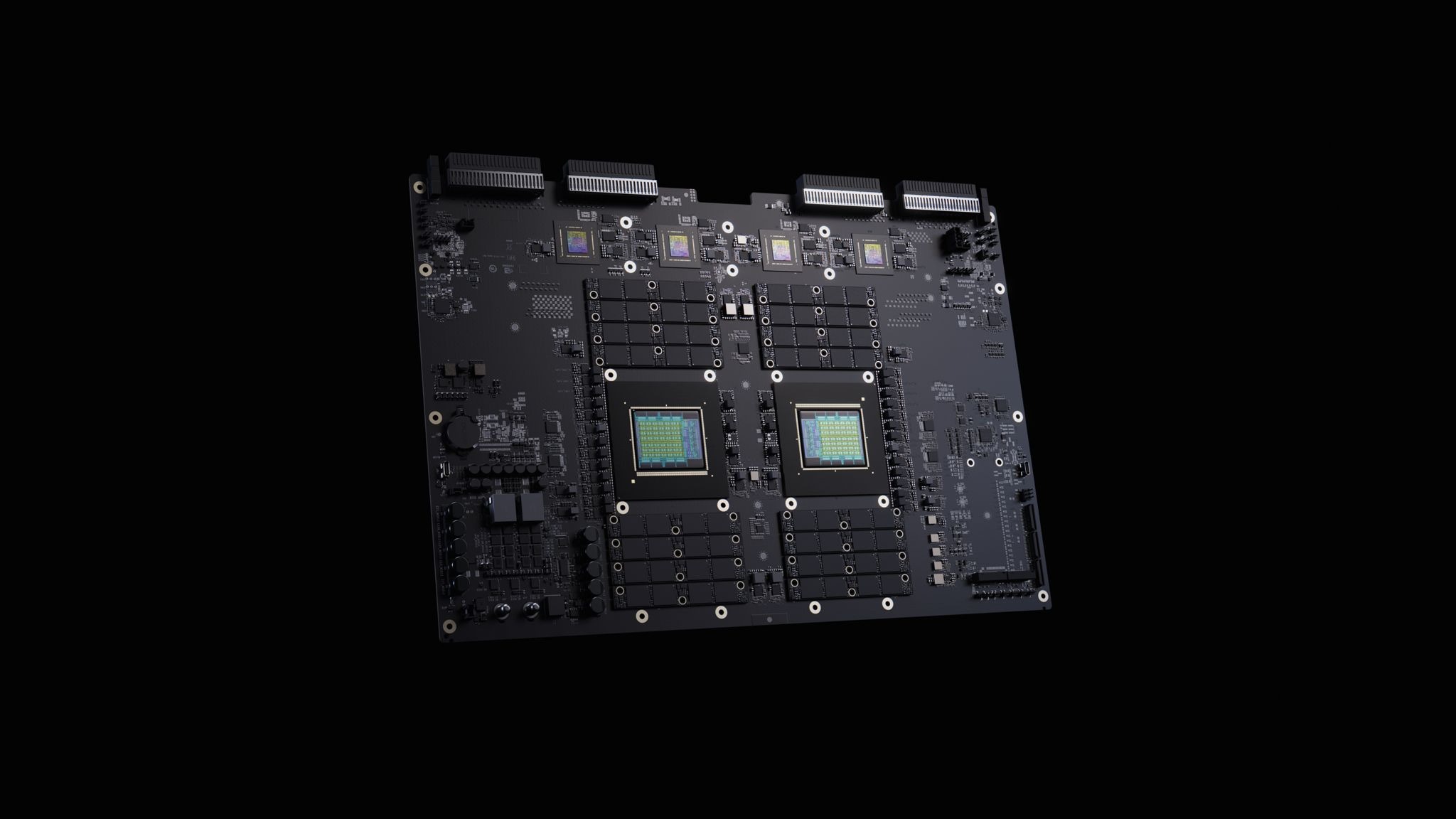
Learn why scaling AI now requires smarter storage architectures, not simply more capacity.
30-Second TL;DR
What Changed
AI datasets and context windows are exceeding the limits of system memory.
Why It Matters
AI teams may need to treat storage as part of model and inference architecture rather than as a passive capacity layer. Poorly designed data paths can constrain context-heavy applications, while secure and efficient storage can improve the usefulness of AI-factory outputs.
What To Do Next
Benchmark your AI pipeline’s dataset and context-window workloads against available memory, then measure storage latency, throughput, and security controls before scaling.
Key Points
- •AI datasets and context windows are exceeding the limits of system memory.
- •Rising storage requirements cannot be solved by capacity expansion alone.
- •Storage architectures must support useful, grounded insights from AI factories.
- •Efficiency and security are becoming core requirements for AI storage.
Deep Insight
AI-generated analysis for this event — not the original article.
Enhanced Key Takeaways
- •NVIDIA's 'AI Factory' concept relies on GPUDirect Storage (GDS) to bypass CPU bottlenecks, enabling direct data transfer between NVMe storage and GPU memory.
- •The shift toward Retrieval-Augmented Generation (RAG) at scale is driving the need for vector databases integrated directly into storage tiers to reduce latency during inference.
- •Data sovereignty and multi-tenancy security are becoming critical as enterprises move from centralized data lakes to distributed AI storage architectures.
- •The industry is seeing a transition from traditional POSIX-compliant file systems to object-based storage architectures optimized for high-throughput, small-file random access patterns common in LLM training.
- •Energy efficiency in storage is now a primary KPI, with 'data-centric' compute architectures aiming to minimize data movement to reduce the total power envelope of AI clusters.
Competitor Analysis
- NVIDIA (Magnum IO/GDS)
- GPU-to-Storage Interconnect
- Pure Storage (AIRI)
- All-Flash Performance
- NetApp (ONTAP AI)
- Hybrid Cloud/Data Management
- NVIDIA (Magnum IO/GDS)
- Direct Memory Access (DMA)
- Pure Storage (AIRI)
- Scale-out Flash Arrays
- NetApp (ONTAP AI)
- Unified Data Fabric
- NVIDIA (Magnum IO/GDS)
- High-throughput/Low-latency
- Pure Storage (AIRI)
- High-density/Efficiency
- NetApp (ONTAP AI)
- Data Governance/Security
| Feature | NVIDIA (Magnum IO/GDS) | Pure Storage (AIRI) | NetApp (ONTAP AI) |
|---|---|---|---|
| Primary Focus | GPU-to-Storage Interconnect | All-Flash Performance | Hybrid Cloud/Data Management |
| Architecture | Direct Memory Access (DMA) | Scale-out Flash Arrays | Unified Data Fabric |
| AI Optimization | High-throughput/Low-latency | High-density/Efficiency | Data Governance/Security |
Technical Deep Dive
- GPUDirect Storage (GDS) utilizes RDMA to move data directly from storage to GPU memory, bypassing the CPU and system RAM to reduce latency and overhead.
- Implementation of NVMe-over-Fabrics (NVMe-oF) is essential for scaling storage performance linearly with GPU cluster growth.
- Integration of vector search capabilities at the storage controller level allows for real-time retrieval of context without loading entire datasets into GPU VRAM.
- Use of high-bandwidth interconnects like InfiniBand or 400GbE is required to prevent storage I/O from becoming the primary bottleneck during distributed training jobs.
Future ImplicationsAI analysis grounded in cited sources
Timeline
- 2020-11NVIDIA introduces Magnum IO GPUDirect Storage to accelerate data movement.
- 2022-03NVIDIA announces the DGX SuperPOD architecture, standardizing storage integration for AI factories.
- 2024-03NVIDIA unveils Blackwell architecture with enhanced support for high-speed data ingestion.
- 2025-06NVIDIA expands AI Factory ecosystem partnerships to include specialized storage vendors.
Weekly AI Recap
Read this week's curated digest of top AI events →
AI-curated news aggregator. All content rights belong to original publishers.
Original source: NVIDIA Blog ↗
This is a summary, not the original. Read the source, or get the weekly briefing.
The weekly digest
One email a week. Unsubscribe anytime.