Aikido to Launch Offshore Floating Data Center
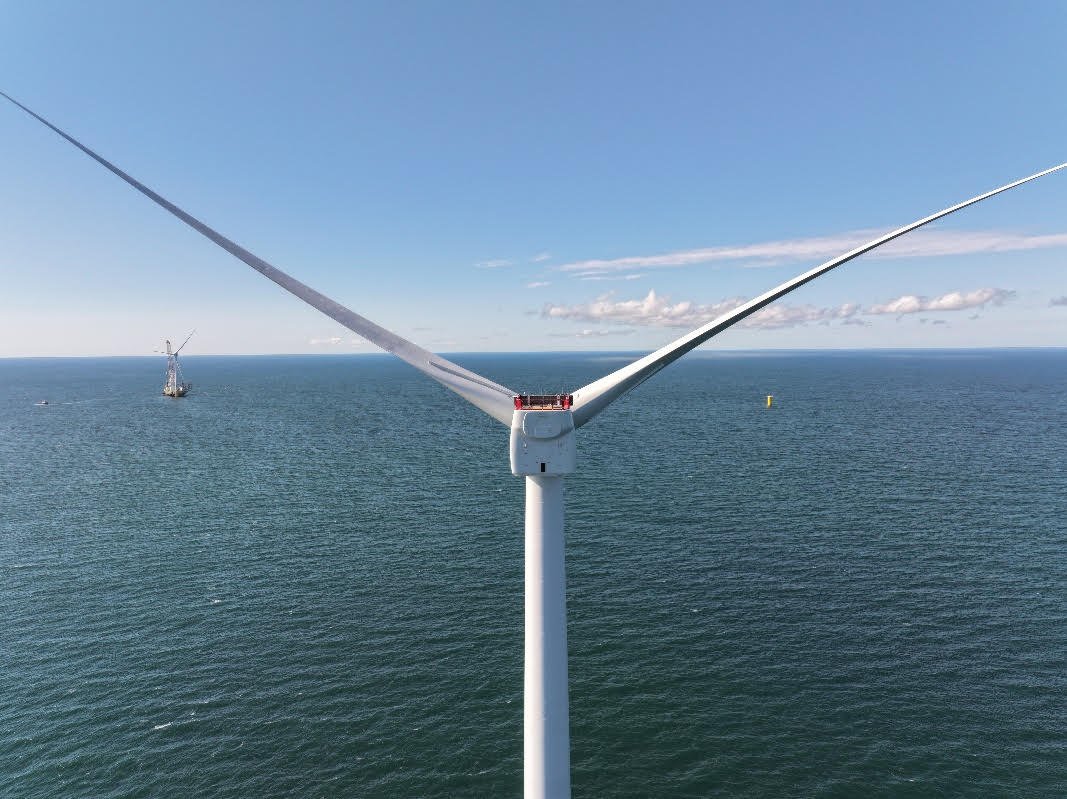
💡Offshore wind data centers solve AI power crisis with renewables
⚡ 30-Second TL;DR
What Changed
Aikido will deploy small data center under floating offshore wind turbine.
Why It Matters
This innovation could alleviate land power grid strains from AI data centers by tapping unlimited offshore wind. It promises lower costs and carbon footprints for hyperscale AI compute needs.
What To Do Next
Research Aikido's pilot for integrating renewable offshore power into your AI data center planning.
Key Points
- •Aikido will deploy small data center under floating offshore wind turbine.
- •Deployment scheduled for later this year.
- •Alternative to space-based data centers using renewable wind power.
🧠 Deep Insight
Background and context from public sources — not the original article. 7 sources cited.
🔑 Enhanced Key Takeaways
- •Aikido's integrated design combines proprietary wind turbine substructure with pre-fabricated data center enclosures into a single steel unit, reducing capital and operating costs while enabling factory prefabrication and quayside lifting.[1]
- •The modular 'flat-pack' semi-submersible platform assembles up to 10 times faster than conventional offshore structures, using proven oil & gas semi-submersible technology deployed for over 25 years.[1][2]
- •Expected power usage effectiveness (PUE) below 1.08 via passive cooling transferring heat through the steel hull to seawater, with thermal impact limited to a few meters and high physical security.[1]
- •Targets over 50GW of existing distressed floating wind sites worldwide for rapid sovereign deployment, streamlining permitting and using existing offshore vessels for maintenance.[1][2]
🛠️ Technical Deep Dive
- •Proprietary 'flat-pack' semi-submersible steel platform with pin joints, assembly-transport cradle, and extended central column for 15MW+ wind turbine and battery installation using land-based cranes.[1][2][5]
- •Horizontal barge transport in collapsed configuration, upending to upright via water pumping in under 2 hours, no final welding required, enabling use of smaller ports and existing vessels.[1][3][4]
- •Passive primary cooling system achieves PUE <1.08 by heat transfer through hull to seawater; designed to withstand 50-year storms using oil & gas standards; 24/7 monitoring for security.[1][2]
- •Data halls pre-fabricated and lifted quayside into outer columns post-platform flotation; supports GW-scale AI compute with serial production at tower facilities.[1][2]
🔮 Future ImplicationsAI analysis grounded in cited sources
⏳ Timeline
📎 Sources (7)
Factual claims are grounded in the sources below. Forward-looking analysis is AI-generated interpretation.
- globenewswire.com — Aikido Launches Offshore Datacenter Technology to Deploy Gw Scale Sovereign AI Compute Onboard Their Floating Wind Platform
- aikidotechnologies.com
- marinelog.com — Video Innovative Aikido Floating Wind Solution Gains Abs Statement of Maturity
- youtube.com — Watch
- aikidotechnologies.com — Technology
- tgs4c.com — Aikido Demonstration United States Us7w
- aol.com — Offshore Wind Turbine House Data 205645816
Weekly AI Recap
Read this week's curated digest of top AI events →
👉Related Updates


AI-curated news aggregator. All content rights belong to original publishers.
Original source: TechCrunch AI ↗
This is a summary, not the original. Read the source, or get the weekly briefing.
Weekly AI briefing
One email a week. Unsubscribe anytime.