💰钛媒体•Freshcollected in 27m
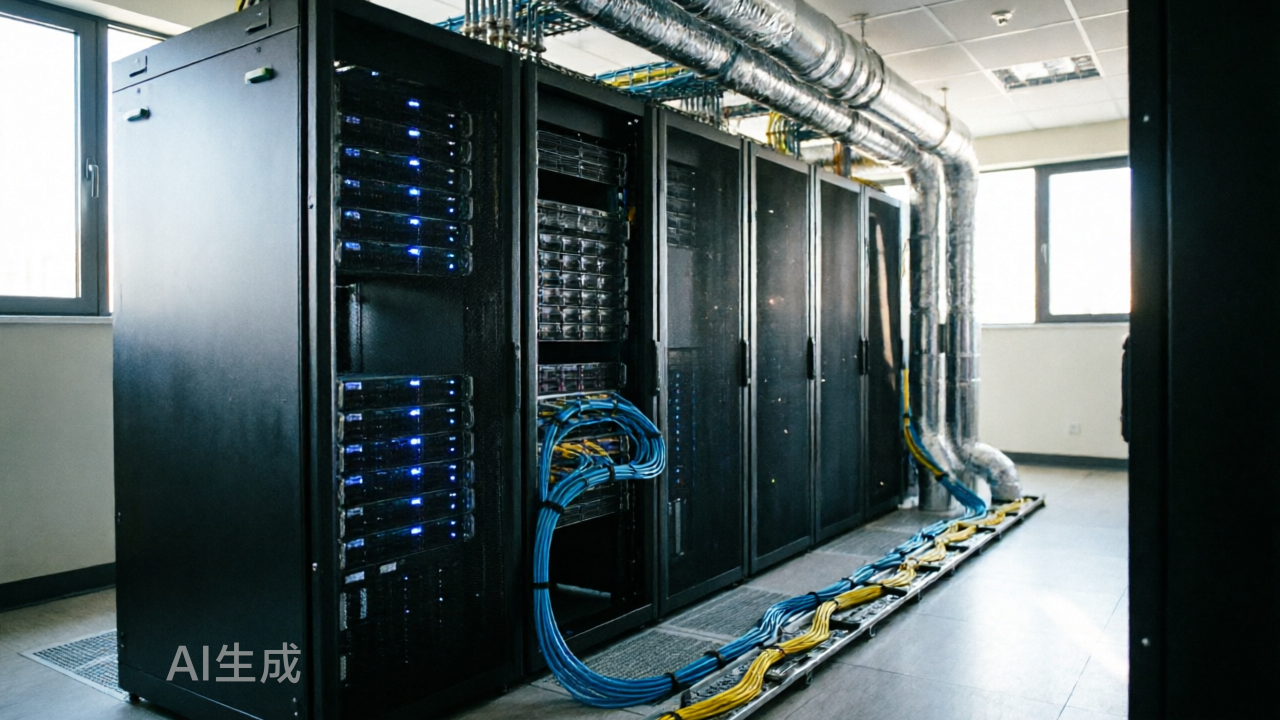
AIDC enters the GW era: Building future data centers
💡Understand the infrastructure shifts required to support the next generation of massive AI compute clusters.
⚡ 30-Second TL;DR
What Changed
AIDC scale is transitioning to the Gigawatt (GW) level.
Why It Matters
Data center architects must rethink power distribution and cooling systems to support the massive energy demands of GW-scale AI clusters.
What To Do Next
Review your infrastructure's power density requirements to ensure compatibility with next-gen high-wattage GPU clusters.
Who should care:Enterprise & Security Teams
Key Points
- •AIDC scale is transitioning to the Gigawatt (GW) level.
- •Success requires advanced system engineering beyond hardware procurement.
- •Energy management and infrastructure integration are critical bottlenecks.
🧠 Deep Insight
AI-generated analysis for this event.
🔑 Enhanced Key Takeaways
- •The transition to GW-scale data centers is primarily driven by the thermal design power (TDP) requirements of next-generation AI accelerators, which now exceed 1,000W per GPU.
- •Liquid cooling technologies, specifically direct-to-chip (D2C) and immersion cooling, have become mandatory infrastructure requirements rather than optional upgrades for GW-scale facilities.
- •Grid interconnection and power availability have replaced compute hardware as the primary limiting factor for AI data center deployment timelines, often extending project lead times to 3-5 years.
- •Modular data center (MDC) architectures are being adopted to accelerate deployment, allowing for pre-fabricated power and cooling blocks to be integrated on-site.
- •AI-driven energy management systems (EMS) are now being integrated into the data center fabric to perform real-time load balancing and predictive maintenance on power distribution units (PDUs).
🛠️ Technical Deep Dive
- Power Density: GW-scale facilities are targeting rack densities of 100kW to 200kW per rack to support high-density GPU clusters.
- Cooling Efficiency: Implementation of Coolant Distribution Units (CDUs) capable of managing secondary loop temperatures to support high-TDP silicon.
- Power Architecture: Shift toward 415V AC or 48V DC bus architectures to reduce conversion losses and improve energy efficiency (PUE).
- Interconnect Fabric: Utilization of ultra-low latency optical switching and InfiniBand NDR/XDR to maintain cluster performance across massive physical footprints.
🔮 Future ImplicationsAI analysis grounded in cited sources
Energy grid constraints will force AI data centers to co-locate with dedicated small modular reactors (SMRs) or renewable microgrids.
The massive, constant power draw of GW-scale facilities exceeds the capacity of existing municipal grids, necessitating independent, high-availability power sources.
The PUE (Power Usage Effectiveness) metric will become secondary to CUE (Carbon Usage Effectiveness) in regulatory compliance for GW-scale data centers.
As data centers scale to the gigawatt level, environmental impact and carbon footprint reporting are becoming mandatory for operational permits.
⏳ Timeline
2023-05
Initial industry shift toward high-density rack designs exceeding 40kW.
2024-09
Major hyperscalers announce first pilot projects for 500MW+ dedicated AI campuses.
2025-11
Standardization of liquid cooling interfaces for high-TDP AI accelerators reaches industry-wide adoption.
2026-03
First commercial-scale GW-capacity data center campus begins operational testing.
📰
Weekly AI Recap
Read this week's curated digest of top AI events →
👉Related Updates


AI-curated news aggregator. All content rights belong to original publishers.
Original source: 钛媒体 ↗