AI辦公崛起,AI手機遇冷
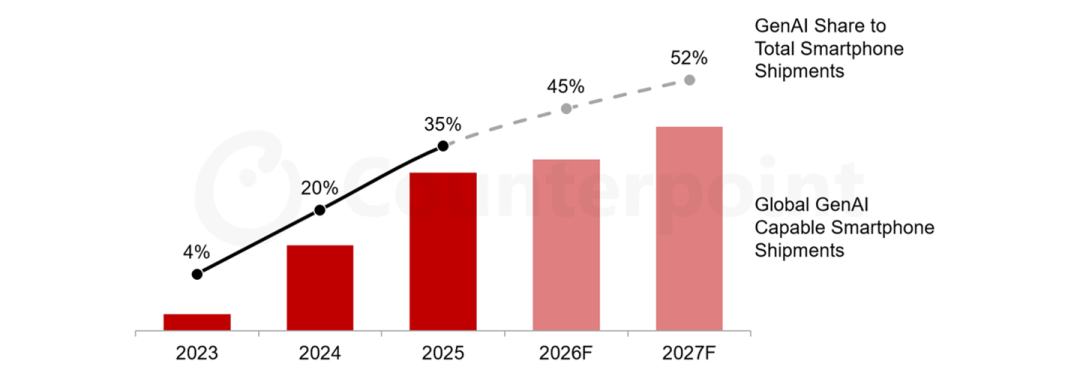
AI辦公可能比AI手機更快找到大規模落地場景,值得重新思考產品優先級。
30-Second TL;DR
What Changed
Technology giants are competing to establish a position in AI office software.
Why It Matters
For AI practitioners, the article suggests that enterprise workflow integration may offer a clearer path to adoption than standalone AI hardware. Teams building AI products should prioritize repeatable productivity gains over adding AI as a device-level selling point.
What To Do Next
Prototype one AI workflow inside the office software your users already use, then measure weekly task completion and retention before considering a dedicated AI device.
Key Points
- •Technology giants are competing to establish a position in AI office software.
- •AI phones have not yet achieved an iPhone-like breakthrough.
- •The contrast highlights the importance of workflow integration and compelling user experiences.
Deep Insight
AI-generated analysis for this event — not the original article.
Enhanced Key Takeaways
- •AI office software adoption is currently driven by 'agentic workflows' where AI autonomously handles multi-step tasks like document drafting, data analysis, and email scheduling within enterprise ecosystems.
- •The 'AI Phone' market stagnation is attributed to high hardware costs and the 'latency-privacy paradox,' where users demand local processing for privacy but cloud-based models for high-performance reasoning.
- •Major tech firms are shifting focus from 'generative AI features' (like text summarization) to 'AI-native OS integration,' aiming to replace traditional app-based interactions with intent-based interfaces.
- •Enterprise AI adoption is seeing higher ROI due to measurable productivity gains in B2B environments, whereas consumer AI phone features are often viewed as 'nice-to-have' rather than essential upgrades.
- •The hardware bottleneck for AI phones is exacerbated by thermal management constraints, limiting the size and complexity of Large Language Models (LLMs) that can run efficiently on-device.
Competitor Analysis
- AI Office Suites (e.g., Microsoft 365 Copilot)
- Workflow Automation & Productivity
- AI-Integrated Smartphones (e.g., Galaxy AI/Pixel AI)
- Contextual Assistance & Media Creation
- AI Office Suites (e.g., Microsoft 365 Copilot)
- Per-user/Per-month Subscription
- AI-Integrated Smartphones (e.g., Galaxy AI/Pixel AI)
- Hardware Premium + Optional Subscription
- AI Office Suites (e.g., Microsoft 365 Copilot)
- Deep OS/Cloud Ecosystem Integration
- AI-Integrated Smartphones (e.g., Galaxy AI/Pixel AI)
- App-level or System-level Overlay
- AI Office Suites (e.g., Microsoft 365 Copilot)
- High (Task Completion Rate)
- AI-Integrated Smartphones (e.g., Galaxy AI/Pixel AI)
- Moderate (Latency/Battery Impact)
| Feature | AI Office Suites (e.g., Microsoft 365 Copilot) | AI-Integrated Smartphones (e.g., Galaxy AI/Pixel AI) |
|---|---|---|
| Primary Value | Workflow Automation & Productivity | Contextual Assistance & Media Creation |
| Pricing Model | Per-user/Per-month Subscription | Hardware Premium + Optional Subscription |
| Integration | Deep OS/Cloud Ecosystem Integration | App-level or System-level Overlay |
| Benchmarks | High (Task Completion Rate) | Moderate (Latency/Battery Impact) |
Technical Deep Dive
- Shift toward Small Language Models (SLMs) optimized for mobile NPU (Neural Processing Unit) architectures to reduce cloud dependency.
- Implementation of Retrieval-Augmented Generation (RAG) in office suites to ground AI responses in proprietary enterprise data.
- Utilization of multi-modal models capable of processing screen context, audio, and text simultaneously to enable agentic behavior.
- Development of on-device quantization techniques to run 7B-10B parameter models within strict mobile power envelopes.
Future ImplicationsAI analysis grounded in cited sources
Timeline
- 2023-11Microsoft launches Copilot for Microsoft 365, setting the standard for AI office integration.
- 2024-01Samsung introduces Galaxy AI, marking the first major attempt to market 'AI Phones' to mass consumers.
- 2025-05Industry reports indicate a plateau in consumer AI phone upgrade cycles due to lack of 'killer' use cases.
- 2026-03Enterprise AI adoption rates surpass consumer AI feature usage by a significant margin in major markets.
Weekly AI Recap
Read this week's curated digest of top AI events →
AI-curated news aggregator. All content rights belong to original publishers.
Original source: 钛媒体 ↗
This is a summary, not the original. Read the source, or get the weekly briefing.
The weekly digest
One email a week. Unsubscribe anytime.