AI wildfire detector raises $2.7M, beats NASA by 35min
💡Teen-built AI tops NASA wildfire alerts by 35min; $2.7M fund shows climate AI momentum
⚡ 30-Second TL;DR
What Changed
Raised $2.7M seed round led by Dalus Capital
Why It Matters
Validates AI's role in climate tech, potentially scaling faster wildfire response globally. Attracts investor interest in satellite AI applications amid rising climate risks.
What To Do Next
Integrate multi-source satellite APIs like NASA's FIRMS into your CV models to test gap-bridging detection.
Key Points
- •Raised $2.7M seed round led by Dalus Capital
- •Detects wildfires 35 minutes ahead of NASA's FIRMS
- •Integrates satellite data from multiple agencies
- •Software-only platform founded by Argentine teens in 2020
🧠 Deep Insight
AI-generated analysis for this event — not the original article.
🔑 Enhanced Key Takeaways
- •Satellites on Fire utilizes a proprietary algorithm that processes data from geostationary satellites (like GOES-16/17) in addition to polar-orbiting satellites to achieve near-real-time monitoring.
- •The startup's business model focuses on B2B and B2G (government) contracts, providing API access and dashboard alerts to forestry agencies and private landowners in Latin America.
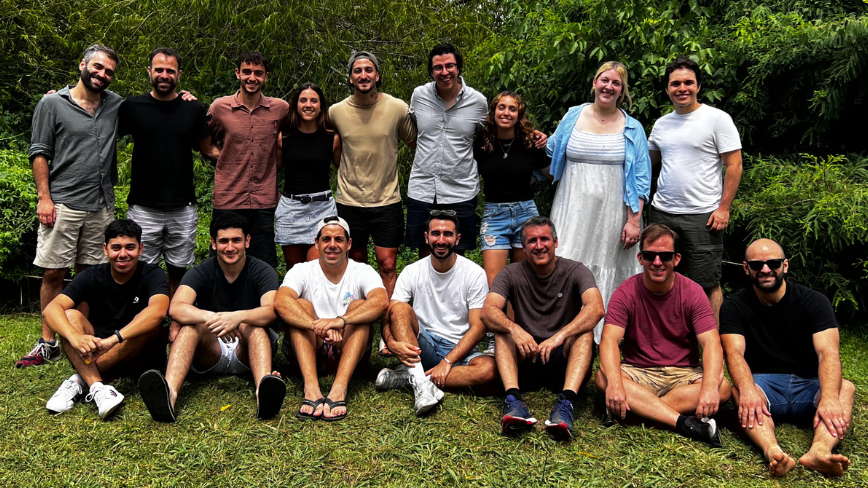
- •The founders, Juan Ignacio Sosa, Federico Sosa, and Enzo Ferrante, developed the initial prototype while still in high school, leveraging open-source satellite imagery datasets.
📊 Competitor Analysis▸ Show
| Feature | Satellites on Fire | NASA FIRMS | Pano AI |
|---|---|---|---|
| Primary Data Source | Multi-agency (Geo + Polar) | Polar-orbiting (MODIS/VIIRS) | Ground-based cameras + AI |
| Latency | Near-real-time | 30-60 min (pass-dependent) | Real-time (visual) |
| Pricing | B2B/B2G Subscription | Public/Free | Enterprise/Subscription |
🛠️ Technical Deep Dive
- •Architecture: Employs a multi-modal fusion approach that combines thermal infrared bands with visible spectrum imagery to reduce false positives from cloud cover or industrial heat sources.
- •Data Pipeline: Integrates data streams from NOAA's GOES series (Geostationary) to provide continuous coverage, contrasting with NASA FIRMS which relies heavily on polar-orbiting satellites that only pass over a specific location at fixed intervals.
- •Processing: Utilizes cloud-based edge computing to minimize latency between satellite data ingestion and alert generation.
🔮 Future ImplicationsAI analysis grounded in cited sources
⏳ Timeline
Weekly AI Recap
Read this week's curated digest of top AI events →
👉Related Updates


AI-curated news aggregator. All content rights belong to original publishers.
Original source: The Next Web (TNW) ↗
This is a summary, not the original. Read the source, or get the weekly briefing.
The weekly digest
One email a week. Unsubscribe anytime.