Source钛媒体•Stalecollected in 21m
AI Video Clash: Alibaba Forces, ByteDance Opens
#ai-competition#china-ai#strategy-shiftai-video-toolsalibababytedancekuaishou
💡China AI video giants' strategy war: Alibaba aggressive, ByteDance opens.
⚡ 30-Second TL;DR
What Changed
Alibaba aggressively pressures AI video competitors
Why It Matters
Escalates China's AI video market consolidation with Alibaba's dominance push. ByteDance openness may boost developer adoption but intensify competition.
What To Do Next
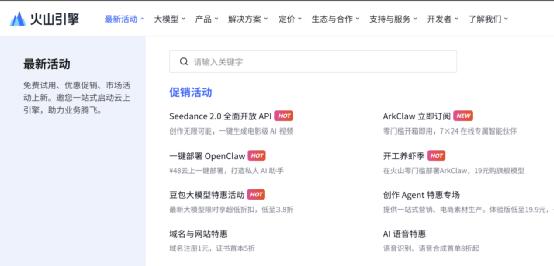
Test ByteDance and Alibaba AI video APIs for new open features.
Who should care:Founders & Product Leaders
Key Points
- •Alibaba aggressively pressures AI video competitors
- •ByteDance pivots to open strategy
- •Kuaishou ('Happy Horse') accelerates catch-up
- •Alibaba intercepts Kuaishou and ByteDance moves
🧠 Deep Insight
AI-generated analysis for this event — not the original article.
🔑 Enhanced Key Takeaways
- •Alibaba's 'forcing palace' strategy refers to the aggressive release of EMO (Emote Portrait Alive) and subsequent video generation models designed to disrupt the market dominance of ByteDance's Jimeng AI and Kuaishou's Kling.
- •ByteDance's shift to an 'open' strategy involves transitioning Jimeng AI from a closed-beta ecosystem to providing API access for third-party developers to integrate high-fidelity video generation into broader creative suites.
- •Kuaishou's Kling model has achieved a technical breakthrough in temporal consistency for long-duration video generation (up to 2 minutes), forcing Alibaba to pivot its R&D focus toward competing on video length and narrative coherence rather than just static image-to-video quality.
📊 Competitor Analysis▸ Show
| Feature | Alibaba (EMO/Animate Anyone) | ByteDance (Jimeng AI) | Kuaishou (Kling) |
|---|---|---|---|
| Primary Focus | Character animation/Lip-sync | High-fidelity creative video | Long-duration/Temporal consistency |
| Model Architecture | Diffusion-based with Audio-driven control | Transformer-Diffusion hybrid | 3D Spatio-temporal attention |
| Pricing Strategy | Aggressive freemium/API-first | Tiered subscription/Enterprise API | Usage-based credits |
| Benchmark Focus | Audio-visual synchronization | Visual fidelity/Prompt adherence | Video length/Motion stability |
🛠️ Technical Deep Dive
- EMO (Alibaba): Utilizes a reference-based audio-to-video generation framework that maps audio features directly to facial landmarks and expression latent spaces, bypassing traditional 3D mesh rendering.
- Jimeng AI (ByteDance): Employs a large-scale latent diffusion model trained on proprietary high-resolution video datasets, utilizing a custom VAE (Variational Autoencoder) for improved temporal compression.
- Kling (Kuaishou): Implements a 3D Spatio-temporal Attention mechanism that allows for consistent object persistence across frames, enabling generation of videos up to 120 seconds without significant degradation in character identity.
🔮 Future ImplicationsAI analysis grounded in cited sources
Consolidation of the Chinese AI video market will occur by Q4 2026.
The high cost of GPU compute for long-form video generation will force smaller startups to exit, leaving only the three major tech giants.
API-based revenue will surpass consumer subscription revenue for AI video platforms.
Enterprise integration into advertising and gaming workflows provides more stable, high-volume demand than individual creator subscriptions.
⏳ Timeline
2024-02
Alibaba releases EMO, demonstrating advanced audio-to-video facial animation.
2024-06
Kuaishou officially launches Kling, targeting long-form video generation capabilities.
2025-01
ByteDance opens Jimeng AI API to enterprise partners, signaling a shift in commercial strategy.
2026-03
Alibaba updates its video generation suite to include competitive long-form features, directly challenging Kling.
📰
Weekly AI Recap
Read this week's curated digest of top AI events →
👉Related Updates



AI-curated news aggregator. All content rights belong to original publishers.
Original source: 钛媒体 ↗
This is a summary, not the original. Read the source, or get the weekly briefing.
The weekly digest
One email a week. Unsubscribe anytime.