AI Turns 10万 Data Points into Fast Funding
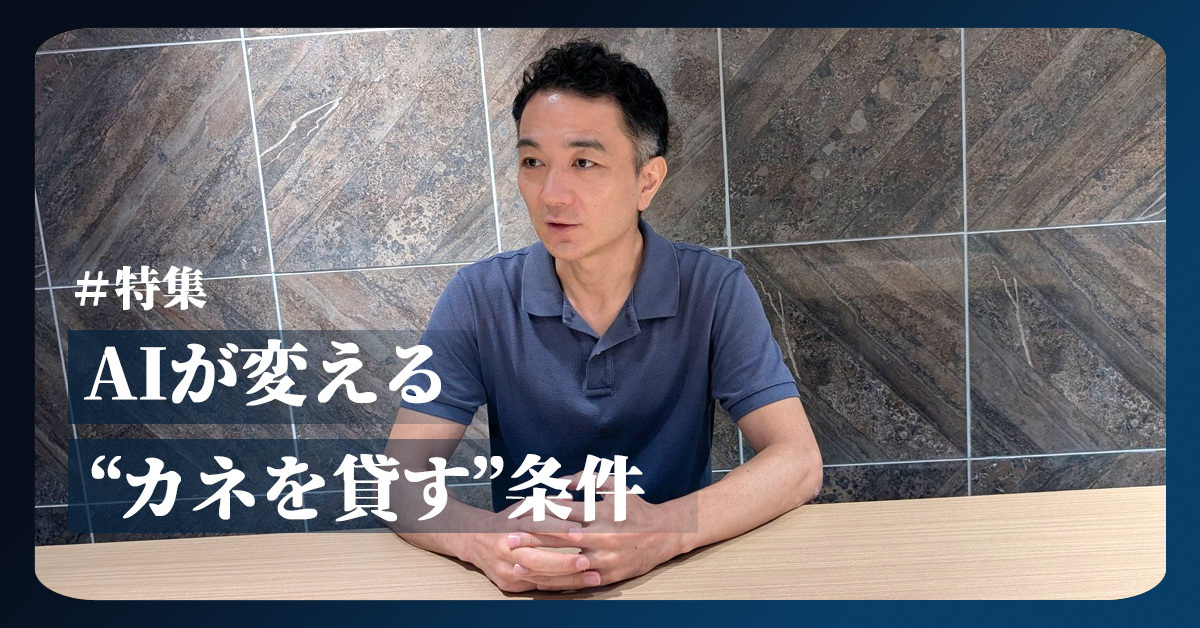
See how Zehitomo converted 100,000 payment records into funding in one month without equity dilution.
30-Second TL;DR
What Changed
Zehitomo needed funding while approaching profitability.
Why It Matters
Data-driven lending could give startups with strong transaction histories a faster alternative to conventional bank loans or equity rounds. It may also encourage lenders to assess financing risk using granular operational data rather than relying mainly on traditional financial statements.
What To Do Next
Audit your company’s payment and cash-flow records, then ask alternative lenders whether they support AI-based underwriting using transaction-level data.
Key Points
- •Zehitomo needed funding while approaching profitability.
- •AI analyzed 100,000 payment records submitted by the company.
- •The company received a loan worth tens of millions of yen in one month.
- •The approach avoided equity dilution and shortened the process compared with bank financing, which can take at least three months.
Deep Insight
AI-generated analysis for this event — not the original article.
Enhanced Key Takeaways
- •The financing was facilitated through a revenue-based financing (RBF) model, which aligns repayment schedules with the company's actual cash flow rather than fixed monthly installments.
- •Zehitomo utilized a specialized fintech platform that integrates directly with payment processors and accounting software to automate the ingestion of the 100,000 data points.
- •The AI-driven credit assessment model prioritized transaction velocity and customer retention metrics over traditional collateral-based underwriting used by legacy banks.
- •This funding mechanism allowed Zehitomo to maintain full ownership control, specifically avoiding the valuation pressure and board seat requirements typical of venture capital rounds.
- •The platform used for this financing employs machine learning algorithms to detect anomalies and predict future revenue stability, effectively reducing the risk premium usually charged to startups.
Competitor Analysis
- AI-Driven RBF (e.g., Zehitomo)
- 1-4 Weeks
- Traditional Bank Loan
- 3-6 Months
- Venture Capital
- 3-9 Months
- AI-Driven RBF (e.g., Zehitomo)
- None
- Traditional Bank Loan
- None
- Venture Capital
- High
- AI-Driven RBF (e.g., Zehitomo)
- Revenue Streams
- Traditional Bank Loan
- Assets/Personal Guarantee
- Venture Capital
- Equity
- AI-Driven RBF (e.g., Zehitomo)
- Moderate (Fee-based)
- Traditional Bank Loan
- Low (Interest)
- Venture Capital
- High (Equity)
| Feature | AI-Driven RBF (e.g., Zehitomo) | Traditional Bank Loan | Venture Capital |
|---|---|---|---|
| Speed | 1-4 Weeks | 3-6 Months | 3-9 Months |
| Dilution | None | None | High |
| Collateral | Revenue Streams | Assets/Personal Guarantee | Equity |
| Cost | Moderate (Fee-based) | Low (Interest) | High (Equity) |
Technical Deep Dive
- The credit scoring engine utilizes a gradient boosting framework to process high-dimensional transactional data.
- Data ingestion pipelines leverage API connectors to pull real-time ledger data, ensuring the 100,000 data points reflect current operational health.
- The model incorporates time-series analysis to forecast revenue volatility, allowing for dynamic adjustment of loan terms.
- Automated underwriting systems perform feature engineering on payment frequency, average transaction value, and churn rates to generate a risk score in near real-time.
Future ImplicationsAI analysis grounded in cited sources
Timeline
- 2015-12Zehitomo is founded in Tokyo to connect local service providers with consumers.
- 2020-09Zehitomo secures significant Series B funding to expand its service marketplace platform.
- 2026-07Zehitomo completes the AI-driven data analysis and secures non-dilutive financing.
Weekly AI Recap
Read this week's curated digest of top AI events →
Related Updates
AI-curated news aggregator. All content rights belong to original publishers.
Original source: ITmedia AI+ (日本) ↗
This is a summary, not the original. Read the source, or get the weekly briefing.
The weekly digest
One email a week. Unsubscribe anytime.