AI Trading Faces Critical Test in Upcoming Earnings Week
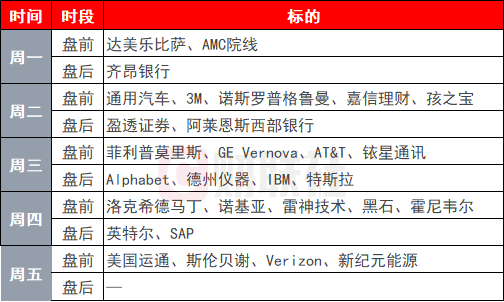
💡Alphabet's earnings will determine if the current AI infrastructure investment cycle remains sustainable.
⚡ 30-Second TL;DR
What Changed
Alphabet's earnings will act as a bellwether for AI capital expenditure trends.
Why It Matters
If tech giants signal a reduction in AI spending, it could trigger a significant correction across the entire AI hardware supply chain.
What To Do Next
Monitor the Q2 earnings call transcripts of Alphabet and Intel specifically for 'AI capital expenditure' guidance to adjust your portfolio risk.
Key Points
- •Alphabet's earnings will act as a bellwether for AI capital expenditure trends.
- •Semiconductor stocks, including Nvidia and TSMC, are under pressure after a recent 20% correction.
- •Market focus is shifting from pure revenue growth to tangible returns on AI infrastructure investment.
- •Geopolitical tensions and energy price fluctuations remain significant external variables for the tech sector.
🧠 Deep Insight
AI-generated analysis for this event — not the original article.
🔑 Enhanced Key Takeaways
- •Institutional investors are increasingly scrutinizing the 'AI ROI gap,' where the massive capital expenditure on GPU clusters has yet to translate into proportional margin expansion for hyperscalers.
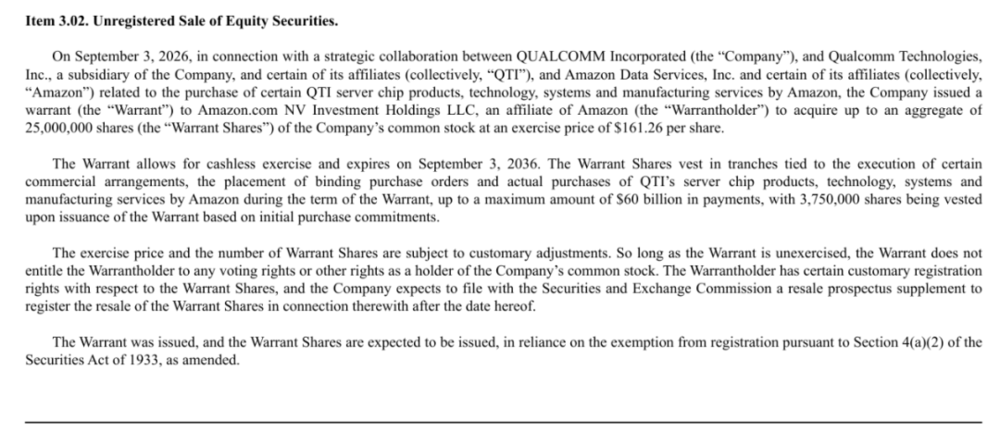
- •Recent regulatory filings indicate that major cloud providers are shifting procurement strategies toward custom silicon (ASICs) to reduce dependency on merchant silicon providers like Nvidia.
- •Energy grid constraints in key data center hubs, such as Northern Virginia and Ireland, have become a primary bottleneck for AI infrastructure scaling, impacting operational timelines for new model training.
- •The '20% correction' mentioned is largely attributed to the unwinding of the yen carry trade, which disproportionately impacted high-beta semiconductor equities during the mid-2026 market volatility.
- •Analysts are tracking the 'inference-to-training' ratio in earnings reports, as companies move from the initial model-building phase to the more cost-sensitive deployment and inference phase.
🛠️ Technical Deep Dive
- Shift toward heterogeneous computing architectures: Hyperscalers are integrating custom AI accelerators (TPUs, Trainium, Maia) alongside general-purpose GPUs to optimize power-per-watt metrics.
- Implementation of liquid cooling systems: Data center designs are rapidly transitioning from air-cooled to direct-to-chip liquid cooling to support the thermal design power (TDP) requirements of next-generation AI chips exceeding 1000W per unit.
- Model quantization and pruning: Companies are prioritizing smaller, more efficient models (SLMs) to reduce inference latency and operational costs, moving away from the 'bigger is better' scaling laws of 2024-2025.
🔮 Future ImplicationsAI analysis grounded in cited sources
⏳ Timeline
Weekly AI Recap
Read this week's curated digest of top AI events →
👉Related Updates


AI-curated news aggregator. All content rights belong to original publishers.
Original source: 虎嗅 ↗
This is a summary, not the original. Read the source, or get the weekly briefing.
The weekly digest
One email a week. Unsubscribe anytime.