AI shifts from capital expenditure to ROI focus
💡Discover why the AI market is moving from 'spending money' to 'making money' and what it means for your startup.
⚡ 30-Second TL;DR
What Changed
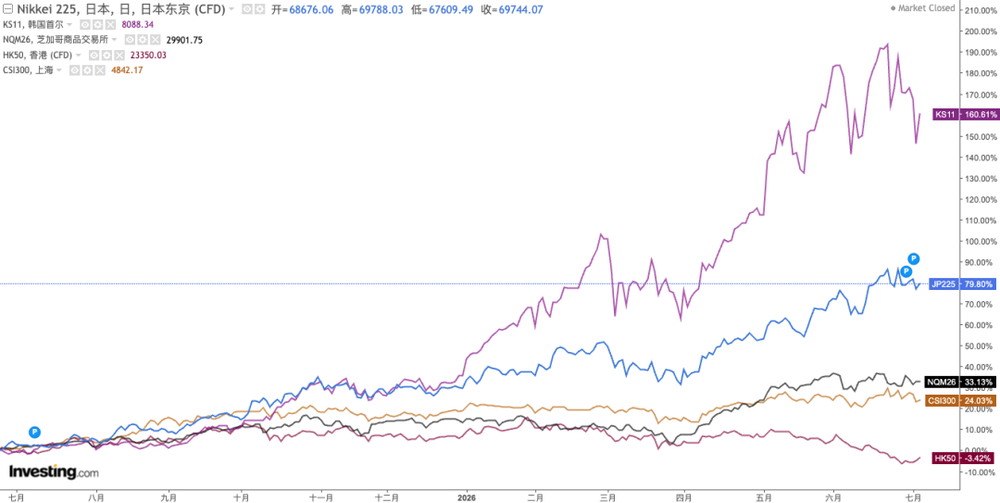
The 'AI first half' characterized by massive CapEx is ending; the 'second half' focuses on financial data.
Why It Matters
This shift forces AI companies to move beyond 'hype' and demonstrate how their models directly reduce operational costs or generate revenue.
What To Do Next
Shift your product metrics from 'total tokens processed' to 'cost-per-unit-of-value' to prove ROI to enterprise clients.
Key Points
- •The 'AI first half' characterized by massive CapEx is ending; the 'second half' focuses on financial data.
- •Investors are shifting from PE-based valuation to scrutinizing cash flow and profit conversion.
- •There is a clear divergence between companies building infrastructure and those struggling to monetize AI applications.
- •AIaaS models face a 'Token billing' paradox where users resist unpredictable costs unless value is proven.
🧠 Deep Insight
AI-generated analysis for this event — not the original article.
🔑 Enhanced Key Takeaways
- •Hyperscalers are increasingly pivoting toward 'AI-native' infrastructure optimization, focusing on energy efficiency and cooling density to reduce the operational expenditure (OpEx) that currently threatens ROI.
- •The 'GPU utilization rate' has emerged as a primary KPI for investors, replacing raw cluster size as the key metric for evaluating the efficiency of AI infrastructure investments.
- •Enterprise adoption is shifting from 'General Purpose LLMs' toward 'Small Language Models' (SLMs) and domain-specific fine-tuning, which offer lower inference costs and higher predictability for business processes.
- •Regulatory scrutiny in major markets is forcing AI companies to allocate significant capital toward compliance and data governance, further squeezing the margins of early-stage AI startups.
- •The emergence of 'Agentic Workflows' is being positioned as the primary catalyst for ROI, as companies move from simple chatbot interfaces to autonomous systems that can replace specific human-in-the-loop tasks.
🛠️ Technical Deep Dive
- Shift toward Mixture-of-Experts (MoE) architectures to reduce active parameter count during inference, thereby lowering token costs.
- Implementation of speculative decoding techniques to accelerate token generation throughput without increasing hardware footprint.
- Adoption of quantization (INT8/FP8) and pruning techniques to optimize model deployment on edge devices, reducing reliance on expensive cloud-based GPU clusters.
- Integration of Retrieval-Augmented Generation (RAG) pipelines to improve output accuracy and reduce hallucinations, which is critical for enterprise-grade ROI.
🔮 Future ImplicationsAI analysis grounded in cited sources
⏳ Timeline
Weekly AI Recap
Read this week's curated digest of top AI events →
👉Related Updates

AI-curated news aggregator. All content rights belong to original publishers.
Original source: 虎嗅 ↗
This is a summary, not the original. Read the source, or get the weekly briefing.
Weekly AI briefing
One email a week. Unsubscribe anytime.