🐯虎嗅•Stalecollected in 12m
AI Search: God-Level Infra Opportunity
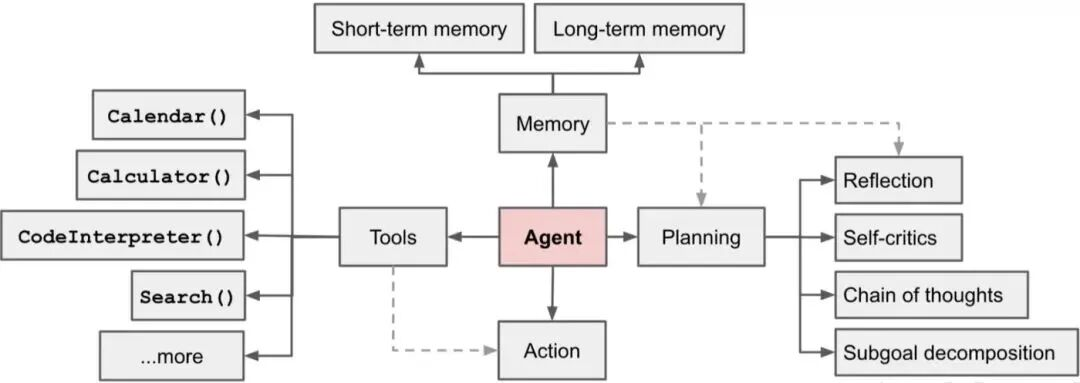
💡Unlocks AI agent context bottleneck like object storage did for cloud devs
⚡ 30-Second TL;DR
What Changed
AI search feeds external context (news, weather, docs) to LLMs for better agent performance.
Why It Matters
Creates huge opportunity for AI infra startups targeting devs building apps/agents, potentially bundling with tokens/compute for revenue.
What To Do Next
Prototype an AI agent using Perplexity or Tavily API for real-time search context injection.
Who should care:Founders & Product Leaders
Key Points
- •AI search feeds external context (news, weather, docs) to LLMs for better agent performance.
- •Parallels object storage: essential add-on, avoids big tech early, scales via small devs.
- •Implementation: fake crawl initially, then direct/strong crawl, preprocessing/ranking results.
🧠 Deep Insight
AI-generated analysis for this event.
🔑 Enhanced Key Takeaways
- •The 'AI Search as Infrastructure' thesis is currently being validated by the rapid adoption of RAG-as-a-Service (RaaS) platforms, which abstract the complexity of vector database management and real-time web indexing for developers.
- •Economic models for AI search are shifting from per-query pricing to 'context-token-as-a-service,' where providers optimize the cost-per-token of retrieved data to compete with raw LLM API costs.
- •The 'fake crawling' strategy is increasingly being replaced by specialized 'LLM-native' crawlers that prioritize semantic relevance and structured data extraction over traditional SEO-optimized page ranking.
📊 Competitor Analysis▸ Show
| Feature | Tavily AI | Perplexity API | Serper.dev |
|---|---|---|---|
| Primary Focus | Agent-optimized search | Consumer-facing answer engine | Low-cost Google search proxy |
| Pricing Model | Usage-based (per request) | Usage-based (per query/token) | Subscription/Credit-based |
| Key Advantage | Built-in RAG preprocessing | High-quality synthesis | Lowest latency/cost |
🛠️ Technical Deep Dive
- •Architecture typically utilizes a multi-stage pipeline: Query Expansion (LLM-based) -> Search API Orchestration -> Semantic Re-ranking (Cross-Encoders) -> Context Compression (Token-aware summarization).
- •Implementation often involves 'Context Window Optimization' where retrieved documents are truncated or summarized based on the specific LLM's attention span and cost constraints.
- •Integration of 'Hybrid Search' combining BM25 (keyword) and Dense Vector Retrieval (semantic) is becoming the standard for high-recall agentic search systems.
- •Use of 'Headless Browsing' (e.g., Playwright/Puppeteer) is being phased out in favor of direct API-based structured data extraction to reduce latency and infrastructure overhead.
🔮 Future ImplicationsAI analysis grounded in cited sources
AI search providers will consolidate into the primary data-ingestion layer for enterprise agents.
As agents require more real-time, verified data, the infrastructure that provides this context will become more valuable than the LLM providers themselves.
The cost of 'AI Search' will drop below $0.001 per query by Q4 2026.
Increased competition among search-as-a-service providers and the commoditization of web-indexing APIs are driving aggressive price deflation.
⏳ Timeline
2023-09
Rise of specialized RAG-focused search APIs (e.g., Tavily) targeting LLM developers.
2024-04
Perplexity launches API, signaling the shift from consumer search to developer-platform infrastructure.
2025-02
Industry-wide adoption of 'Agentic Search' patterns, moving beyond simple keyword retrieval to multi-step reasoning search.
📰
Weekly AI Recap
Read this week's curated digest of top AI events →
👉Related Updates
AI-curated news aggregator. All content rights belong to original publishers.
Original source: 虎嗅 ↗