AI Reshapes 2026 Game Job Market
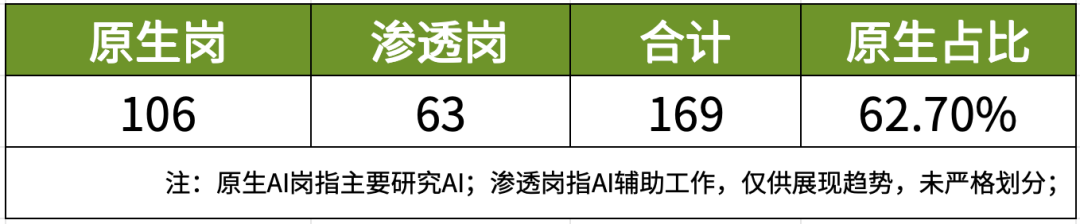
💡15% game jobs now AI-mandated—upskill in MidJourney/ChatGPT for Tencent/NetEase roles.
⚡ 30-Second TL;DR
What Changed
1076 AI-related jobs out of 7300 total (15% penetration)
Why It Matters
AI is compressing traditional entry-level game jobs, boosting demand for hybrid skills and raising entry barriers for fresh grads. Companies accelerate AI workflows in art, QA, and dev, potentially displacing non-AI users amid rising unemployment.
What To Do Next
Tailor resume with MidJourney/ChatGPT workflows and apply to Tencent IEG's AI permeation roles.
Key Points
- •1076 AI-related jobs out of 7300 total (15% penetration)
- •54% AI permeation roles vs 46% native AI positions
- •Top keywords: large models (723 mentions), MidJourney/ChatGPT most cited tools
- •Tencent IEG: 410 AI jobs, highest demand
- •Campus recruitment AI ratio often >20%, e.g. 48% at Tencent
🧠 Deep Insight
AI-generated analysis for this event — not the original article.
🔑 Enhanced Key Takeaways
- •Beyond art and programming, Chinese game firms are increasingly prioritizing 'AI-native' roles in data engineering and infrastructure to support the massive compute requirements of proprietary large language models (LLMs) tailored for game development.
- •The shift toward AI-integrated workflows has led to a measurable decline in demand for entry-level 'junior' concept artists and manual QA testers, as these tasks are being automated by generative AI pipelines.
- •Regulatory compliance in China has become a critical hiring requirement, with firms now seeking AI specialists who possess expertise in 'content safety alignment' and 'data privacy compliance' specifically for generative AI outputs in interactive media.
🛠️ Technical Deep Dive
- •Implementation of RAG (Retrieval-Augmented Generation) architectures to allow game NPCs to access dynamic, lore-consistent databases rather than relying solely on static training data.
- •Integration of LoRA (Low-Rank Adaptation) fine-tuning techniques within internal art pipelines to maintain consistent character style and IP fidelity across generative assets.
- •Deployment of automated CI/CD pipelines that incorporate AI-driven unit testing to validate code generated by LLM-assisted coding assistants before deployment to production environments.
🔮 Future ImplicationsAI analysis grounded in cited sources
⏳ Timeline
Weekly AI Recap
Read this week's curated digest of top AI events →
👉Related Updates


AI-curated news aggregator. All content rights belong to original publishers.
Original source: 虎嗅 ↗
This is a summary, not the original. Read the source, or get the weekly briefing.
The weekly digest
One email a week. Unsubscribe anytime.