AI Rescues Ships in Iran War
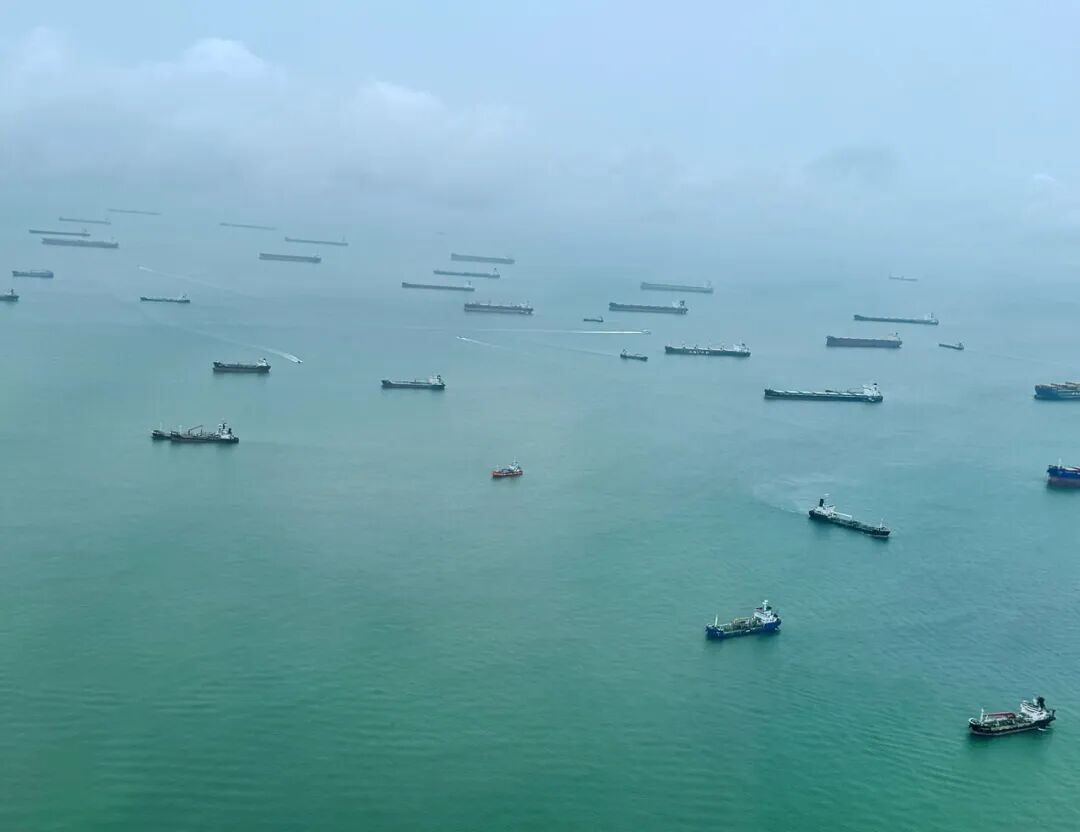
💡AI preempts wars, saves $4.5B/week in shipping—revolutionize risk mgmt.
⚡ 30-Second TL;DR
What Changed
AI flags war via 15% port vacancy spike, 200% shadow fleet activity on infrared
Why It Matters
AI turns war chaos into computable risks, slashing shipping costs and enabling unmanned fleets. Broader ripple: stabilizes global supply chains, commodities prices.
What To Do Next
Integrate Windward API into supply chain dashboards for predictive risk rerouting.
Key Points
- •AI flags war via 15% port vacancy spike, 200% shadow fleet activity on infrared
- •NLP detects 400% surge in Persian war keywords, predicts 82% strait blockade
- •SAR + Starlink beats GPS spoofing; INS multi-modal saves $2B LNG tanker
- •Maersk reroutes VLCCs via Cape, cuts $20k/day war premiums; 35% loss avoidance
🧠 Deep Insight
Background and context from public sources — not the original article. 7 sources cited.
🔑 Enhanced Key Takeaways
- •Windward's Remote Sensing Intelligence (combining SAR, EO, RF, and AIS analysis) detected a 200% surge in dark vessel activity within the first 24 hours of Iran conflict escalation, enabling early risk assessment beyond AIS spoofing[6].
- •GPS interference affected over 1,100 vessels across the Middle East Gulf within 24 hours, with AIS signals diverted to false locations including airports, nuclear plants, and inland Iranian coordinates, demonstrating systemic GNSS manipulation at operational scale[6].
- •Behavioral intelligence models now serve as primary enforcement triggers: vessels like the Marinera were flagged as high-risk 22 months before formal sanctions (April 2023 vs. June 2025) based on identity manipulation, registry hopping, and dark activity patterns rather than explicit violations[2].
- •Multi-source fusion and remote sensing validation reduced GNSS manipulation impact on platform vessels to near-zero by 2025, establishing a technical foundation for reliable navigation during high-frequency signal interference events[3].
🛠️ Technical Deep Dive
- •Remote Sensing Intelligence integrates SAR (Synthetic Aperture Radar), EO (Electro-Optical), RF (Radio Frequency), and AIS truth analysis with behavioral analytics to detect vessels operating with disabled or spoofed AIS signals[1].
- •Visual Link Analysis (VLA) connects individual vessels to operators, owners, and broader fleets by mapping patrol patterns, escort behaviors, shadowing, and rotation cycles to surface coordinated activity that mimics pre-operational surveillance[1].
- •Behavioral Intelligence Models analyze vessel operations over extended timelines to identify anomalies including MMSI changes, extended dark activity in high-risk zones, deceptive flagging transitions, and first-time port calls that deviate from legitimate trade patterns[2].
- •Multi-source fusion architecture successfully mitigated GNSS spoofing by cross-correlating space-based intelligence with vessel telemetry, reducing false signal impact to near-zero levels during 2025 operations[3].
🔮 Future ImplicationsAI analysis grounded in cited sources
⏳ Timeline
📎 Sources (7)
Factual claims are grounded in the sources below. Forward-looking analysis is AI-generated interpretation.
- windward.ai — The Gray Zone at Sea
- windward.ai — Maritime Compliance in 2026 Why Behavioral Risk Is the New Red Flag
- windward.ai — Windwards 2026 Commitment to Verified Maritime Intelligence
- windward.ai — How the 2026 US Nds Strategy Reframes Maritime Access
- windward.ai — What US Maritime Enforcement Is Up Against in 2026
- cyprusshippingnews.com — 48 Hours Into the Iran War a Maritime Intelligence Breakdown
- safety4sea.com — The Maritime World Enters 2026 Amidst Significant Instability
Weekly AI Recap
Read this week's curated digest of top AI events →
👉Related Updates

AI-curated news aggregator. All content rights belong to original publishers.
Original source: 虎嗅 ↗
This is a summary, not the original. Read the source, or get the weekly briefing.
Weekly AI briefing
One email a week. Unsubscribe anytime.