AI Questions Raphael’s Brushwork
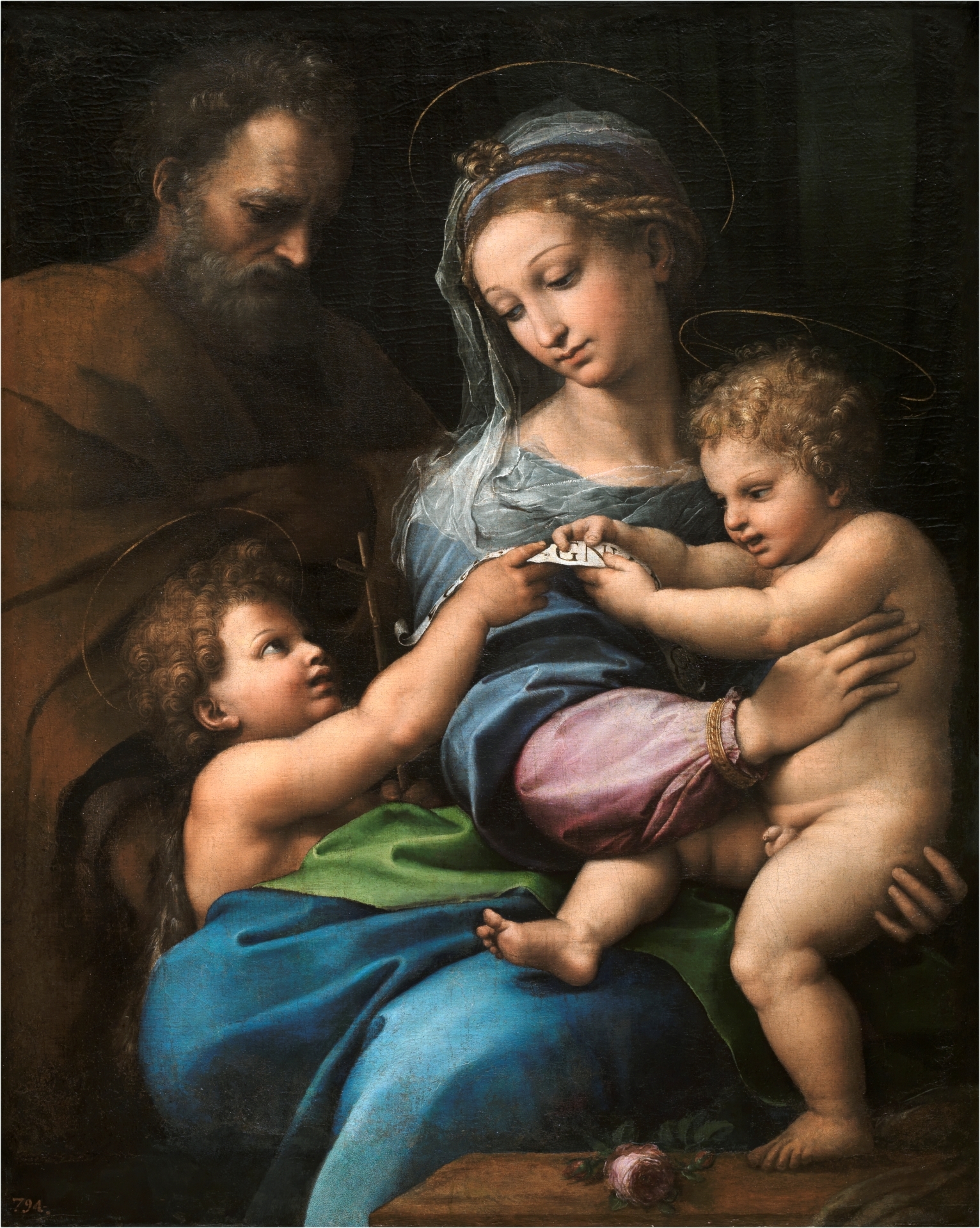
💡See how AI is challenging traditional art attribution with evidence from Raphael’s celebrated painting.
⚡ 30-Second TL;DR
What Changed
AI analysis identified the face of Saint Joseph as potentially inconsistent with Raphael’s authorship.
Why It Matters
The study demonstrates how AI can support art authentication and attribution research without necessarily replacing human experts. Its approach could influence museums, conservators, and researchers evaluating disputed or collaboratively produced works.
What To Do Next
Read the 2023 Cultural Heritage Science paper and replicate its AI face-analysis method on a labeled dataset of authenticated Renaissance artworks.
Key Points
- •AI analysis identified the face of Saint Joseph as potentially inconsistent with Raphael’s authorship.
- •The majority of Madonna della Rosa still aligns with Raphael’s artistic style.
- •The research was published in the journal Cultural Heritage Science in December 2023.
🧠 Deep Insight
AI-generated analysis for this event.
🔑 Enhanced Key Takeaways
- •The AI model used for the analysis was specifically trained on a dataset of authentic Raphael paintings to learn his brushwork, color palette, and shading techniques.
- •Researchers utilized a custom deep convolutional neural network (CNN) that achieved a 98% accuracy rate in identifying Raphael's hand in test cases.
- •The study suggests that Giulio Romano, a prominent student of Raphael, was likely the artist responsible for painting the face of Saint Joseph.
- •While the face of Saint Joseph was flagged as inconsistent, the rest of the painting, including the Madonna, Child, and Saint John the Baptist, showed high probability scores for Raphael's authorship.
- •This AI-driven methodology is being positioned as a non-invasive, objective tool to complement traditional art historical connoisseurship, which has debated the attribution of this specific work for decades.
🛠️ Technical Deep Dive
- The analysis employed a deep learning architecture based on ResNet50, a residual neural network commonly used for image classification tasks.
- The model was trained using a technique called transfer learning, fine-tuning a pre-trained network on a curated dataset of Raphael's verified works.
- The system performed feature extraction by analyzing micro-patterns in brushstrokes, which are often imperceptible to the human eye.
- The classification process involved dividing the high-resolution image into small patches, allowing the AI to generate a probability map of authorship across the entire canvas.
🔮 Future ImplicationsAI analysis grounded in cited sources
⏳ Timeline
Weekly AI Recap
Read this week's curated digest of top AI events →
👉Related Updates


AI-curated news aggregator. All content rights belong to original publishers.
Original source: cnBeta (Full RSS) ↗