AI Powers China Display Industry Boom
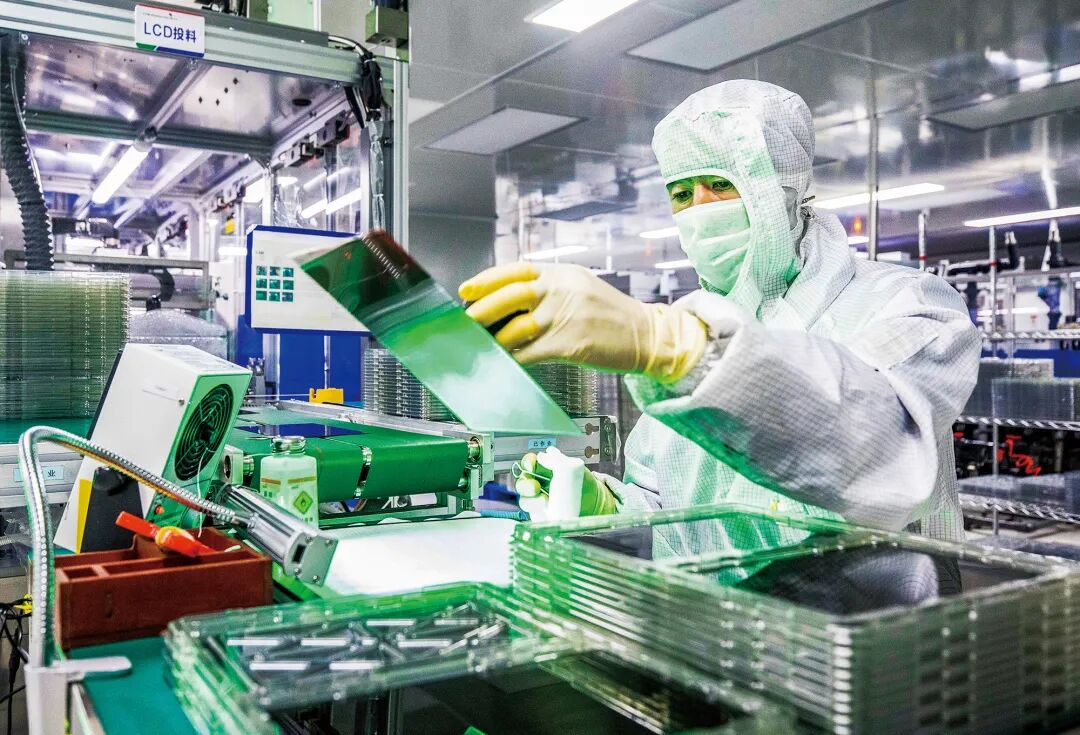
💡China's AI-driven display lead (53% global) impacts AR/VR infra for AI devs
⚡ 30-Second TL;DR
What Changed
2025 China display prod value ~$120B, 53% global; 2026 projected $130B, 55% share.
Why It Matters
Strengthens China's hardware edge for AI apps in AR/VR/metaverse; accelerates manufacturing AI adoption, widening global tech gap as laggards lose data advantages.
What To Do Next
Explore AMOLED IJP tech docs for edge AI display prototypes in AR devices.
Key Points
- •2025 China display prod value ~$120B, 53% global; 2026 projected $130B, 55% share.
- •AMOLED shipments 9.8M sqm (52% global first); three 8.6-gen lines with innovative crafts underway.
- •Materials $39B (48% global), equip $1.3B (21%); R&D 7% revenue, avg profit 2% above global.
🧠 Deep Insight
Background and context from public sources — not the original article. 7 sources cited.
🔑 Enhanced Key Takeaways
- •BOE Technology Group debuted over 60 AI-integrated display products at CES 2026, including the HERO 2.0 intelligent cockpit with under-display camera and AI facial recognition for automotive use.[1]
- •BOE commissioned China's first fully complete 8.6-generation OLED production line in December 2025, targeting high-volume TV and IT panels, contributing to Chinese AMOLED surpassing 50% global unit share in smartphones.[5]
- •China's AI hardware market, including displays and robotics, reached $153 billion in 2025 and is projected to grow 18% annually through 2030, driven by Shenzhen's rapid prototyping supply chains.[3]
📊 Competitor Analysis▸ Show
| Feature | China (BOE, etc.) | Korea (Samsung Display) |
|---|---|---|
| OLED Gen Line Size | 8.6-gen (2,290 mm × 2,620 mm glass for IT) | 8.6-gen mass production started, double G6 area for cost reduction[5] |
| AMOLED Market Share | >50% smartphone units, rapid materials localization[5] | Leads in profitability, IT OLED push[5] |
| AI Integration | AI cockpits, rollable OLED, facial recog | Less emphasized in recent displays[1][5] |
🛠️ Technical Deep Dive
- •BOE's 17-inch electrically rollable portable OLED display panel contracts from 9.5-inch tablet to full size, supporting mobile work and entertainment via AI-enhanced features.[1]
- •HERO 2.0 intelligent cockpit integrates high-end displays with AI algorithms for high-precision facial recognition using under-display cameras.[1]
- •8.6-generation OLED lines use larger glass substrates (e.g., 2,290 mm × 2,620 mm) to reduce per-panel costs for TV, IT, and laptop applications.[5]
🔮 Future ImplicationsAI analysis grounded in cited sources
⏳ Timeline
📎 Sources (7)
Factual claims are grounded in the sources below. Forward-looking analysis is AI-generated interpretation.
- global.chinadaily.com.cn — Ws695f36dea310d6866eb32aab
- globaltimes.cn — 1356144
- latimes.com — China Is Already Putting AI in Everything From Cars to Birdbaths
- idc.com — Beyond the Performance What Chinas Cny 2026 Robot Showcase Signals for Global Tech Leadership
- displaydaily.com — State of the Display Industry Q1 2026
- youtube.com — Watch
- zte.com.cn — Zte Showcases Full Stack AI Innovations at Mwc Barcelona 2026 Creating an Intelligent Future
Weekly AI Recap
Read this week's curated digest of top AI events →
👉Related Updates
AI-curated news aggregator. All content rights belong to original publishers.
Original source: 虎嗅 ↗
This is a summary, not the original. Read the source, or get the weekly briefing.
Weekly AI briefing
One email a week. Unsubscribe anytime.