AI Platforms Race to Make Content Playable
AI is turning passive video into playable, user-generated worlds—but early engagement may expose a hype gap.
30-Second TL;DR
What Changed
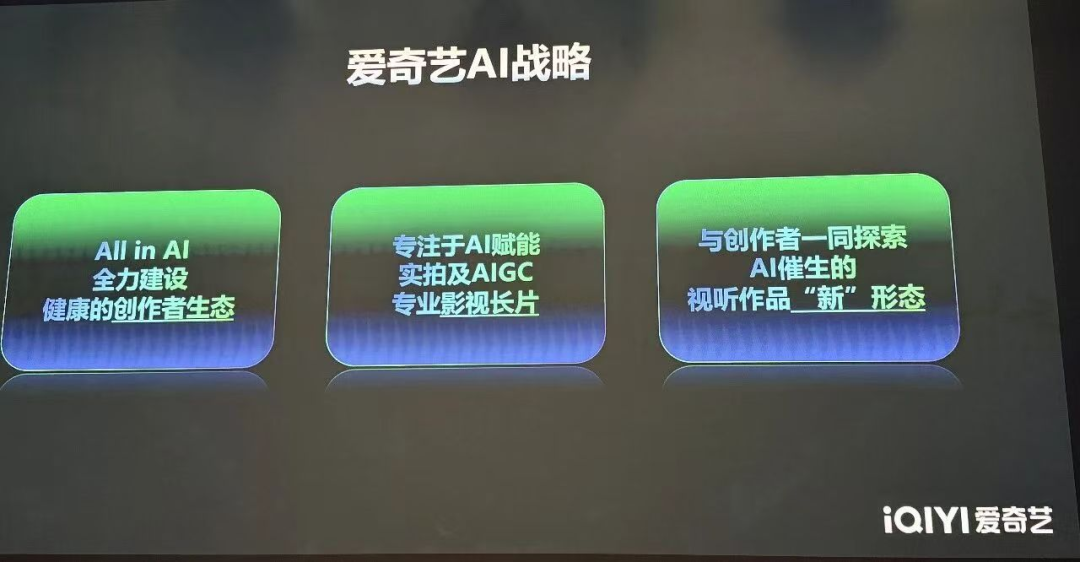
iQIYI introduced its creator brand '+你,更快樂' and is exploring AI-generated IVP interactive video.
Why It Matters
AI could lower the production cost of interactive video and blur the boundaries between video, games, fiction, and user-generated content. However, the lack of engagement evidence means founders should treat this as an emerging product hypothesis rather than a validated market.
What To Do Next
Prototype one branching story with Castloop or Tencent's 造化工坊, then measure completion rate, branch selection, repeat sessions, and generation cost before scaling.
Key Points
- •iQIYI introduced its creator brand '+你,更快樂' and is exploring AI-generated IVP interactive video.
- •Tencent Photon Studio's '造化工坊' and Yuanxiang Technology's Castloop generate interactive stories, characters, visuals, and branching logic from prompts or scripts.
- •Netflix is moving interactive experiences into gaming after previously removing most interactive programs.
- •Douyin launched '互動空間廣場', while Bilibili, Xiaohongshu, and Kuaishou are also developing interactive-content products.
- •Early usage is weak: Douyin's interactive space reportedly had fewer than 10,000 uses and leading works only hundreds of views.
Deep Insight
AI-generated analysis for this event — not the original article.
Enhanced Key Takeaways
- •The shift toward 'playable' content is driven by the integration of Large Language Models (LLMs) for real-time NPC dialogue generation, moving beyond the static branching logic of traditional interactive video.
- •Technical bottlenecks currently include high latency in AI inference during interactive segments, which disrupts the immersion required for gaming-like experiences.
- •Monetization models for these platforms are shifting from traditional ad-supported video to 'micro-transaction' models where users pay for specific AI-generated narrative paths or character interactions.
- •Regulatory scrutiny in China regarding AI-generated content (AIGC) requires these platforms to implement strict real-time content filtering, adding significant overhead to the deployment of interactive AI stories.
- •Cloud gaming infrastructure is being repurposed by companies like Tencent to stream these AI-generated interactive experiences, bypassing the need for high-end local hardware.
Competitor Analysis
- iQIYI (+你)
- Narrative Video
- Tencent (造化工坊)
- Game Assets/Logic
- Netflix (Interactive)
- Gaming/Streaming
- Douyin (互動空間)
- Social Interaction
- iQIYI (+你)
- High (Gen-Video)
- Tencent (造化工坊)
- High (Gen-Assets)
- Netflix (Interactive)
- Low (Logic-based)
- Douyin (互動空間)
- Medium (Chat-based)
- iQIYI (+你)
- Subscription/Ads
- Tencent (造化工坊)
- Asset Marketplace
- Netflix (Interactive)
- Subscription
- Douyin (互動空間)
- Virtual Gifts
- iQIYI (+你)
- Mobile/Web
- Tencent (造化工坊)
- PC/Cloud
- Netflix (Interactive)
- TV/Mobile/Console
- Douyin (互動空間)
- Mobile
| Feature | iQIYI (+你) | Tencent (造化工坊) | Netflix (Interactive) | Douyin (互動空間) |
|---|---|---|---|---|
| Core Focus | Narrative Video | Game Assets/Logic | Gaming/Streaming | Social Interaction |
| AI Integration | High (Gen-Video) | High (Gen-Assets) | Low (Logic-based) | Medium (Chat-based) |
| Monetization | Subscription/Ads | Asset Marketplace | Subscription | Virtual Gifts |
| Platform | Mobile/Web | PC/Cloud | TV/Mobile/Console | Mobile |
Technical Deep Dive
- Implementation typically utilizes a hybrid architecture combining a Large Language Model (LLM) for narrative branching and a text-to-video or text-to-3D model for asset generation.
- State management is handled via a persistent session context that tracks user choices and injects them into the LLM prompt to maintain narrative consistency.
- Latency reduction is achieved through speculative decoding and edge computing nodes that pre-render common narrative branches.
- Integration with game engines like Unity or Unreal Engine 5 is common for platforms like Tencent's, using custom plugins to bridge AI-generated scripts with engine-native animation systems.
Future ImplicationsAI analysis grounded in cited sources
Timeline
- 2019-06iQIYI releases 'His Smile', one of the first major interactive dramas in China.
- 2022-11Netflix begins phasing out its interactive video library to focus on gaming integration.
- 2024-03Tencent Photon Studio accelerates development of AI-driven game asset generation tools.
- 2025-05iQIYI launches the '+你,更快樂' brand to formalize its AI-interactive content strategy.
- 2026-02Douyin introduces '互動空間廣場' to test user interest in AI-moderated interactive spaces.
Weekly AI Recap
Read this week's curated digest of top AI events →
AI-curated news aggregator. All content rights belong to original publishers.
Original source: 虎嗅 ↗
This is a summary, not the original. Read the source, or get the weekly briefing.
The weekly digest
One email a week. Unsubscribe anytime.