AI Outputs 'Good Enough' But Lack Human Effort

💡Reveals why 'good enough' AI skips thinking's pain—key for builders avoiding cognitive laziness
⚡ 30-Second TL;DR
What Changed
AI mimics style but over-emphasizes, requiring human 'subtraction' for natural tone
Why It Matters
Encourages AI users to prioritize personal writing to preserve cognitive depth and taste amid high-quality AI outputs. Risks over-reliance leading to stagnant thinking muscles.
What To Do Next
Draft with AI but rewrite fully by hand daily to trigger personal error signals and refine taste.
Key Points
- •AI mimics style but over-emphasizes, requiring human 'subtraction' for natural tone
- •Writing compiles chaotic thoughts into clarity, acting as brain's error signal processor
- •Passive AI resonance lacks backpropagation-like updates from writing's pain
- •Taste as internal judge atrophies without personal creation practice
🧠 Deep Insight
Background and context from public sources — not the original article. 6 sources cited.
🔑 Enhanced Key Takeaways
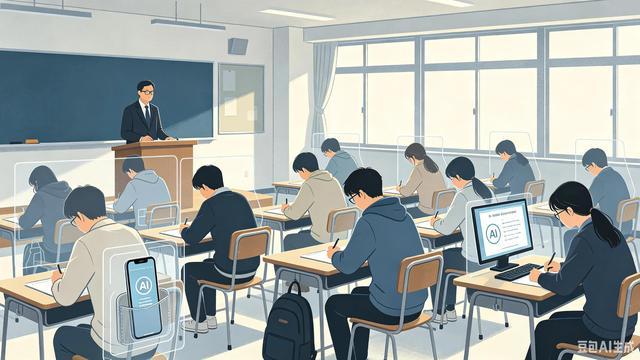
- •AI-generated content produces superficially polished outputs that mask cognitive deficits in the creator, as users offload computational thinking without realizing they're losing critical capabilities[1]
- •Writing serves as a neurological error-correction mechanism that forces deep cognitive processing, while passive consumption of AI content creates an illusion of understanding without the neural reinforcement of struggle[1][3]
- •Reader perception significantly penalizes AI-assisted creative work, with disclosure of AI involvement reducing evaluations by an average of 6.2% across 27,000 participants, suggesting authenticity and human effort remain valued[2]
- •AI excels at derivative, formula-based writing (genre fiction, procedurals) but cannot replicate memoir or introspective writing that requires genuine self-knowledge and cognitive sovereignty[3]
- •Students using AI for writing assistance produce better final products but show no improvement in actual writing ability compared to those working without AI, indicating the tool masks rather than develops skill[6]
🛠️ Technical Deep Dive
• EEG Brain Activity Patterns: Unassisted writers show stronger and more widely distributed electroencephalograph patterns compared to those using search engines or LLMs, indicating higher cognitive engagement during composition[1] • LLM Feature Recognition: Large language models use richer, more clinically aligned feature sets than humans for text analysis, with stronger inter-annotator agreement (κ = 0.465) due to shared training data and deterministic structure[4] • Probabilistic vs. Deterministic Processing: AI operates through probabilistic word-sequence calculation (most likely next token), fundamentally different from human writing as a mode of thinking that involves genuine memory and self-reflection[3] • Offloading Cascade Effect: When individuals delegate computational thinking to LLMs, computational thinking becomes the first cognitive capability lost, creating a feedback loop of increasing dependence[1]
🔮 Future ImplicationsAI analysis grounded in cited sources
The research suggests a bifurcation in creative industries: AI will likely dominate formula-driven genres by 2030, but authentic, introspective, and innovative creative work will increasingly command premium value as human-created content. This creates pressure for AI disclosure legislation (currently under U.S. Congressional consideration as of 2026), which paradoxically may harm AI-assisted creators through reader bias while protecting consumers from manipulation. The broader societal risk involves cognitive atrophy across knowledge work—users may experience productivity gains in the short term while suffering long-term erosion of critical thinking, creativity, and taste discrimination. Educational institutions face pressure to redesign curricula around the cognitive struggle itself rather than output quality, as AI commoditizes the final product.
⏳ Timeline
📎 Sources (6)
Factual claims are grounded in the sources below. Forward-looking analysis is AI-generated interpretation.
Weekly AI Recap
Read this week's curated digest of top AI events →
👉Related Updates

AI-curated news aggregator. All content rights belong to original publishers.
Original source: 虎嗅 ↗
This is a summary, not the original. Read the source, or get the weekly briefing.
Weekly AI briefing
One email a week. Unsubscribe anytime.