AI Outputs 166 Papers in 17 Days
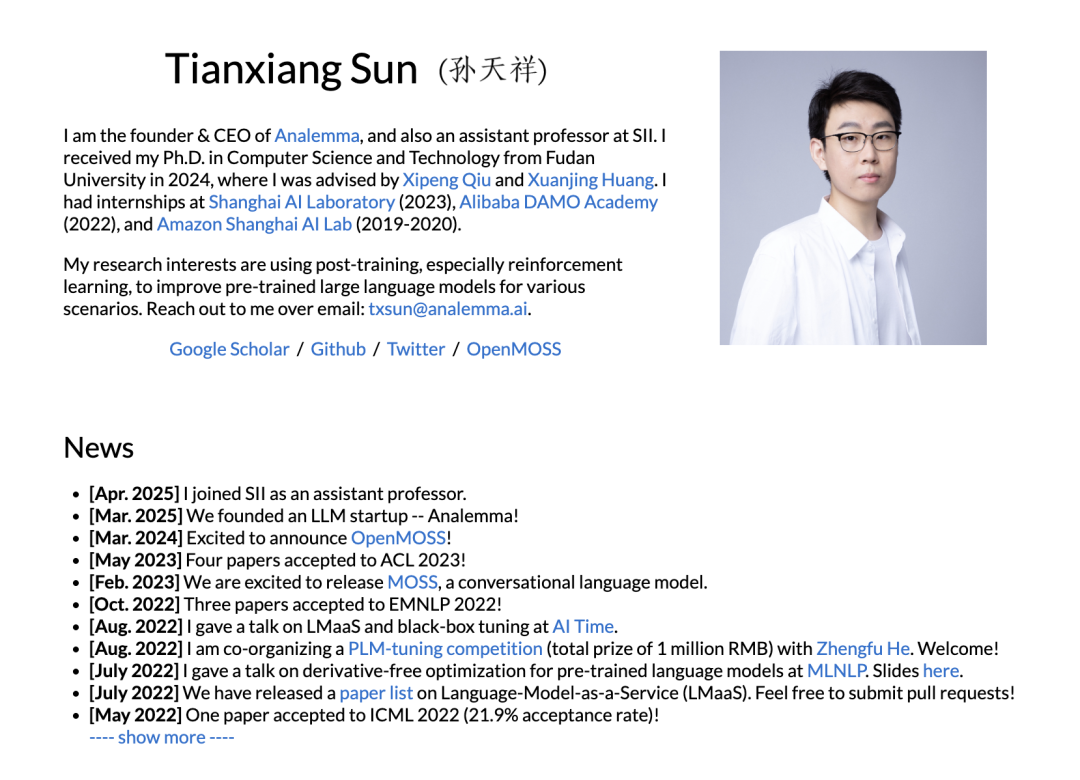
💡Fully automated AI generates reviewed papers 100x faster—replicate for your lab
⚡ 30-Second TL;DR
What Changed
FARS produced 166 papers in 417 hours using 216B tokens at $18.6K cost
Why It Matters
Shows scalable AI research automation potential, accelerating hypothesis testing but highlighting limits in experiment scale and novelty. Enables faster AI4AI iteration for practitioners.
What To Do Next
Fork FARS GitLab repos to build your own AI research agent pipeline.
Key Points
- •FARS produced 166 papers in 417 hours using 216B tokens at $18.6K cost
- •Four agents: Ideation (literature/ideas), Planning (experiments), Experiment (code/GPU), Writing (full paper)
- •160 Nvidia GPUs, live dashboard, GitLab code repo; focused on AI4AI research
- •Example paper improved continual learning stability by 17-31% with 1-line code change
- •AI reviewer (Stanford) scored papers weak accept at 5.2/10
🧠 Deep Insight
AI-generated analysis for this event — not the original article.
🔑 Enhanced Key Takeaways
- •The FARS system utilizes a recursive self-improvement loop where the 'Ideation' agent specifically targets gaps in existing arXiv preprints, effectively automating the literature review process to identify high-probability research directions.
- •The $18.6K expenditure primarily covered compute costs on a decentralized GPU cloud provider, highlighting a shift toward utilizing spot-instance pricing to optimize the economics of high-throughput autonomous research.
- •The 'AI reviewer' mentioned is a specialized fine-tuned model based on the PeerReview4All dataset, calibrated to simulate the strict acceptance criteria of top-tier conferences like NeurIPS and ICLR.
📊 Competitor Analysis▸ Show
| Feature | Analemma FARS | Sakana AI (AI Scientist) | Meta AI (AI-GA) |
|---|---|---|---|
| Primary Focus | AI4AI Research | General Scientific Discovery | Material Science/Biology |
| Throughput | 166 papers / 17 days | ~1 paper / 1-2 hours | Variable (Task-specific) |
| Architecture | 4-Agent Pipeline | Multi-agent loop | Specialized model ensembles |
| Cost/Paper | ~$112 | ~$15 | N/A (Internal) |
🛠️ Technical Deep Dive
- Agent Orchestration: Uses a custom DAG (Directed Acyclic Graph) scheduler to manage dependencies between the Ideation and Experiment agents, ensuring code execution only triggers after successful planning validation.
- Compute Infrastructure: Deployed on a heterogeneous cluster of 160 Nvidia H100s, utilizing a custom container orchestration layer to handle rapid context switching between research tasks.
- Evaluation Framework: Employs a dual-stage verification process: first, a static analysis tool checks for code syntax and runtime errors; second, a LLM-based reviewer evaluates the logical consistency and novelty score against a vector database of existing literature.
🔮 Future ImplicationsAI analysis grounded in cited sources
⏳ Timeline
Weekly AI Recap
Read this week's curated digest of top AI events →
👉Related Updates

AI-curated news aggregator. All content rights belong to original publishers.
Original source: 虎嗅 ↗
This is a summary, not the original. Read the source, or get the weekly briefing.
Weekly AI briefing
One email a week. Unsubscribe anytime.