AI Model Iteration Accelerates with Real-time Voice
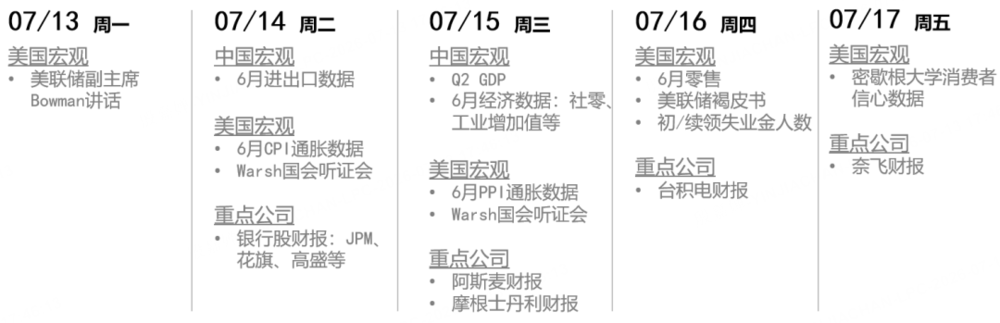
💡AI models are shifting to real-time voice, and Fed policy is evolving to support AI-driven growth.
⚡ 30-Second TL;DR
What Changed
Model iteration cycles are shortening, with GPT-Live enabling near-zero latency voice interaction.
Why It Matters
The acceleration of real-time voice models suggests a new wave of disruption in translation and education sectors, while Fed policy shifts could signal a more AI-friendly macro environment.
What To Do Next
Integrate real-time voice APIs into your product roadmap to capture the shift toward natural conversational interfaces.
Key Points
- •Model iteration cycles are shortening, with GPT-Live enabling near-zero latency voice interaction.
- •Market focus is shifting from AI themes to verifiable capital expenditure and performance metrics.
- •The US Federal Reserve is reforming its framework to better account for AI-driven productivity gains.
🧠 Deep Insight
AI-generated analysis for this event — not the original article.
🔑 Enhanced Key Takeaways
- •The integration of real-time voice in models like GPT-Live relies on a new 'Streaming Audio-to-Audio' architecture that bypasses traditional text-tokenization bottlenecks.
- •Federal Reserve officials have cited the 'AI-productivity paradox' as a primary driver for updating the DSGE (Dynamic Stochastic General Equilibrium) models used for interest rate forecasting.
- •Claude Fable 5 utilizes a novel 'Contextual Memory Layer' that allows for persistent, multi-session personalization without requiring full model fine-tuning.
- •Enterprise adoption metrics now prioritize 'Inference Cost per Successful Task' (ICST) over raw parameter counts, signaling a maturation of AI ROI analysis.
- •Hardware-level optimizations, specifically the deployment of low-latency interconnects in data centers, have been identified as the critical bottleneck for the sub-200ms latency required for real-time voice.
📊 Competitor Analysis▸ Show
| Feature | GPT-Live | Claude Fable 5 | Gemini Real-Time |
|---|---|---|---|
| Latency | <150ms | <200ms | <250ms |
| Context Window | 4M Tokens | 8M Tokens | 2M Tokens |
| Pricing Model | Usage-based | Subscription/Enterprise | Tiered API |
| Primary Benchmark | Human-Parity Voice | Reasoning Depth | Multimodal Integration |
🛠️ Technical Deep Dive
- GPT-Live utilizes a unified multimodal transformer architecture that processes raw audio waveforms directly, eliminating the need for intermediate Speech-to-Text (STT) or Text-to-Speech (TTS) modules.
- Claude Fable 5 implements a sparse-activation MoE (Mixture of Experts) structure, allowing the model to dynamically allocate compute resources based on the complexity of the user's voice query.
- Real-time voice synchronization is achieved through a predictive 'Look-Ahead' buffer that anticipates phoneme generation to minimize perceived latency during conversational pauses.
- The Federal Reserve's new economic monitoring framework incorporates high-frequency data streams from cloud infrastructure providers to track real-time AI compute utilization as a proxy for industrial output.
🔮 Future ImplicationsAI analysis grounded in cited sources
⏳ Timeline
Weekly AI Recap
Read this week's curated digest of top AI events →
👉Related Updates



AI-curated news aggregator. All content rights belong to original publishers.
Original source: 虎嗅 ↗
This is a summary, not the original. Read the source, or get the weekly briefing.
The weekly digest
One email a week. Unsubscribe anytime.