AI Memory Boom Shows Signs of Cooling
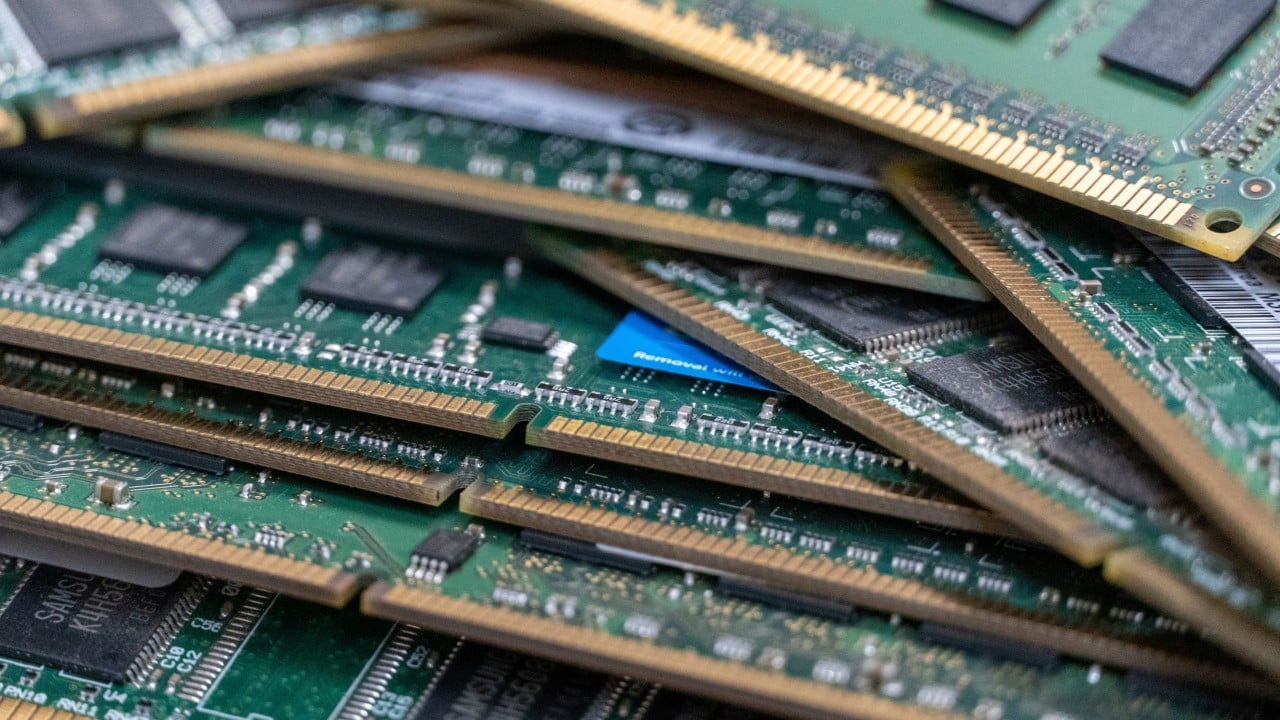
Memory prices may be nearing a turning point that changes AI infrastructure costs and capacity planning.
30-Second TL;DR
What Changed
Global memory-chip stocks are beginning to falter after a sharp rally.
Why It Matters
AI infrastructure operators may face less severe memory-cost inflation if supply expands, but falling prices could also signal weaker supplier profitability and investment momentum. Companies planning large-scale AI deployments should avoid assuming that current memory pricing and availability will persist.
What To Do Next
Reforecast your next two quarters of AI infrastructure costs using both flat and declining memory-price scenarios before committing to long-term capacity contracts.
Key Points
- •Global memory-chip stocks are beginning to falter after a sharp rally.
- •Cooling memory-price growth may indicate that the industry is entering a late-cycle phase.
- •Data-centre demand for high-end memory remains robust because of AI workloads.
- •New supply from Chinese memory producers could intensify pricing and margin pressure.
Deep Insight
AI-generated analysis for this event — not the original article.
Enhanced Key Takeaways
- •HBM3e and HBM4 production yields have become the primary differentiator for memory manufacturers, with Samsung and SK Hynix facing intense pressure to maintain quality standards for NVIDIA's next-generation GPU architectures.
- •The 'memory wall' bottleneck remains a critical constraint in AI system design, forcing a shift toward CXL (Compute Express Link) technology to expand memory capacity beyond traditional DRAM limits.
- •Chinese memory manufacturers, specifically CXMT and YMTC, have accelerated their transition to advanced process nodes, effectively narrowing the technology gap with South Korean incumbents in the legacy and mid-range DRAM markets.
- •Inventory levels at major cloud service providers (CSPs) have begun to normalize, shifting from a 'just-in-case' hoarding strategy to a more disciplined 'just-in-time' procurement model as supply chain visibility improves.
- •Capital expenditure (CapEx) cycles in the semiconductor industry are showing signs of bifurcation, where investment in high-bandwidth memory (HBM) continues to surge while legacy NAND and DRAM capacity expansion is being actively curtailed.
Competitor Analysis
- SK Hynix
- Market Leader (HBM3e)
- Samsung Electronics
- Aggressive Catch-up
- Micron Technology
- Challenger (HBM3e)
- CXMT (China)
- Emerging/Limited
- SK Hynix
- AI-Specific Memory
- Samsung Electronics
- Diversified (Logic/Memory)
- Micron Technology
- Enterprise/AI
- CXMT (China)
- Legacy/Mid-range DRAM
- SK Hynix
- Premium/High Margin
- Samsung Electronics
- Competitive/Volume
- Micron Technology
- Value-Oriented
- CXMT (China)
- Aggressive/Cost-Leader
| Feature | SK Hynix | Samsung Electronics | Micron Technology | CXMT (China) |
|---|---|---|---|---|
| HBM Leadership | Market Leader (HBM3e) | Aggressive Catch-up | Challenger (HBM3e) | Emerging/Limited |
| Primary Focus | AI-Specific Memory | Diversified (Logic/Memory) | Enterprise/AI | Legacy/Mid-range DRAM |
| Pricing Strategy | Premium/High Margin | Competitive/Volume | Value-Oriented | Aggressive/Cost-Leader |
Technical Deep Dive
- HBM3e Architecture: Utilizes 12-high and 16-high stack configurations to achieve bandwidths exceeding 1.2 TB/s per stack.
- CXL 3.0 Implementation: Enables memory pooling and expansion, allowing AI accelerators to access terabytes of coherent memory across a fabric.
- Process Node Transition: Shift from 1a/1b nm DRAM processes to 1c nm nodes to improve power efficiency and density for AI workloads.
- Thermal Management: Integration of advanced thermal interface materials (TIM) and specialized packaging to mitigate heat dissipation issues in high-density HBM stacks.
Future ImplicationsAI analysis grounded in cited sources
Timeline
- 2023-06SK Hynix begins mass production of HBM3, establishing early dominance in the AI memory market.
- 2024-03Micron announces mass production of HBM3e, securing supply deals for NVIDIA's H200 GPUs.
- 2025-02Samsung Electronics reports record-breaking HBM revenue growth, signaling the peak of the initial AI memory super-cycle.
- 2026-01Chinese memory producers achieve volume production of LPDDR5, intensifying competition in the mobile and edge-AI segments.
Weekly AI Recap
Read this week's curated digest of top AI events →
Related Updates




AI-curated news aggregator. All content rights belong to original publishers.
Original source: SCMP Technology ↗
This is a summary, not the original. Read the source, or get the weekly briefing.
The weekly digest
One email a week. Unsubscribe anytime.