AI Memory Crash Hits Korean Retail Investors
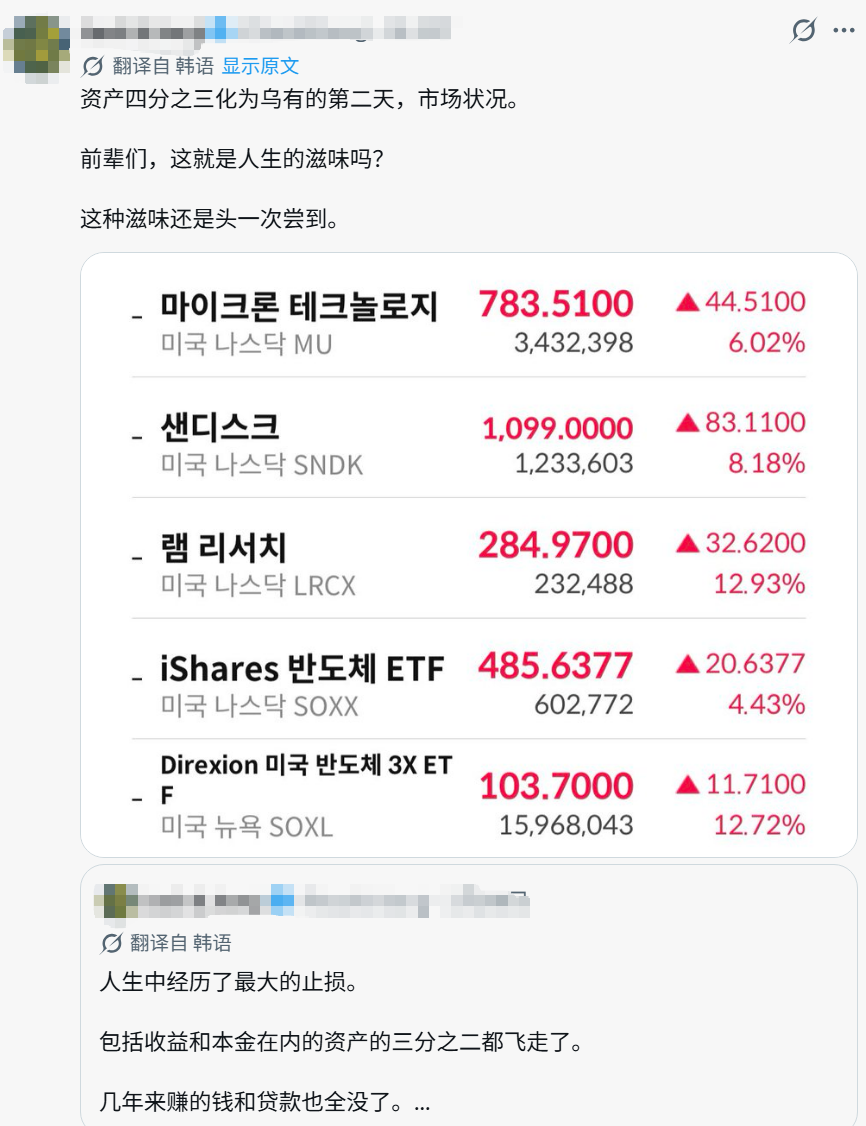
A brutal AI-memory stock crash shows how leverage and supplier concentration can threaten AI infrastructure plans.
30-Second TL;DR
What Changed
The KOSPI reportedly fell more than 8% intraday on July 28, with Samsung down over 13% and SK hynix down over 14%.
Why It Matters
For AI companies, a severe correction in memory and semiconductor equities could tighten financing conditions and increase scrutiny of AI infrastructure spending. It also warns founders and investors against treating strong AI-chip demand as a justification for excessive leverage or concentration.
What To Do Next
Run a downside stress test on your AI infrastructure budget using 30–50% memory-price and supplier-equity drawdown scenarios before committing to long-term capacity.
Key Points
- •The KOSPI reportedly fell more than 8% intraday on July 28, with Samsung down over 13% and SK hynix down over 14%.
- •More than 1.2 million leveraged retail accounts reportedly reached margin-call thresholds, while roughly 320,000–360,000 accounts were forcibly liquidated.
- •Samsung and SK hynix, key memory suppliers for AI infrastructure, reportedly fell 44% and 53% from their June highs.
- •The article links the crash to aggressive leverage, margin ETFs, retail FOMO, and concentrated exposure to AI hardware stocks.
Deep Insight
AI-generated analysis for this event — not the original article.
Enhanced Key Takeaways
- •The July 28, 2026, market event, often referred to as the 'Black Tuesday' of the Korean stock market, was exacerbated by a 'carry trade' unwinding triggered by the Bank of Korea's unexpected interest rate adjustments earlier that month.
- •South Korean financial regulators, specifically the Financial Services Commission (FSC), initiated an emergency investigation into potential market manipulation and 'short-and-distort' campaigns that allegedly targeted semiconductor stocks prior to the crash.
- •The collapse triggered a broader liquidity crisis in the 'Dong-hak Ant' (retail investor) community, leading to a surge in personal bankruptcy filings and a temporary suspension of certain high-leverage margin trading products by major Korean brokerages.
- •Institutional investors, particularly foreign funds, had been net sellers of Samsung and SK hynix for 15 consecutive trading days leading up to the crash, signaling a shift in sentiment regarding the sustainability of HBM (High Bandwidth Memory) demand.
- •The crash prompted the Korean government to announce a 10 trillion won market stabilization fund to prevent systemic contagion across the KOSPI and KOSDAQ indices.
Technical Deep Dive
- The market volatility was heavily tied to the HBM3E and HBM4 production yields, which faced scrutiny regarding thermal management issues in high-density AI server clusters.
- The reliance on TSV (Through-Silicon Via) packaging technology created a supply chain bottleneck that, when combined with cooling demand concerns, led to the re-evaluation of the 'AI Supercycle' thesis.
- Retail investors were heavily concentrated in leveraged 'Inverse' and 'Leveraged' ETFs tracking the KRX Semiconductor Index, which amplified the downside volatility during the rapid sell-off.
Future ImplicationsAI analysis grounded in cited sources
Timeline
- 2025-03Samsung and SK hynix announce record-breaking HBM production capacity expansion.
- 2025-11Retail investor participation in semiconductor-linked margin ETFs reaches an all-time high.
- 2026-06Samsung and SK hynix stock prices hit their peak valuation before the correction begins.
- 2026-07Bank of Korea adjusts interest rates, triggering the initial unwinding of leveraged positions.
- 2026-07-28KOSPI experiences an 8% intraday crash, leading to mass retail liquidations.
Weekly AI Recap
Read this week's curated digest of top AI events →
AI-curated news aggregator. All content rights belong to original publishers.
Original source: 虎嗅 ↗
This is a summary, not the original. Read the source, or get the weekly briefing.
The weekly digest
One email a week. Unsubscribe anytime.