📲Digital Trends•Stalecollected in 31m
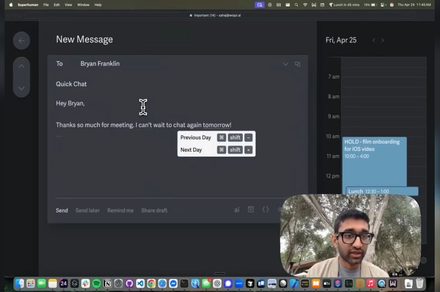
AI Makes Email More Soul-Sucking

💡AI bots emailing bots endlessly: warning for automation pitfalls in your apps.
⚡ 30-Second TL;DR
What Changed
AI promised relief from email drudgery.
Why It Matters
Highlights risks of unchecked AI automation in communication, potentially increasing human oversight needs and resource waste in productivity tools.
What To Do Next
Audit AI agents in your email workflows to detect and block bot-to-bot communications.
Who should care:Developers & AI Engineers
Key Points
- •AI promised relief from email drudgery.
- •Bots now generate endless bot-to-bot emails.
- •This amplifies email's soul-sucking nature.
- •Humans pretend it's meaningful progress.
🧠 Deep Insight
AI-generated analysis for this event.
🔑 Enhanced Key Takeaways
- •The rise of 'AI-generated noise' has led to a measurable decline in email deliverability rates, as spam filters struggle to distinguish between legitimate AI-assisted communication and automated bot-generated content.
- •Major email service providers have begun implementing 'AI-to-AI' authentication protocols to prioritize human-verified traffic, effectively creating a tiered system where human-authored emails are increasingly deprioritized by automated filtering algorithms.
- •Corporate adoption of 'autonomous email agents' has shifted the primary metric of success from 'inbox zero' to 'response velocity,' incentivizing organizations to deploy more bots to maintain competitive response times, further accelerating the feedback loop.
🔮 Future ImplicationsAI analysis grounded in cited sources
Email will transition into a gated, reputation-based communication protocol.
The proliferation of bot-generated traffic will force providers to move away from open SMTP standards toward verified-identity systems to maintain utility.
The 'human-in-the-loop' requirement will become a premium feature for enterprise communication platforms.
As automated noise renders standard email unreliable, businesses will pay for verified human-only communication channels to ensure critical information is actually read by a person.
📰
Weekly AI Recap
Read this week's curated digest of top AI events →
👉Related Updates

AI-curated news aggregator. All content rights belong to original publishers.
Original source: Digital Trends ↗