AI Lobster Booms, Rattles WeChat
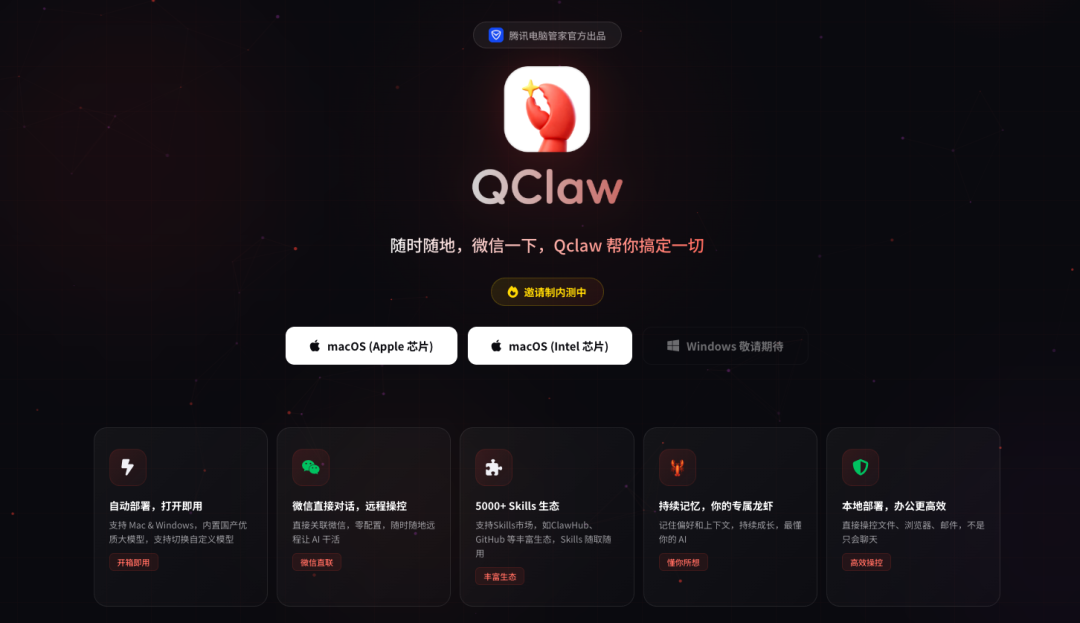
💡Viral AI agent challenges WeChat – key lessons for China AI app devs
⚡ 30-Second TL;DR
What Changed
AI '龙虾' achieves viral popularity in tech circles.
Why It Matters
Highlights intense competition in China's AI agent market. WeChat's response may accelerate social platform AI integrations. Offers insights for AI builders targeting messaging apps.
What To Do Next
Prototype a WeChat mini-app AI agent using Tencent's API to test viral potential.
Key Points
- •AI '龙虾' achieves viral popularity in tech circles.
- •WeChat reacts with urgency to this emerging AI competitor.
- •WeChat shifts from aloofness amid AI disruptions.
🧠 Deep Insight
Background and context from public sources — not the original article. 9 sources cited.
🔑 Enhanced Key Takeaways
- •OpenClaw, nicknamed 'AI Lobster' or '小龙虾', is an open-source AI agent developed by Austrian entrepreneur Peter Steinberger, capable of full device control for tasks like file management and email handling[7].
- •Tencent integrated OpenClaw into QQ, WeChat, and Enterprise WeChat via WorkBuddy on March 9, 2026, enabling zero-threshold access through chat commands without needing high-end hardware[1][5].
- •Chinese tech giants including Alibaba, Baidu, ByteDance, and Xiaomi rapidly responded with one-click deployment services and variants like ArkClaw and '手机龙虾', while OpenClaw adopted Kimi K2.5 as its official free model in early February[2][9].
🛠️ Technical Deep Dive
- •Supports integration with Telegram, Feishu, DingTalk, and QQ for mobile remote control of desktop tasks[4].
- •Features autonomous skill development by writing and encapsulating code for new tasks[4].
- •Compatible with MCP and Skills extensions; supports multi-agent parallel operations for enhanced efficiency[5].
🔮 Future ImplicationsAI analysis grounded in cited sources
⏳ Timeline
📎 Sources (9)
Factual claims are grounded in the sources below. Forward-looking analysis is AI-generated interpretation.
Weekly AI Recap
Read this week's curated digest of top AI events →
👉Related Updates


AI-curated news aggregator. All content rights belong to original publishers.
Original source: 钛媒体 ↗
This is a summary, not the original. Read the source, or get the weekly briefing.
Weekly AI briefing
One email a week. Unsubscribe anytime.