AI Labs Need Reliability, Not Flashy Demos

💡AI4S's real bottleneck is the physical loop: instrument integration, robot reliability, and production-grade acceptance.
⚡ 30-Second TL;DR
What Changed
The AI laboratory combines models that design drug or material candidates with robots that execute and validate experiments in the physical world.
Why It Matters
The article suggests that AI4S adoption will be driven by dependable physical execution and measurable return on investment, not model demos alone. This favors companies with cross-disciplinary integration, operations, compliance, and service capabilities.
What To Do Next
Run a 30-day full-load test of your lab orchestration layer and measure failure frequency, recovery time, sample damage, and manual intervention rate before scaling the deployment.
Key Points
- •The AI laboratory combines models that design drug or material candidates with robots that execute and validate experiments in the physical world.
- •Customers may expect roughly 90% demo success, then require 30 days of full-load operation with less than 5% human intervention.
- •The core engineering challenge is orchestrating dozens or hundreds of heterogeneous instruments while handling failures and maintaining traceable records.
- •Meigai's proposed '80/20 Lego' model standardizes about 80% of the system and customizes the remaining 20% for each customer.
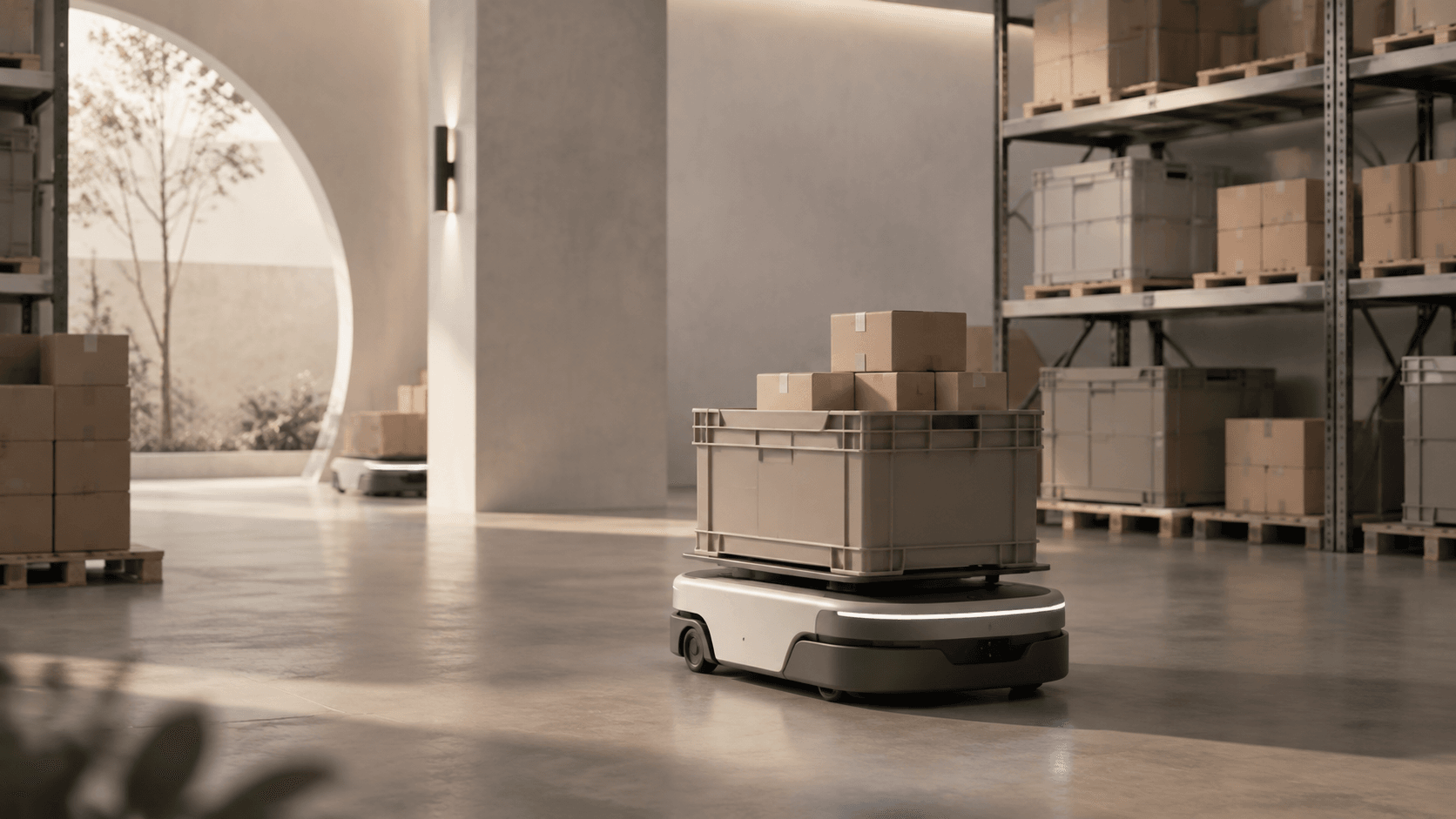
- •For current industrial laboratory settings, wheeled robots are favored over bipedal robots for stability, energy efficiency, maintenance, and cost.
Weekly AI Recap
Read this week's curated digest of top AI events →
👉Related Updates


AI-curated news aggregator. All content rights belong to original publishers.
Original source: 虎嗅 ↗
This is a summary, not the original. Read the source, or get the weekly briefing.
Weekly AI briefing
One email a week. Unsubscribe anytime.