AI is turning celebrity creation into a mass game
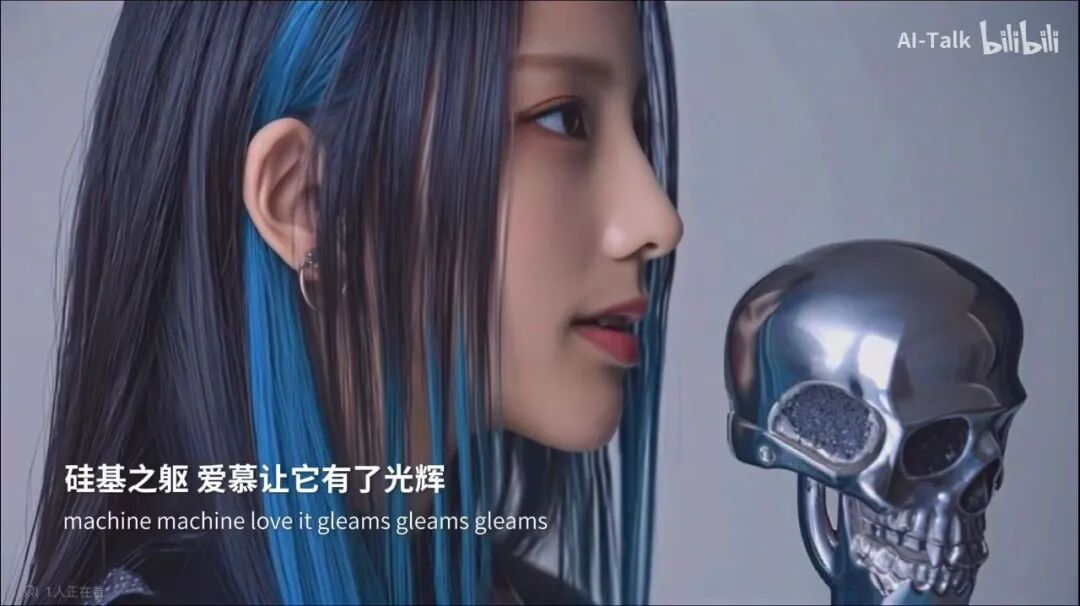
💡Learn how generative media models are disrupting the entertainment industry and creating new creator-led business models
⚡ 30-Second TL;DR
What Changed
Audio and video foundation models are enabling decentralized content creation.
Why It Matters
This shift threatens traditional talent agencies while creating new opportunities for AI developers to build specialized creative tools.
What To Do Next
Explore integrating Lip-sync and voice-cloning APIs into your creative workflows to prototype an 'AI-native' persona.
Key Points
- •Audio and video foundation models are enabling decentralized content creation.
- •AI-native entities like singers, actors, and comedians are entering the market.
- •The industry is shifting toward an asset-light, creator-driven model.
🧠 Deep Insight
AI-generated analysis for this event — not the original article.
🔑 Enhanced Key Takeaways
- •The rise of 'AI-native' celebrities is driving a shift in intellectual property law, with recent precedents establishing that AI-generated likenesses require explicit digital rights management (DRM) to prevent unauthorized deepfake exploitation.
- •Major talent agencies are increasingly adopting 'Digital Twin' clauses in contracts, allowing human artists to license their AI-generated counterparts for 24/7 content production across global markets.
- •The emergence of 'Synthetic Influencer Platforms' has reduced the cost of celebrity-grade content production by approximately 85% compared to traditional studio-based workflows.
- •Platform-level integration of real-time lip-syncing and emotional expression models allows AI celebrities to engage in live, interactive streaming, a capability that was technically infeasible as recently as 2024.
- •New monetization models, such as 'AI-as-a-Service' (AaaS) for entertainment, allow fans to pay for personalized, AI-generated interactions with celebrity personas, creating a new revenue stream independent of traditional media distribution.
🛠️ Technical Deep Dive
- Utilization of Latent Diffusion Models (LDMs) for high-fidelity video synthesis, enabling temporal consistency in long-form AI celebrity performances.
- Integration of Retrieval-Augmented Generation (RAG) architectures to ensure AI personas maintain consistent personality traits and historical memory during interactive sessions.
- Implementation of Neural Radiance Fields (NeRF) and 3D Gaussian Splatting to achieve photorealistic rendering of digital avatars in varied lighting and environmental conditions.
- Deployment of low-latency inference pipelines using specialized AI accelerators to support real-time, interactive AI celebrity streaming with sub-100ms latency.
🔮 Future ImplicationsAI analysis grounded in cited sources
⏳ Timeline
Weekly AI Recap
Read this week's curated digest of top AI events →
👉Related Updates



AI-curated news aggregator. All content rights belong to original publishers.
Original source: 钛媒体 ↗
This is a summary, not the original. Read the source, or get the weekly briefing.
The weekly digest
One email a week. Unsubscribe anytime.