AI Is Rewriting Subtitle Teams
💡AI cuts subtitle production to minutes—but context mistakes are making human review more important, not less.
⚡ 30-Second TL;DR
What Changed
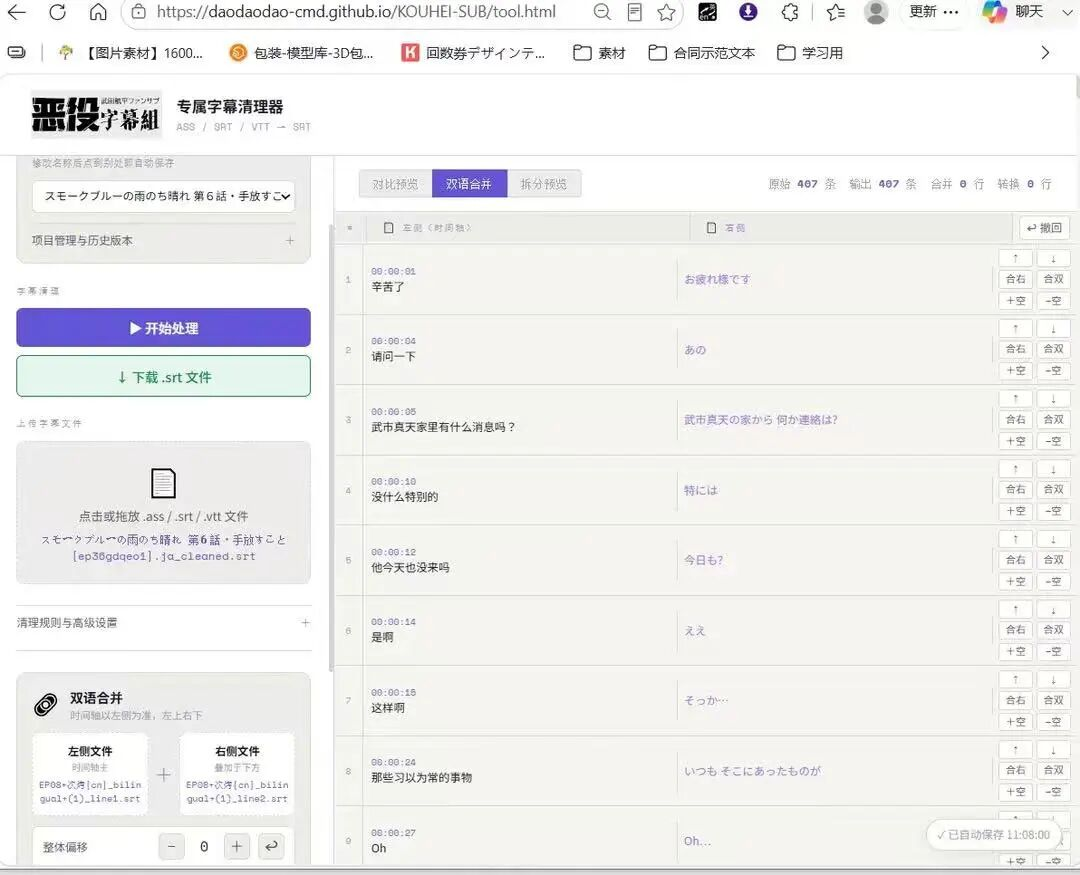
One two-person subtitle team uses multiple AI systems to generate a draft within about 30 minutes of episode release.
Why It Matters
AI is changing translation workflows from large volunteer teams to small human-in-the-loop operations. For AI product builders, the article highlights that quality depends less on raw translation speed and more on contextual understanding, consistency, and review tooling.
What To Do Next
Prototype a human-review pipeline with the OpenAI Responses API, adding scene metadata and automated checks for names, pronouns, terminology, and inconsistent character voice.
Key Points
- •One two-person subtitle team uses multiple AI systems to generate a draft within about 30 minutes of episode release.
- •Human editors still need to correct pronouns, relationships, idioms, scene context, tone, and cultural explanations.
- •AI-generated drafts can be difficult to detect because they are often mixed with human translations and may sound superficially natural.
- •Official platform subtitles and tighter copyright enforcement are shrinking the space for volunteer subtitle groups.
🧠 Deep Insight
AI-generated analysis for this event.
🔑 Enhanced Key Takeaways
- •The rise of Large Language Model (LLM) based subtitle tools has led to a 'post-editing' workflow where translators spend more time fixing hallucinations than performing original translation.
- •Copyright holders are increasingly utilizing automated fingerprinting and AI-driven takedown notices to target fan-sub groups that use AI-assisted workflows, as these tools enable faster, higher-volume distribution.
- •AI subtitle tools are increasingly integrating 'context windows' that allow users to upload glossaries or previous episode scripts to maintain character consistency, a feature previously exclusive to professional localization firms.
- •The shift toward AI-generated subtitles has created a 'quality gap' where viewers often prefer slower, human-curated subtitles over faster, AI-assisted ones due to the loss of cultural nuance and humor in machine translations.
- •Volunteer subtitle communities are experiencing a demographic shift, with younger members favoring AI-assisted speed while veteran translators are leaving the space due to the perceived degradation of linguistic quality.
🛠️ Technical Deep Dive
- Modern AI subtitle pipelines typically utilize a multi-stage architecture: ASR (Automatic Speech Recognition) models like Whisper for transcription, followed by LLMs (GPT-4o, Claude 3.5, or specialized fine-tuned models) for translation and formatting.
- Implementation often involves RAG (Retrieval-Augmented Generation) to inject character names, relationship charts, and specific terminology into the prompt to reduce pronoun and context errors.
- Many tools now employ 'timestamp alignment' algorithms that use forced alignment techniques to ensure the generated text matches the audio duration, preventing subtitle desync.
- Advanced workflows use 'Chain-of-Thought' prompting to force the model to analyze the scene context before generating the target language output, improving the handling of idioms and cultural references.
🔮 Future ImplicationsAI analysis grounded in cited sources
⏳ Timeline
Weekly AI Recap
Read this week's curated digest of top AI events →
👉Related Updates

AI-curated news aggregator. All content rights belong to original publishers.
Original source: 虎嗅 ↗