AI in film: A tool for empowerment, not replacement
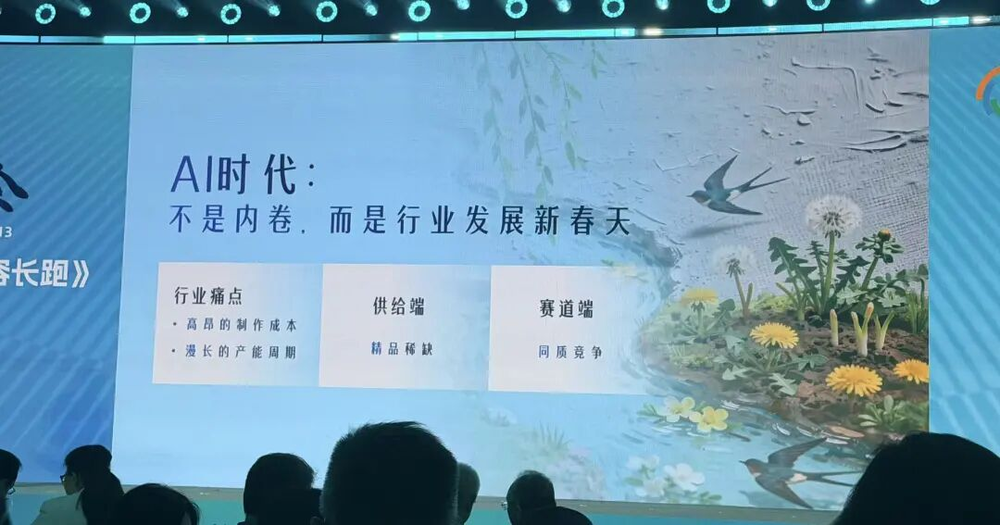
💡Learn how top film studios are standardizing AI budgets and workflows to balance efficiency with human creativity.
⚡ 30-Second TL;DR
What Changed
AI is being used to automate repetitive tasks like rotoscoping and background generation.
Why It Matters
The integration of AI into film production is standardizing as a 'co-pilot' technology, significantly reducing post-production timelines for high-budget projects.
What To Do Next
Integrate AI-driven asset generation tools into your pre-production pipeline to reduce costs for non-critical visual elements.
Key Points
- •AI is being used to automate repetitive tasks like rotoscoping and background generation.
- •Industry standard: 10-15% of production budgets are now allocated to AI-integrated workflows.
- •Human-led creative direction is essential for maintaining cultural depth and emotional resonance.
- •AI enables new interactive storytelling formats, particularly in the intersection of film and gaming.
🧠 Deep Insight
Web-grounded analysis with 30 cited sources.
🔑 Enhanced Key Takeaways
- •AI is significantly streamlining pre-production by automating script analysis into storyboards, shot lists, and pitch materials, allowing for faster visualization and experimentation before filming.
- •Beyond rotoscoping and background generation, AI is being used for automated editing, color grading consistency, dialogue fixes (ADR, lip-sync), object removal (inpainting), and advanced sound design, significantly reducing time and costs while enhancing quality in post-production.
- •The rapid adoption of AI in film raises significant ethical concerns regarding bias in training data, authenticity and originality, intellectual property rights, consent for digital likenesses (deepfakes), and potential job displacement, leading to industry strikes and calls for ethical guidelines.
- •AI tools are lowering the barrier to entry for filmmaking, enabling smaller studios and independent creators to produce professional-grade content faster and more affordably, potentially increasing the total content supply and democratizing content creation.
- •Specific AI models and platforms like Google Veo, RunwayML, Kling AI, Sora, and LTX Studio are emerging, each excelling in different aspects of film production, from high-quality video generation and cinematic lighting to full script-to-screen workflows.
🛠️ Technical Deep Dive
- Rotoscoping and Object Isolation: Utilizes machine learning (ML) and advanced neural networks to automate the process of generating matte images or masks, isolating individual objects in video footage. Specific tools like DaVinci Neural Engine (Magic Mask) and Meta's SAM 2 (Mask Prompter) are employed.
- Generative AI for Visuals: Employs generative AI models to render cinematic frames, character designs, set concepts, and entire video clips from text prompts or existing images.
- Large Language Models (LLMs): Used for scriptwriting, brainstorming story ideas, generating outlines, and assisting with story development.
- 3D Model Generation: Neural Radiance Fields (NeRFs) enable the creation of detailed 3D models from 2D images, rendering realistic lighting and intricate details for visual effects.
- Camera Stabilization: AI-assisted camera stabilization systems are used in real-time cinematography to execute smooth transitions and enhance visual impact.
- Object Removal and Inpainting: AI inpainting tools can remove unwanted details across moving footage, automatically preserving perspective, texture, and continuity, even handling occlusions and motion blur.
- Sound Design and Audio Enhancement: Neural models are capable of separating audio stems, recreating missing ambience, and synthesizing Foley that blends seamlessly with recorded environments.
- Pre-production Optimization: Predictive algorithms are used for streamlining scheduling, optimizing budgets, and flagging potential delays by analyzing scripts and production plans.
🔮 Future ImplicationsAI analysis grounded in cited sources
⏳ Timeline
📎 Sources (30)
Factual claims are grounded in the sources below. Forward-looking analysis is AI-generated interpretation.
- Google Search Source
- Google Search Source
- Google Search Source
- Google Search Source
- Google Search Source
- Google Search Source
- Google Search Source
- Google Search Source
- Google Search Source
- Google Search Source
- Google Search Source
- Google Search Source
- Google Search Source
- Google Search Source
- Google Search Source
- Google Search Source
- Google Search Source
- Google Search Source
- Google Search Source
- Google Search Source
- Google Search Source
- Google Search Source
- Google Search Source
- Google Search Source
- Google Search Source
- Google Search Source
- Google Search Source
- Google Search Source
- Google Search Source
- Google Search Source
Weekly AI Recap
Read this week's curated digest of top AI events →
👉Related Updates
AI-curated news aggregator. All content rights belong to original publishers.
Original source: 虎嗅 ↗