AI Idols Enter the Spotlight
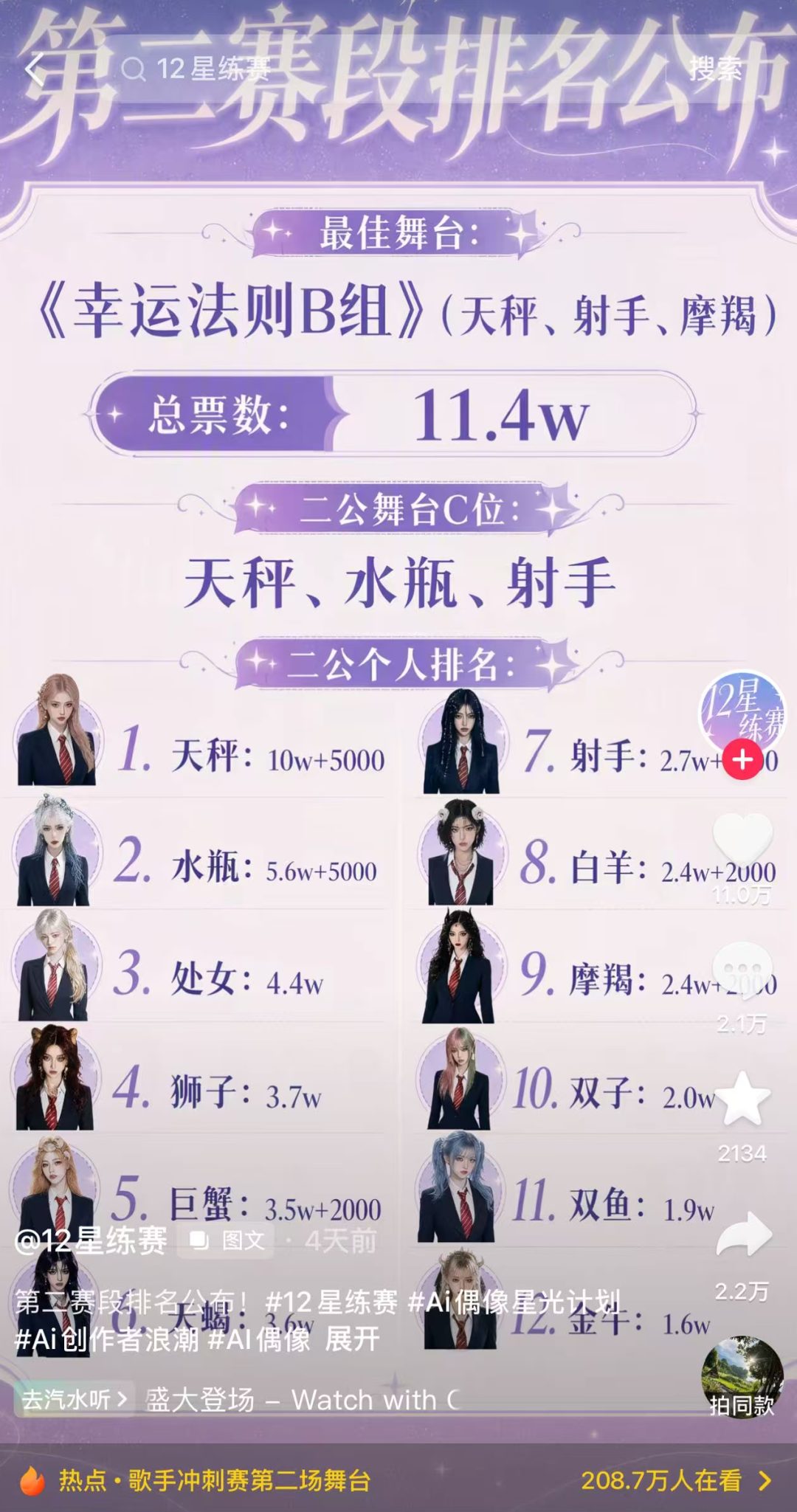
See how generative AI is turning talent competitions into scalable virtual entertainment.
30-Second TL;DR
What Changed
The competition selected 9 finalists from 108 AI contestants.
Why It Matters
AI-generated idols could lower the cost of producing recurring entertainment characters while enabling rapid experimentation with personas and visual styles. However, creators will need to consider audience authenticity, rights ownership, and disclosure of synthetic performers.
What To Do Next
Prototype one virtual performer with an image, voice, and motion pipeline, and document consent, licensing, and synthetic-content disclosure requirements before publishing.
Key Points
- •The competition selected 9 finalists from 108 AI contestants.
- •The female idols are AI-generated rather than human performers.
- •The format combines generative AI with talent-show mechanics and virtual entertainment.
Deep Insight
AI-generated analysis for this event — not the original article.
Enhanced Key Takeaways
- •The competition is part of a broader trend in China's digital economy where 'AI-native' celebrities are being leveraged to bypass the high costs and management risks associated with human talent agencies.
- •These AI idols utilize real-time motion capture and low-latency LLM integration, allowing them to interact with live audiences during broadcasts rather than relying solely on pre-rendered content.
- •The 108 initial contestants were evaluated using a multi-dimensional scoring system that includes 'fan engagement potential,' 'aesthetic consistency,' and 'conversational intelligence' metrics.
- •Major Chinese tech platforms are increasingly integrating these AI idols into e-commerce live-streaming, where they function as 24/7 sales agents capable of personalized product recommendations.
- •Regulatory bodies in China have begun drafting guidelines specifically for 'Virtual Digital Humans,' requiring clear disclosure of AI identity to prevent consumer deception in entertainment and commercial contexts.
Competitor Analysis
- AI Idol Competition (TMT)
- Generative AI/LLM-driven
- A-SOUL (ByteDance)
- Motion-capture/Human-backed
- Miquela (Brud)
- CGI/Influencer-led
- AI Idol Competition (TMT)
- High (Real-time LLM)
- A-SOUL (ByteDance)
- Medium (Scripted/Live)
- Miquela (Brud)
- Low (Curated content)
- AI Idol Competition (TMT)
- Talent Show/Entertainment
- A-SOUL (ByteDance)
- Idol Group/Music
- Miquela (Brud)
- Fashion/Brand Marketing
- AI Idol Competition (TMT)
- High (Automated)
- A-SOUL (ByteDance)
- Low (Human-dependent)
- Miquela (Brud)
- Low (Human-dependent)
| Feature | AI Idol Competition (TMT) | A-SOUL (ByteDance) | Miquela (Brud) |
|---|---|---|---|
| Core Model | Generative AI/LLM-driven | Motion-capture/Human-backed | CGI/Influencer-led |
| Interactivity | High (Real-time LLM) | Medium (Scripted/Live) | Low (Curated content) |
| Primary Market | Talent Show/Entertainment | Idol Group/Music | Fashion/Brand Marketing |
| Scalability | High (Automated) | Low (Human-dependent) | Low (Human-dependent) |
Technical Deep Dive
- Architecture: Employs a hybrid pipeline combining Large Language Models (LLMs) for personality and dialogue generation with Text-to-Speech (TTS) engines for emotional vocal synthesis.
- Visual Rendering: Utilizes Unreal Engine 5 for real-time photorealistic rendering, integrated with NVIDIA Omniverse for high-fidelity lighting and texture mapping.
- Motion Synthesis: Implements AI-driven skeletal animation that maps facial expressions and body language from audio input, reducing the need for manual keyframe animation.
- Latency Optimization: Uses edge computing nodes to maintain sub-200ms response times during live interactions, ensuring seamless conversation flow.
Future ImplicationsAI analysis grounded in cited sources
Timeline
- 2023-05Initial surge in virtual influencer adoption across Chinese social media platforms.
- 2024-11Introduction of advanced real-time LLM integration for virtual avatars in live-streaming.
- 2026-06Launch of the AI idol competition selection process with 108 initial entries.
- 2026-08Final selection of the 9 AI idol finalists for the spotlight showcase.
Weekly AI Recap
Read this week's curated digest of top AI events →
AI-curated news aggregator. All content rights belong to original publishers.
Original source: 钛媒体 ↗
This is a summary, not the original. Read the source, or get the weekly briefing.
The weekly digest
One email a week. Unsubscribe anytime.