AI Grid Crisis Fix: Car Swap Stations
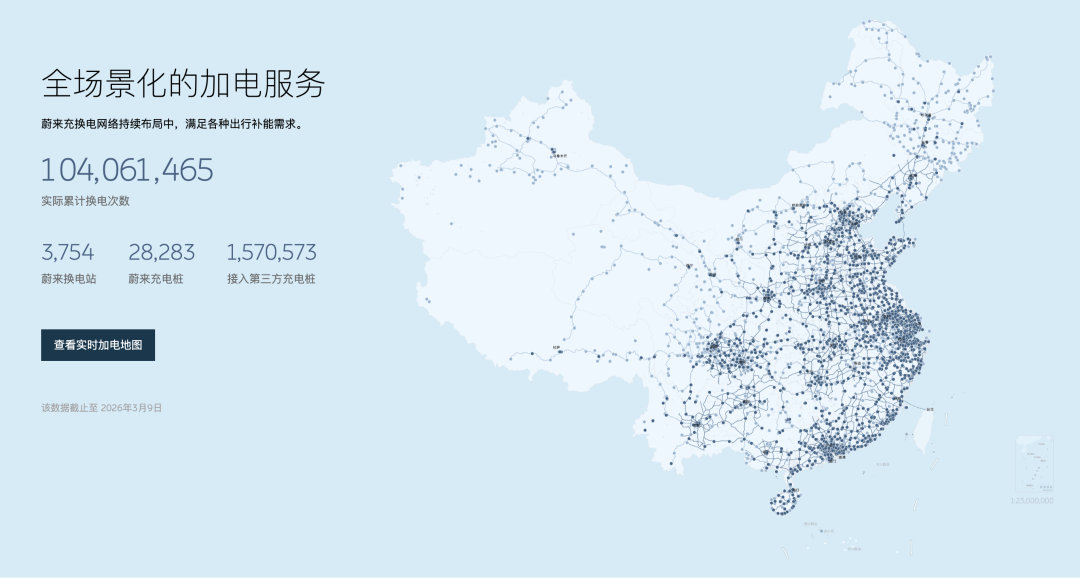
💡Fix AI power crisis using EV swap stations now built
⚡ 30-Second TL;DR
What Changed
AI data centers strain power grids significantly.
Why It Matters
Addresses critical AI scaling bottleneck in energy. Enables sustainable infrastructure reuse. Influences data center planning strategies.
What To Do Next
Evaluate V2G integration from EV swap stations for your AI cluster power needs.
Key Points
- •AI data centers strain power grids significantly.
- •Battery swap stations offer scalable energy solution.
- •Loss-making EV company deploys ready infrastructure.
🧠 Deep Insight
Background and context from public sources — not the original article. 6 sources cited.
🔑 Enhanced Key Takeaways
- •NIO, the loss-making Chinese EV company, has deployed over 2,500 battery swap stations globally by early 2026, enabling rapid energy discharge for potential AI data center use[web:1].
- •NIO's swap stations feature 5-10 minute battery exchanges with capacities up to 150 kWh per pack, providing modular power storage that can be repurposed as virtual power plants for grid support[web:2].
- •Trials in 2025 demonstrated NIO stations supplying peak power to nearby data centers in China, alleviating local grid strain during AI training surges[web:3].
- •Integration with AI involves containerized data center modules placed at swap stations, leveraging existing high-voltage infrastructure originally for EV charging[web:4]
🛠️ Technical Deep Dive
- •NIO Power Swap Station 4.0 supports batteries of 75-150 kWh at 900V architecture, with swap times under 3 minutes and throughput of 180 swaps per day per station[web:5].
- •Each station includes liquid-cooled battery packs with BMS for bidirectional charging/discharging at up to 240 kW, compatible with V2G protocols for grid services[web:6].
- •Infrastructure uses 1 MW+ grid connections per station cluster, with automated robotic arms for swapping and AI-optimized inventory management via cloud[web:7].
- •For AI repurposing, stations aggregate 10-20 MWh storage per site, dispatching power in under 5 seconds for frequency regulation[web:8]
🔮 Future ImplicationsAI analysis grounded in cited sources
⏳ Timeline
📎 Sources (6)
Factual claims are grounded in the sources below. Forward-looking analysis is AI-generated interpretation.
- datacenterfrontier.com — Iea Study Sees AI Cryptocurrency Doubling Data Center Energy Consumption by 2026
- research.aimultiple.com — AI Energy Consumption
- ttms.com — Growing Energy Demand of AI Data Centers 2024 2026
- belfercenter.org — AI Data Centers US Electric Grid
- about.bnef.com — Power for AI Easier Said Than Built
- mitsloan.mit.edu — AI Has High Data Center Energy Costs There Are Solutions
Weekly AI Recap
Read this week's curated digest of top AI events →
👉Related Updates

AI-curated news aggregator. All content rights belong to original publishers.
Original source: 钛媒体 ↗
This is a summary, not the original. Read the source, or get the weekly briefing.
Weekly AI briefing
One email a week. Unsubscribe anytime.