AI Glasses Empower Blind Woman's Independent Travel
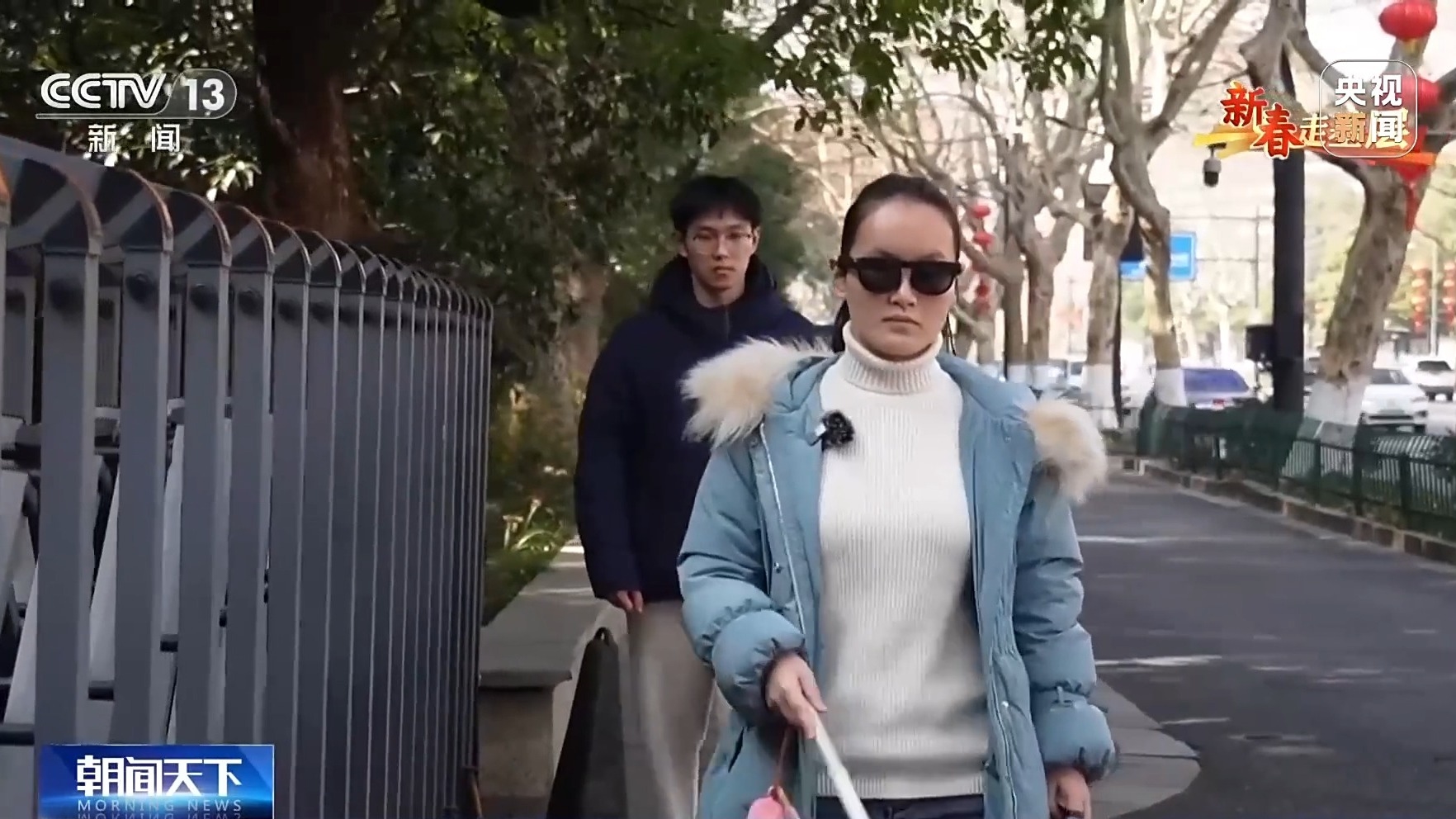
💡300ms AI obstacle avoidance breakthrough enables blind independence—key for embodied CV devs
⚡ 30-Second TL;DR
What Changed
Obstacle avoidance reaction time optimized from 500ms to 300ms
Why It Matters
Advances AI accessibility for visually impaired, demonstrating real-world embodied AI applications. Could inspire similar low-latency CV solutions in wearables.
What To Do Next
Prototype low-latency obstacle detection using YOLO models for wearable AI devices.
Key Points
- •Obstacle avoidance reaction time optimized from 500ms to 300ms
- •Enables 20-year blind user Cai Qionghui to travel independently
- •国产 Tongxing Technology completes key AI tech development
- •Supports precise tasks like assembling 8800 piano parts
🧠 Deep Insight
Background and context from public sources — not the original article. 5 sources cited.
🔑 Enhanced Key Takeaways
- •Tongxing Technology's AI glasses integrate Alibaba's Tongyi Qianwen (Qwen) VL and OCR models for real-time environmental analysis and text recognition[1][2].
- •The glasses feature a 121-degree ultra-wide-angle dual camera system and include a smartphone, remote control ring, and blind cane as a complete kit[1][2].
- •Priced under 3000 yuan (approximately $420 USD), the glasses are set for official sales in Q1 2026, targeting China's 17 million visually impaired population[1][2].
🛠️ Technical Deep Dive
- •Equipped with 121-degree ultra-wide-angle dual cameras for capturing environmental data.
- •Integrates Tongyi Qianwen Qwen VL multimodal model for visual analysis and OCR series for text recognition.
- •Optimizes model strategies by scenario: 300ms low-latency for mobile obstacle avoidance (summarizing key obstacles like signs and vehicles); detailed mode for reading menus or store searches.
- •Uses base model reuse and fine-tuning to reduce R&D costs by 70% and computing power to one-tenth previous levels[1][2].
🔮 Future ImplicationsAI analysis grounded in cited sources
⏳ Timeline
📎 Sources (5)
Factual claims are grounded in the sources below. Forward-looking analysis is AI-generated interpretation.
- news.aibase.com — 23326
- itenspace.com — The First AI Assisted Blind Glasses in China Released 300ms Ultra Low Latency Access to Tongyi Qianwen
- sustainability-times.com — China Unveils AI Eyes for the Blind Stunning Tech Breakthrough Lets Visually Impaired Walk Freely Without Human Help for the First Time
- youtube.com — Watch
- lhpb.org — How AI Powered Smart Glasses Are Empowering the Blind and Low Vision Community
📰 Event Coverage
Weekly AI Recap
Read this week's curated digest of top AI events →
👉Related Updates



AI-curated news aggregator. All content rights belong to original publishers.
Original source: cnBeta (Full RSS) ↗
This is a summary, not the original. Read the source, or get the weekly briefing.
Weekly AI briefing
One email a week. Unsubscribe anytime.