AI for Science Enters Its Self-Improving Era
💡The next AI frontier may be autonomous hypothesis generation and validation—not just better chat or code.
⚡ 30-Second TL;DR
What Changed
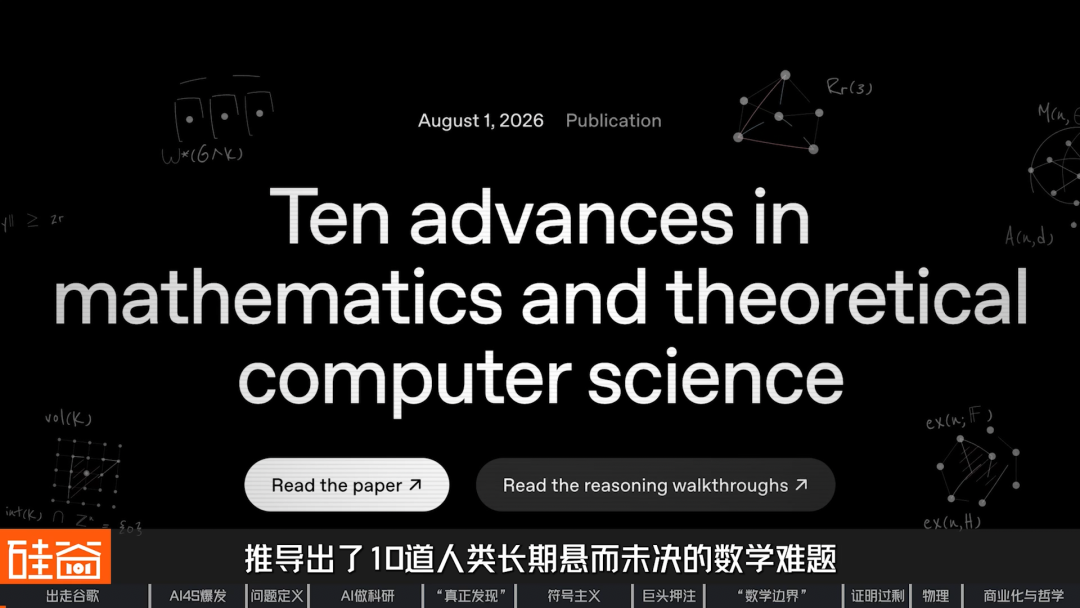
Jeff Dean and other Google veterans launched Discovery Loop to pursue autonomous knowledge discovery and scientific research.
Why It Matters
If recursive research loops become reliable, AI could shorten experimentation cycles and expand the scale of scientific R&D. However, the near-term bottleneck is not just model intelligence: evaluation, experimental validation, domain tooling, and human oversight remain essential.
What To Do Next
Prototype a closed-loop research agent that uses a foundation model to generate hypotheses, calls a domain simulator for validation, and logs results for iterative evaluation.
Key Points
- •Jeff Dean and other Google veterans launched Discovery Loop to pursue autonomous knowledge discovery and scientific research.
- •AI for Science startups are increasingly focused on extending mathematical reasoning and coding into biology, materials, physics, and other fields.
- •A capable scientific system must propose new hypotheses, validate them experimentally or computationally, and continuously update itself.
- •Cao Yuan says Google still has the full-stack capabilities required for AI, but internal priorities and resource allocation may be limiting progress.
🧠 Deep Insight
AI-generated analysis for this event.
🔑 Enhanced Key Takeaways
- •Discovery Loop, founded by Jeff Dean and other former Google DeepMind researchers, secured significant seed funding in 2025 to build 'autonomous research agents' capable of navigating the entire scientific discovery lifecycle.
- •The 'AI for Science' paradigm shift is increasingly leveraging 'Neuro-symbolic AI,' which combines the pattern recognition of deep learning with the rigorous logical constraints of symbolic mathematics to reduce hallucinations in scientific outputs.
- •Cao Yuan's departure from Google DeepMind reflects a broader industry trend where top-tier researchers are moving to specialized startups to bypass the 'product-first' constraints of Big Tech, which often prioritize consumer applications over fundamental scientific research.
- •Current AI for Science frameworks are shifting from 'predictive models' (like AlphaFold) to 'generative research agents' that utilize active learning loops to decide which experiments to perform next to maximize information gain.
- •The integration of automated laboratory hardware (self-driving labs) with AI software is becoming the critical bottleneck, as digital hypothesis generation currently outpaces the physical speed of experimental validation.
📊 Competitor Analysis▸ Show
| Feature | Discovery Loop | Sakana AI | SandboxAQ |
|---|---|---|---|
| Primary Focus | Autonomous Scientific Discovery | Nature-Inspired Intelligence | Quantum & AI Simulation |
| Architecture | Closed-loop Agentic | Evolutionary/Swarm | Hybrid Quantum-Classical |
| Target Domain | General Science | Material/Biology | Enterprise/Security |
🛠️ Technical Deep Dive
- Architecture: Utilizes multi-agent systems where 'Planner' agents decompose scientific problems into sub-tasks, 'Executor' agents run simulations or code, and 'Verifier' agents check results against physical laws.
- Reasoning: Employs Chain-of-Thought (CoT) prompting combined with formal verification tools (e.g., Lean or Isabelle) to ensure mathematical proofs generated by the model are logically sound.
- Data Integration: Systems are designed to ingest multi-modal scientific data, including unstructured PDF literature, raw experimental sensor data, and structured chemical/biological databases.
- Feedback Loop: Implements Bayesian Optimization to select the next set of parameters for experiments, minimizing the number of iterations required to reach a scientific conclusion.
🔮 Future ImplicationsAI analysis grounded in cited sources
⏳ Timeline
Weekly AI Recap
Read this week's curated digest of top AI events →
👉Related Updates

AI-curated news aggregator. All content rights belong to original publishers.
Original source: 虎嗅 ↗