AI Filmmaking Turns Family History into Visual Poetry
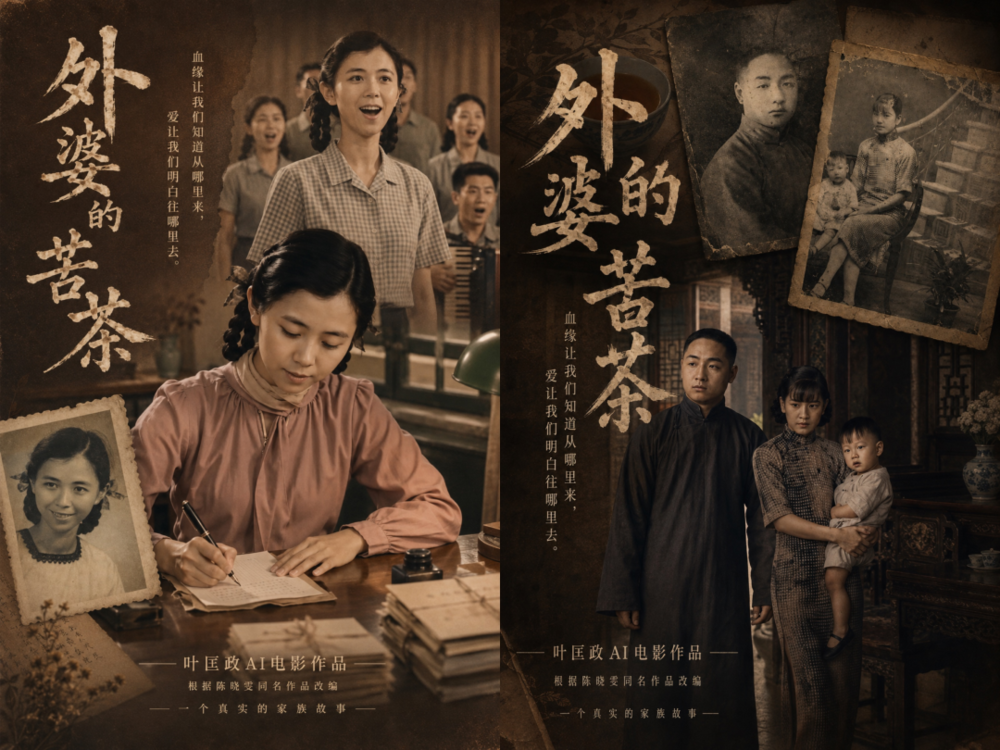
💡Learn how one creator compresses a century of family history into AI-generated three-minute films.
⚡ 30-Second TL;DR
What Changed
The creator treats AI filmmaking as a distinct medium rather than a cheaper version of conventional cinema.
Why It Matters
The project suggests that generative video can enable highly individual, low-budget filmmaking while introducing new narrative grammar based on compression, juxtaposition, and memory. For creators, artistic selection and editing remain more important than raw generation volume.
What To Do Next
Prototype a six-shot sequence in Kling’s image-to-video workflow, using one archival image, one motion prompt, and one emotional beat per shot.
Key Points
- •The creator treats AI filmmaking as a distinct medium rather than a cheaper version of conventional cinema.
- •The film adapts a nonfiction family history from archival photographs and real-life details.
- •Each three-minute episode uses roughly 15 shots, with 12 seconds per shot as a structural constraint.
- •The workflow relies on storyboards, prompts, reference images, video generation, selection, and editing.
- •The central creative challenge is deciding which emotionally meaningful moments deserve to be shown.
Weekly AI Recap
Read this week's curated digest of top AI events →
👉Related Updates


AI-curated news aggregator. All content rights belong to original publishers.
Original source: 虎嗅 ↗
This is a summary, not the original. Read the source, or get the weekly briefing.
Weekly AI briefing
One email a week. Unsubscribe anytime.