AI Fails to Predict World Cup Outcomes
💡Learn why LLMs struggle with real-world prediction and how to improve your own model's reliability.
⚡ 30-Second TL;DR
What Changed
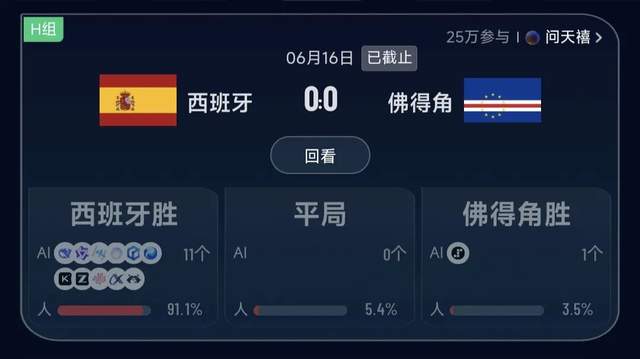
AI models underperformed in predicting unpredictable sports events
Why It Matters
This highlights the need for better uncertainty quantification and real-time data integration in predictive AI systems.
What To Do Next
Implement confidence scoring in your prediction pipelines to flag low-certainty outputs.
Key Points
- •AI models underperformed in predicting unpredictable sports events
- •High-entropy scenarios remain a challenge for current LLMs
- •Limitations of training data in capturing real-time, chaotic variables
🧠 Deep Insight
AI-generated analysis for this event — not the original article.
🔑 Enhanced Key Takeaways
- •Research indicates that LLMs suffer from 'stochastic parroting' in sports forecasting, where models prioritize historical statistical averages over the dynamic, non-linear variables of live match conditions.
- •The failure is partially attributed to the 'Black Swan' nature of sports, where individual player psychology, sudden injuries, and referee decisions create data points that are not present in pre-training corpora.
- •Current AI architectures lack a real-time feedback loop mechanism to adjust probability weightings during the 'entropy spikes' that occur during high-stakes tournament matches.
- •Studies comparing LLM performance against traditional Elo rating systems show that while LLMs excel at summarizing past performance, they consistently underperform in predictive accuracy for knockout-stage matches.
- •The inability to process 'tacit knowledge'—such as team morale or tactical shifts not documented in structured datasets—remains a primary bottleneck for AI-driven sports analytics.
🛠️ Technical Deep Dive
- LLMs rely on static transformer architectures that process tokenized historical data, lacking the temporal-spatial awareness required for real-time sports dynamics.
- The models utilize probabilistic next-token prediction, which inherently favors the most likely historical outcome rather than accounting for the high-variance 'chaos' inherent in competitive sports.
- Lack of integration with live telemetry or low-latency sensor data prevents models from updating their internal state in response to match-specific events.
- Training data bias: Models are heavily weighted toward aggregate historical win/loss records, which fail to capture the conditional dependencies of a specific tournament's bracket structure.
🔮 Future ImplicationsAI analysis grounded in cited sources
Weekly AI Recap
Read this week's curated digest of top AI events →
👉Related Updates

AI-curated news aggregator. All content rights belong to original publishers.
Original source: 钛媒体 ↗
This is a summary, not the original. Read the source, or get the weekly briefing.
Weekly AI briefing
One email a week. Unsubscribe anytime.