AI-Driven ERP for Industrial Manufacturing Automation
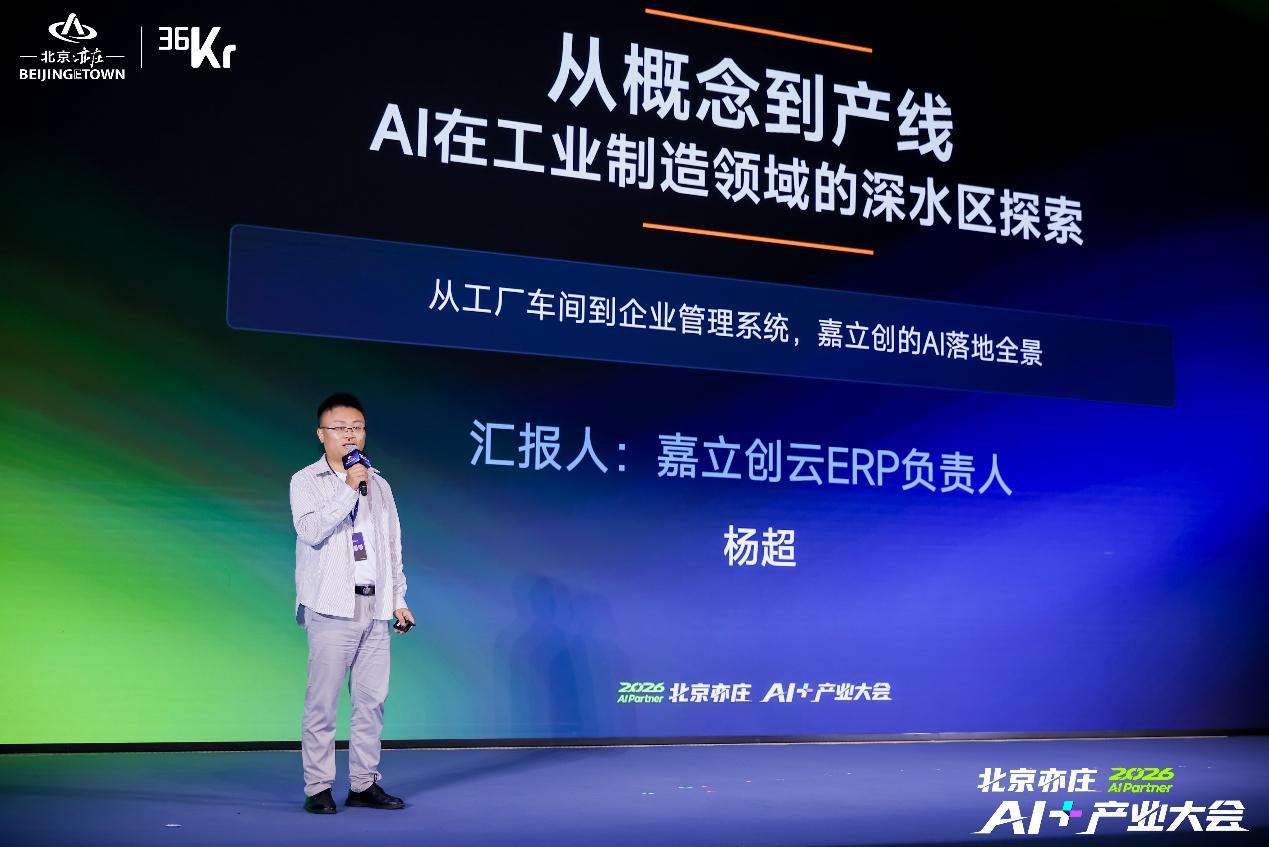
Learn how to transform industrial ERPs into AI-native productivity engines to scale manufacturing efficiency.
30-Second TL;DR
What Changed
AI-driven automation for design, production, and supply chain management.
Why It Matters
This integration demonstrates how AI can move beyond auxiliary tools to become the core engine of industrial productivity, providing a scalable model for manufacturing digital transformation.
What To Do Next
Evaluate your manufacturing workflow to identify high-frequency manual tasks suitable for AI vision or predictive maintenance integration.
Key Points
- •AI-driven automation for design, production, and supply chain management.
- •Achieved 80% efficiency improvement in AOI defect detection.
- •Provides tiered ERP solutions for SMEs and large-scale enterprises.
- •Focuses on 'World-Action' integration to move from 'people waiting for goods' to 'goods waiting for people'.
Deep Insight
Background and context from public sources — not the original article. 23 sources cited.
Enhanced Key Takeaways
- •Jia Li Chuang (JLCPCB) originated in 2006 as a PCB prototyping specialist and has since expanded into a comprehensive electronics and mechanical manufacturing ecosystem, including design software (EasyEDA), component sourcing (LCSC), 3D printing, and CNC machining.
- •嘉立创云ERP is specifically designed for the electronics industry, leveraging the parent company's nearly two decades of operational experience to address common pain points for small and medium-sized enterprises (SMEs).
- •The platform offers mobile accessibility via a mini-program, enabling real-time inventory management through QR code scanning, mobile work reporting, and remote order tracking, enhancing operational flexibility beyond traditional desktop ERP systems.
- •Beyond defect detection, AI-powered Automated Optical Inspection (AOI) systems, which the ERP integrates with, can achieve high accuracy (98-99% defect detection, under 1% false positives) by utilizing deep learning models to distinguish between actual defects and acceptable variations, significantly reducing manual re-inspection efforts.
Technical Deep Dive
- AI-driven automation is applied across design, production, and supply chain management.
- AI-powered AOI systems utilize deep learning models trained on extensive production samples to differentiate between real defects and acceptable variations, aiming for high accuracy and reduced false positives.
- Some AI-powered AOI solutions leverage technologies like NVIDIA Metropolis for Factories and NVIDIA Certified System (NCS) AI computing platforms.
- The ERP's 'AI empowerment' features include automatic workflow, intelligent decision support, and AI-assisted data entry and file recognition.
- It integrates with popular Chinese enterprise communication platforms like DingTalk and WeChat for notifications and aims to enable one-click ordering for components and PCBs within its ecosystem.
- The system supports advanced manufacturing functions such as Material Requirements Planning (MRP) calculations, intelligent production scheduling, and process route planning.
- The parent company, 嘉立创, also develops a suite of industrial software including EDA (Electronic Design Automation), CAM (Computer-Aided Manufacturing), DFM (Design for Manufacturability), Ican toolbox, ECAD, and 3D viewers.
Future ImplicationsAI analysis grounded in cited sources
Timeline
- 2006-11嘉立创 (Jia Li Chuang) founded in Shenzhen, specializing in PCB prototyping.
- 2011-00LCSC (立创商城) established, becoming an important entry point for electronic components.
- 2013-00EasyEDA, a free online EDA tool, launched, integrating with JLCPCB's manufacturing capabilities.
- 2021-00嘉立创, Zhongxinhua, and Lichuang completed strategic integration, forming Jia Li Chuang Group.
- 2025-06嘉立创ECAD, Cloud ERP, and other industrial software products successively released.
- 2025-11嘉立创云ERP officially released, offering mobile app and free trial for 'seed users'.
Sources (23)
Factual claims are grounded in the sources below. Forward-looking analysis is AI-generated interpretation.
Weekly AI Recap
Read this week's curated digest of top AI events →
AI-curated news aggregator. All content rights belong to original publishers.
Original source: 36氪 ↗
This is a summary, not the original. Read the source, or get the weekly briefing.
The weekly digest
One email a week. Unsubscribe anytime.