🐯虎嗅•Freshcollected in 4m
AI Can Solve More Math, But Not Invent It
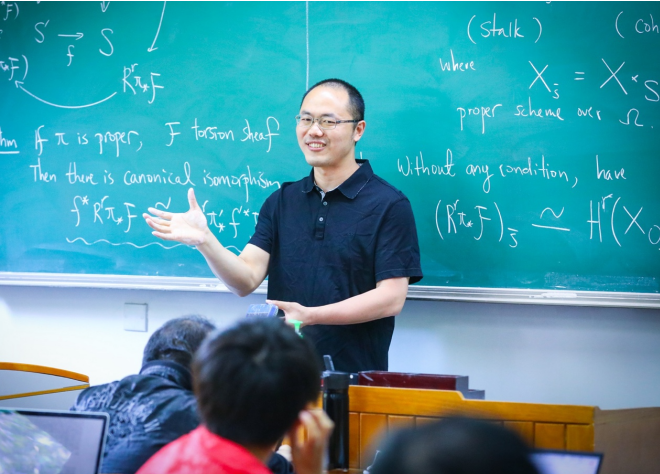
💡AI已能跨領域解題和尋找反例,但數學家仍認為它尚未真正提出新問題。
⚡ 30-Second TL;DR
What Changed
AI善於跨數學分支整合既有方法,能力可超越單一人類數學家的知識範圍。
Why It Matters
AI數學工具短期內更可能充當研究助理,用於文獻整合、猜想探索及反例搜尋,而不是取代數學家的問題提出能力。對AI研究團隊而言,如何評估原創性與避免重組既有知識,將成為重要課題。
What To Do Next
在數學推理系統中加入文獻檢索、形式化驗證與新穎性評估模組,分別檢查答案是否正確及是否只是重組既有結果。
Who should care:Researchers & Academics
Key Points
- •AI善於跨數學分支整合既有方法,能力可超越單一人類數學家的知識範圍。
- •AI憑藉大量算力與試錯能力,在構造數學例子和反例方面具備明顯優勢。
- •目前AI仍缺乏真正原創、能推動數學領域前進的重要成果。
- •中國數學人才培養體系已經歷二十多年累積,國際競爭力持續提升。
- •青年教師面臨多輪考核、論文與項目指標,現行非升即走制度在部分高校被過度淘汰化。
🧠 Deep Insight
AI-generated analysis for this event.
🔑 Enhanced Key Takeaways
- •Yuan Xinyi's critique aligns with the broader 'AI for Math' discourse, specifically referencing the limitations of Large Language Models (LLMs) in performing formal logical reasoning required for proofs, as opposed to pattern matching.
- •The 'quantified research assessment' pressure mentioned is part of a systemic reform debate in China, where institutions are increasingly pressured to balance 'publish or perish' metrics with the long-term nature of fundamental mathematical research.
- •Recent advancements in AI-assisted mathematics, such as DeepMind's AlphaProof and AlphaGeometry, have demonstrated the ability to solve International Mathematical Olympiad (IMO) level problems, yet these systems rely on formal languages (Lean/Isabelle) rather than natural language intuition.
- •The distinction between 'combinatorial search' (where AI excels) and 'conceptual innovation' (where AI currently fails) is a recurring theme in recent Fields Medalist commentary regarding the automation of mathematical discovery.
- •China's mathematical talent pipeline has shifted focus toward 'Top-tier Base Programs' (拔尖計劃), which aim to identify and nurture mathematical talent earlier, though these programs are now facing scrutiny regarding their long-term output of original research versus academic credentialing.
🛠️ Technical Deep Dive
- AI mathematical reasoning models currently utilize neuro-symbolic architectures, combining LLMs for heuristic search with formal theorem provers like Lean to ensure logical correctness.
- The 'construction of examples' mentioned relies on high-dimensional search spaces where AI models utilize reinforcement learning to navigate potential counterexamples that are computationally expensive for humans to verify.
- Current limitations in 'inventing' mathematics stem from the lack of a 'world model' for abstract mathematical objects, meaning AI cannot yet perform the conceptual abstraction required to define new axioms or structures.
🔮 Future ImplicationsAI analysis grounded in cited sources
Formal verification will become a mandatory component of AI-generated mathematical research.
As AI models produce increasingly complex proofs, the necessity for machine-checked formal verification will grow to prevent 'hallucinated' mathematical logic.
Chinese academic institutions will pivot away from quantitative metrics for basic science researchers.
The growing consensus on the failure of 'publish or perish' to produce breakthrough mathematics is forcing a policy shift toward long-term, qualitative evaluation cycles.
⏳ Timeline
2018-06
Yuan Xinyi joins the Institute for Advanced Study at Princeton as a member, marking a significant phase in his international research career.
2020-09
Yuan Xinyi returns to China to join the Beijing International Center for Mathematical Research (BICMR) at Peking University.
2024-07
DeepMind's AlphaProof and AlphaGeometry achieve silver-medal standard at the IMO, sparking intense debate on the role of AI in professional mathematics.
2025-03
Chinese Ministry of Education releases new guidelines aimed at reducing the administrative and quantitative burden on young researchers in basic sciences.
📰
Weekly AI Recap
Read this week's curated digest of top AI events →
👉Related Updates
AI-curated news aggregator. All content rights belong to original publishers.
Original source: 虎嗅 ↗