AI Browsers Face a Narrower Path
OpenAI's Atlas exit raises a hard question: what can still make an AI browser defensible?
30-Second TL;DR
What Changed
OpenAI's Atlas is described as having withdrawn from the AI browser effort.
Why It Matters
OpenAI's reported withdrawal could affect market expectations for AI-native browsers and browser agents. Builders should be cautious about assuming that adding an LLM to browsing is enough to create a durable product moat.
What To Do Next
Build a small Playwright-based browser-agent prototype and benchmark task completion, latency, and failure recovery before committing to a full AI browser product.
Key Points
- •OpenAI's Atlas is described as having withdrawn from the AI browser effort.
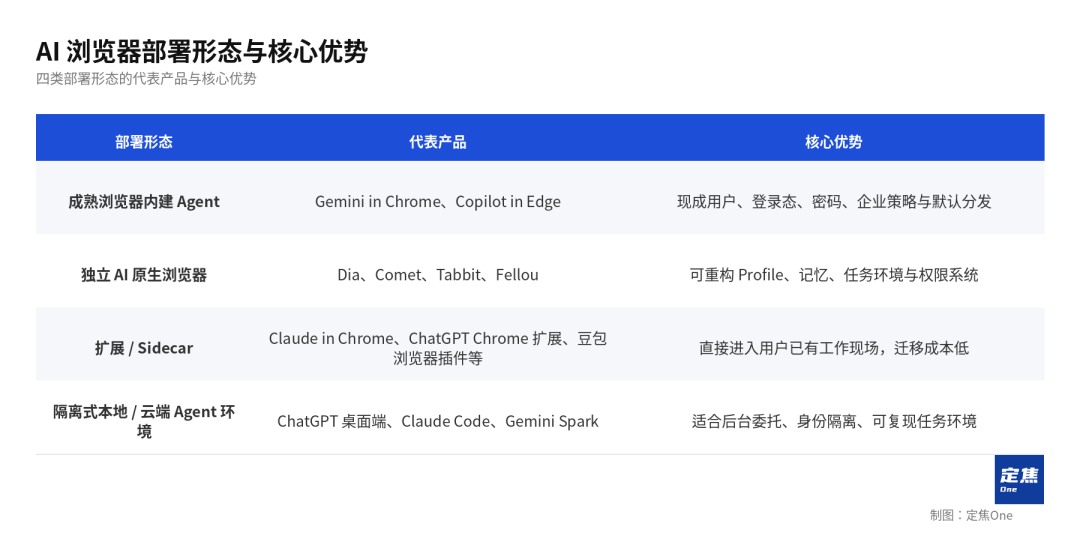
- •Tabbit and similar products are continuing to develop the category.
- •The market is framed as having limited room for viable differentiation.
Deep Insight
AI-generated analysis for this event — not the original article.
Enhanced Key Takeaways
- •The 'AI browser' category is increasingly being subsumed by OS-level integration, where major players like Microsoft (Copilot) and Apple (Apple Intelligence) embed agentic capabilities directly into the system shell rather than the browser.
- •Tabbit's differentiation strategy focuses on 'context-aware session management,' utilizing local vector databases to index user browsing history for offline retrieval, a departure from cloud-heavy AI models.
- •OpenAI's pivot away from a standalone browser project is reportedly driven by a strategic shift toward 'Agentic Workflows' that operate across applications rather than being confined to the DOM (Document Object Model) of a web browser.
- •Industry data indicates that user retention for dedicated AI browsers drops significantly after 30 days, as users prefer the familiarity of Chrome or Safari with AI extensions over standalone, proprietary browsers.
- •The technical barrier for AI browsers has shifted from simple LLM integration to 'browser automation agents' that require low-latency inference to perform multi-step tasks like form filling and authentication without breaking.
Competitor Analysis
- Tabbit
- Local Context/Memory
- Microsoft Edge (Copilot)
- System-wide Integration
- Arc (The Browser Company)
- UI/UX & Tab Management
- Tabbit
- Freemium/Subscription
- Microsoft Edge (Copilot)
- Free (Ad-supported)
- Arc (The Browser Company)
- Free (Pro features paid)
- Tabbit
- Hybrid (Local/Cloud)
- Microsoft Edge (Copilot)
- Cloud-based
- Arc (The Browser Company)
- Cloud-based
| Feature | Tabbit | Microsoft Edge (Copilot) | Arc (The Browser Company) |
|---|---|---|---|
| Core AI Focus | Local Context/Memory | System-wide Integration | UI/UX & Tab Management |
| Pricing | Freemium/Subscription | Free (Ad-supported) | Free (Pro features paid) |
| Inference | Hybrid (Local/Cloud) | Cloud-based | Cloud-based |
Technical Deep Dive
- Tabbit utilizes a local-first architecture employing ONNX Runtime for on-device inference of smaller embedding models to maintain user privacy.
- Browser automation is achieved through a custom WebDriver-based agent layer that translates natural language intents into DOM-specific JavaScript execution.
- The system implements a RAG (Retrieval-Augmented Generation) pipeline that indexes browsing history into a local SQLite-based vector store to minimize latency for context-aware queries.
- Integration with external APIs is handled via a secure sandbox environment to prevent unauthorized data exfiltration during agentic task execution.
Future ImplicationsAI analysis grounded in cited sources
Timeline
- 2024-03Initial reports emerge regarding OpenAI's internal 'Atlas' project focused on web-agent capabilities.
- 2025-01Tabbit launches its beta, positioning itself as a memory-centric AI browser.
- 2026-05OpenAI reportedly halts development of the standalone Atlas browser to focus on broader agentic model integration.
Weekly AI Recap
Read this week's curated digest of top AI events →
AI-curated news aggregator. All content rights belong to original publishers.
Original source: 钛媒体 ↗
This is a summary, not the original. Read the source, or get the weekly briefing.
The weekly digest
One email a week. Unsubscribe anytime.