AI Authorship Signs Reach 10% of the Web

💡See how widespread AI-written web content has become—and where it is concentrated.
⚡ 30-Second TL;DR
What Changed
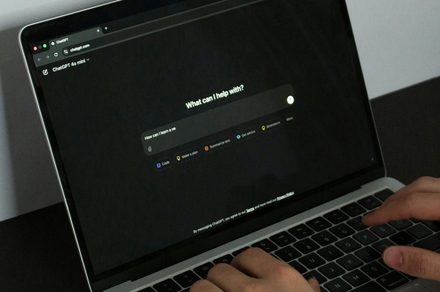
Around 10% of the sampled webpages showed strong signs of AI authorship.
Why It Matters
The findings suggest AI-generated or AI-assisted content is becoming a substantial part of the public web, especially in commercial publishing. AI practitioners building search, moderation, provenance, or content-quality systems may need to account for rapidly increasing machine-assisted text.
What To Do Next
Audit your content pipeline with provenance metadata and human-review checkpoints instead of relying solely on AI-text detectors.
Key Points
- •Around 10% of the sampled webpages showed strong signs of AI authorship.
- •More than one-third of pages published since ChatGPT’s release showed AI authorship signals.
- •AI authorship appeared on about 10% of .com pages, compared with roughly 1% of .edu and .gov pages.
🧠 Deep Insight
Background and context from public sources — not the original article. 31 sources cited.
🔑 Enhanced Key Takeaways
- •The Pew Research Center's study utilized the Open Pangram AI detection tool to analyze approximately 490,000 English-language webpages from the Common Crawl archive, spanning from January 2021 to July 2026.
- •Linguistic patterns indicative of AI authorship, such as a doubling in em dash usage, a 63% increase in Oxford commas, and the frequent appearance of words like 'delve' and 'pivotal,' have become more pronounced since 2023.
- •Beyond the Pew study, other analyses in 2026 suggest that between 30% and 50% of new content published on the internet is AI-generated, with some estimates for 2025 indicating that AI-generated content constituted 64% of all newly published internet material, surpassing human-created content by a ratio of 17 to 1.
- •AI content detection tools, despite continuous improvements, face significant challenges in accurately identifying highly sophisticated AI-generated text, content that mixes AI and human writing, or paraphrased material, often leading to false positives.
- •The proliferation of AI-generated content poses substantial threats to information integrity, including the accelerated spread of misinformation, disinformation, and hate speech, which can erode public trust in digital platforms and potentially impact democratic processes.
🛠️ Technical Deep Dive
- AI detectors employ machine learning models and natural language processing (NLP) to differentiate between human and AI-generated text.
- These tools analyze linguistic and statistical patterns, including word choice, sentence structure, stylistic nuances (e.g., repetitive phrasing, overly formal language), and measures like 'perplexity' (how predictable the text is to a language model) and 'burstiness' (the natural, uneven rhythm of human writing).
- Advanced detection methods can include embedding and vector similarity checks, where a document's numerical representations are compared to those of known AI-generated content to identify structural and semantic similarities.
- A significant challenge for AI detectors is the rapid evolution of generative AI models, which produce increasingly human-like text, making accurate detection more difficult and leading to a 'cat and mouse' dynamic.
- Future detection techniques are exploring statistical watermarking, which embeds subtle, mathematically detectable signals into AI-generated text, and multimodal detection that extends analysis to images, videos, and audio.
🔮 Future ImplicationsAI analysis grounded in cited sources
⏳ Timeline
📎 Sources (31)
Factual claims are grounded in the sources below. Forward-looking analysis is AI-generated interpretation.
- pewresearch.org
- pewresearch.org
- thenextweb.com
- amraandelma.com
- medium.com
- zapier.com
- medium.com
- scribbr.com
- medium.com
- sunycreate.cloud
- antispoofing.org
- un.org
- medium.com
- rand.org
- digitalcontentnext.org
- gptzero.me
- coursera.org
- grammarly.com
- adobe.com
- copyleaks.com
- psu.edu
- unu.edu
- lifearchitect.ai
- toloka.ai
- quillbot.com
- qualcomm.com
- medium.com
- wikipedia.org
- chatgpt.ca
- scribbr.com
- wikipedia.org
Weekly AI Recap
Read this week's curated digest of top AI events →
👉Related Updates


AI-curated news aggregator. All content rights belong to original publishers.
Original source: The Next Web (TNW) ↗
This is a summary, not the original. Read the source, or get the weekly briefing.
Weekly AI briefing
One email a week. Unsubscribe anytime.