AI Adds a New Rent Layer to Retail
💡AI is becoming a recurring retail cost—and possibly a new gatekeeper for merchant distribution.
⚡ 30-Second TL;DR
What Changed
Retailers are increasingly paying for physical locations, platform exposure, and AI-powered capabilities at the same time.
Why It Matters
For AI founders and retail operators, the key implication is that distribution and usage pricing may matter as much as model quality. AI vendors that become embedded in merchant workflows could gain strong pricing power, while merchants need clear ROI controls to avoid accumulating fragmented subscription and API costs.
What To Do Next
Create a monthly cost-and-ROI dashboard for every AI API and tool, including image generation, customer service, and pricing, before renewing or expanding usage.
Key Points
- •Retailers are increasingly paying for physical locations, platform exposure, and AI-powered capabilities at the same time.
- •AI tools such as image generation, customer-service APIs, and smart pricing are becoming recurring operating expenses.
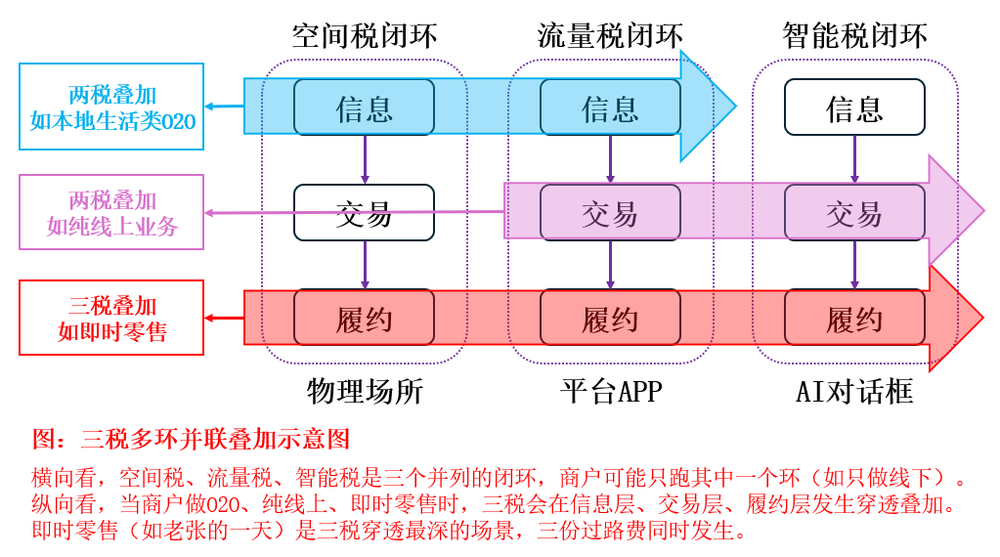
- •Platform data and the information-to-transaction-to-fulfillment loop make it difficult for merchants to bypass platform fees.
- •OpenAI’s reported 4% Shopify commission is presented as a possible new form of AI-related commerce taxation.
🧠 Deep Insight
AI-generated analysis for this event.
🔑 Enhanced Key Takeaways
- •The integration of AI agents into retail ecosystems is shifting the cost structure from one-time software licensing fees to performance-based 'take rates' or commission models.
- •Major e-commerce platforms are increasingly embedding proprietary AI layers that require merchants to pay for 'intelligence-as-a-service' to maintain search visibility and algorithmic ranking.
- •The 4% commission model reported in relation to OpenAI and Shopify reflects a broader industry trend where AI providers seek to capture a percentage of Gross Merchandise Value (GMV) rather than just API call volume.
- •Retailers are facing 'AI tax' inflation, where the cost of AI-driven personalization and automated customer support is compounding, potentially eroding net margins for small-to-medium enterprises (SMEs).
- •Regulatory bodies in the EU and US are beginning to scrutinize whether AI-driven platform fees constitute anti-competitive behavior by bundling essential AI services with marketplace access.
📊 Competitor Analysis▸ Show
| Feature | OpenAI/Shopify Model | Traditional SaaS (e.g., Salesforce) | Marketplace AI (e.g., Amazon) |
|---|---|---|---|
| Pricing Model | GMV-based Commission | Subscription/Seat-based | Ad-spend/Referral fees |
| Primary Cost Driver | Transaction Value | User Count/Usage | Visibility/Conversion |
| AI Integration | Embedded/Agentic | Add-on/Module | Native/Black-box |
🛠️ Technical Deep Dive
- AI-driven retail layers typically utilize Retrieval-Augmented Generation (RAG) to connect merchant product catalogs with real-time consumer intent data.
- Implementation often involves high-frequency API calls to Large Language Models (LLMs) for dynamic pricing, which requires low-latency edge computing to prevent checkout friction.
- The commission-based AI model relies on event-driven architecture where the AI agent acts as a middleware between the storefront and the payment gateway to track conversion attribution.
- Smart pricing engines utilize reinforcement learning from human feedback (RLHF) to optimize margins based on competitor pricing data scraped in real-time.
🔮 Future ImplicationsAI analysis grounded in cited sources
⏳ Timeline
Weekly AI Recap
Read this week's curated digest of top AI events →
👉Related Updates

AI-curated news aggregator. All content rights belong to original publishers.
Original source: 虎嗅 ↗