Aerosols Act as Fuel for Tropical Storm Clouds
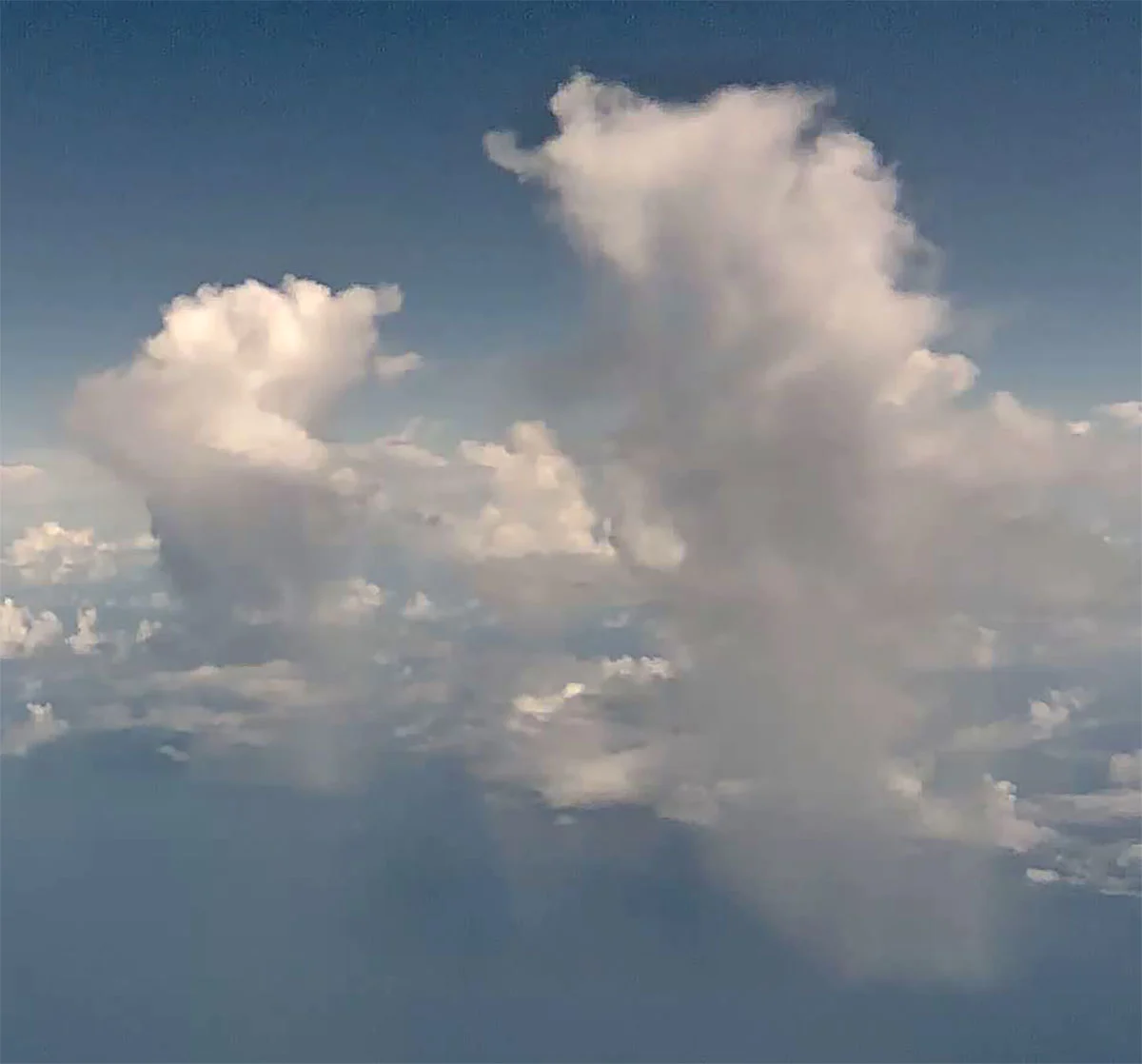
💡New atmospheric data that refines climate modeling accuracy for AI-driven weather prediction.
⚡ 30-Second TL;DR
What Changed
Water vapor supersaturation in deep convective clouds exceeds previous records.
Why It Matters
These findings improve the accuracy of climate prediction models, which are increasingly reliant on AI to process complex atmospheric data.
What To Do Next
Incorporate these new aerosol-cloud interaction parameters into your climate simulation datasets to improve model fidelity.
Key Points
- •Water vapor supersaturation in deep convective clouds exceeds previous records.
- •Aerosol particles act as a catalyst for storm cloud development.
- •Findings provide critical evidence for climate and atmospheric modeling.
🧠 Deep Insight
AI-generated analysis for this event — not the original article.
🔑 Enhanced Key Takeaways
- •The research utilized high-altitude aircraft observations, specifically the NASA ER-2, to measure supersaturation levels within deep convective clouds that were previously underestimated by satellite remote sensing.
- •Supersaturation levels were found to reach up to 50% in some tropical cloud environments, significantly higher than the 1-2% typically assumed in older climate models.
- •The presence of aerosols increases the number of cloud droplets, which reduces their individual size and slows down the collision-coalescence process, thereby delaying precipitation and allowing clouds to grow taller.
- •This 'invigoration effect' allows clouds to reach colder altitudes where latent heat release from freezing further accelerates updraft velocities, intensifying the storm's energy cycle.
- •These findings suggest that anthropogenic aerosol emissions may be contributing to the increased frequency of extreme weather events in tropical regions by altering cloud microphysics.
🛠️ Technical Deep Dive
- Measurement instrumentation: The study relied on the Counterflow Virtual Impactor (CVI) and specialized hygrometers capable of measuring water vapor in high-velocity, high-altitude environments.
- Data validation: Researchers compared in-situ aircraft measurements with Cloud-Aerosol Lidar and Infrared Pathfinder Satellite Observation (CALIPSO) data to reconcile discrepancies in cloud water content.
- Modeling framework: The study integrated these findings into the Weather Research and Forecasting (WRF) model with chemistry (WRF-Chem) to simulate aerosol-cloud interactions at high resolution.
- Supersaturation dynamics: The research identified that the rapid updrafts in tropical storms prevent aerosols from reaching equilibrium, maintaining high supersaturation states that drive droplet nucleation.
🔮 Future ImplicationsAI analysis grounded in cited sources
⏳ Timeline
Weekly AI Recap
Read this week's curated digest of top AI events →
👉Related Updates
AI-curated news aggregator. All content rights belong to original publishers.
Original source: cnBeta (Full RSS) ↗
This is a summary, not the original. Read the source, or get the weekly briefing.
The weekly digest
One email a week. Unsubscribe anytime.