Accelerated Understanding Bets on Physics Foundation Models
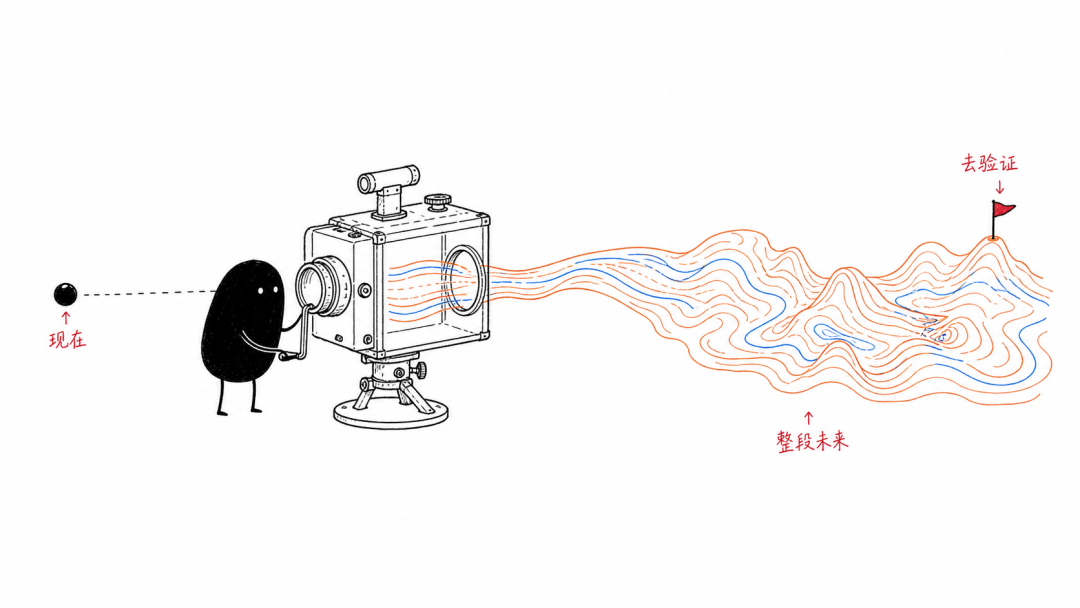
💡Physics foundation models could change simulation from stepwise solving to direct 4D prediction.
⚡ 30-Second TL;DR
What Changed
The company is exploring 4D rollout models that predict complete future physical fields instead of recursively calculating one time step at a time.
Why It Matters
If successful, physics foundation models could reduce the cost and latency of engineering simulation while enabling faster design-space exploration. However, practitioners will need to evaluate physical fidelity, conservation-law compliance, extrapolation behavior, and the infrastructure required to handle extremely large outputs.
What To Do Next
Benchmark a Fourier Neural Operator prototype on one of your PDE workloads against a conventional solver, measuring rollout error, conservation violations, inference latency, and output-storage cost.
Key Points
- •The company is exploring 4D rollout models that predict complete future physical fields instead of recursively calculating one time step at a time.
- •Its approach is based on Neural Operator learning, which maps initial states, boundary conditions, and material parameters to future physical-field trajectories.
- •Accelerated Understanding claims inference at a scale exceeding 5 trillion data points, with a full output potentially reaching about 22TB.
- •The long-term bet is that pretraining across weather, fluids, materials, plasma, and other domains could create transferable physics representations.
- •The approach remains unproven as a general-purpose physics engine because turbulence, shocks, complex geometries, and material defects can cause severe distribution-shift failures.
🧠 Deep Insight
Background and context from public sources — not the original article. 9 sources cited.
🔑 Enhanced Key Takeaways
- •Accelerated Understanding was co-founded by former NVIDIA scientist Anima Anandkumar and AI infrastructure engineer Benedikt Jenik.
- •The founders rejected a $2 billion financing offer and 35% equity stake from the Jeff Bezos-backed 'Project Prometheus' to maintain independence.
- •The model architecture explicitly abandons the Transformer design used by mainstream LLMs in favor of neural operator-based frameworks.
- •The system's context capacity is reported to be 5 million times larger than current flagship models from Anthropic or Google, enabling the processing of 5 trillion data points in a single prompt.
- •Initial commercial focus is directed toward high-stakes industrial sectors including chip design optimization, robotics, extreme weather forecasting, and geological analysis.
📊 Competitor Analysis▸ Show
| Feature | Accelerated Understanding | Standard LLM-based World Models | Physics-Informed Neural Networks (PINNs) |
|---|---|---|---|
| Architecture | Neural Operators | Transformers | PDE-constrained optimization |
| Context Scale | 5 Trillion+ data points | Limited (Token-based) | Variable/Small |
| Primary Goal | 4D Physical Field Rollout | Text/Token Prediction | Equation Solving |
| Domain Transfer | High (Cross-physics) | Low (Language-centric) | Low (Task-specific) |
🛠️ Technical Deep Dive
- Architecture: Utilizes neural operators to learn mappings between function spaces, bypassing the need for recursive time-stepping found in traditional numerical solvers.
- Data Handling: Employs a non-tokenized input structure capable of ingesting 5 trillion data points, representing a shift from discrete sequence modeling to continuous field modeling.
- Dimensionality: Operates on a 4D spatio-temporal grid, allowing for the direct prediction of physical field trajectories rather than autoregressive token generation.
- Mathematical Foundation: Built upon the mathematical framework of learning governing equations directly from data, minimizing reliance on human-defined numerical discretization.
🔮 Future ImplicationsAI analysis grounded in cited sources
⏳ Timeline
📎 Sources (9)
Factual claims are grounded in the sources below. Forward-looking analysis is AI-generated interpretation.
Weekly AI Recap
Read this week's curated digest of top AI events →
👉Related Updates
AI-curated news aggregator. All content rights belong to original publishers.
Original source: 虎嗅 ↗
This is a summary, not the original. Read the source, or get the weekly briefing.
Weekly AI briefing
One email a week. Unsubscribe anytime.