$89 AI Glasses Sell Out Amid Privacy Fears
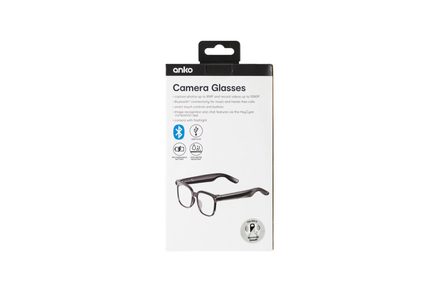
An $89 sellout shows AI glasses are going mainstream—while privacy risks become a product-design issue.
30-Second TL;DR
What Changed
Kmart's AI smart glasses are priced at $89.
Why It Matters
Strong demand could accelerate adoption of affordable AI wearables, but privacy concerns may increase pressure on manufacturers to provide clear recording indicators, consent controls, and responsible data handling. AI practitioners building camera-enabled products should treat social acceptance as a core product requirement.
What To Do Next
Before prototyping camera-enabled AI wearables, document recording indicators, consent flows, retention limits, and whether captured data leaves the device.
Key Points
- •Kmart's AI smart glasses are priced at $89.
- •The product reportedly sold out overnight, indicating strong consumer interest.
- •Wearable cameras are prompting renewed debate over privacy, surveillance, and consent.
- •The product reflects the growing normalization of AI-enabled eyewear in everyday settings.
Deep Insight
AI-generated analysis for this event — not the original article.
Enhanced Key Takeaways
- •The glasses are marketed as a 'smart' accessory primarily focused on social media content creation and hands-free photography rather than advanced augmented reality (AR) overlays.
- •Privacy advocates have highlighted that the device lacks a prominent, hardware-level 'recording' indicator light, which is a standard safety feature in more expensive smart eyewear.
- •Retail analysts suggest the $89 price point is achieved by utilizing off-the-shelf, low-cost camera sensors and basic Bluetooth connectivity, bypassing the expensive processors found in high-end AR headsets.
- •Regulatory bodies in several jurisdictions are currently reviewing whether these low-cost wearables comply with existing 'right to privacy' laws regarding surreptitious recording in public spaces.
- •The rapid sell-out is being attributed to 'dupe culture' on social media platforms like TikTok, where influencers are positioning the device as an affordable alternative to premium smart glasses.
Competitor Analysis
- Kmart AI Glasses
- $89
- Meta Ray-Ban
- $299+
- XREAL Air 2
- $399+
- Kmart AI Glasses
- Basic/Low-Res
- Meta Ray-Ban
- 12MP Ultra-wide
- XREAL Air 2
- None
- Kmart AI Glasses
- Cloud-based/Basic
- Meta Ray-Ban
- Meta AI (Multimodal)
- XREAL Air 2
- N/A
- Kmart AI Glasses
- Social Media/Fun
- Meta Ray-Ban
- Productivity/Media
- XREAL Air 2
- AR Display
| Feature | Kmart AI Glasses | Meta Ray-Ban | XREAL Air 2 |
|---|---|---|---|
| Price | $89 | $299+ | $399+ |
| Camera | Basic/Low-Res | 12MP Ultra-wide | None |
| AI Integration | Cloud-based/Basic | Meta AI (Multimodal) | N/A |
| Primary Use | Social Media/Fun | Productivity/Media | AR Display |
Technical Deep Dive
- Connectivity: Relies on Bluetooth 5.0 for image transfer to a companion smartphone application.
- Optics: Fixed-focus lens system with no diopter adjustment or AR projection capabilities.
- Battery: Integrated lithium-polymer battery providing approximately 2-3 hours of active recording time.
- Processing: Minimal onboard processing; relies on the paired smartphone for image/video compression and storage.
- Materials: Lightweight polycarbonate frame with non-prescription UV-protected lenses.
Future ImplicationsAI analysis grounded in cited sources
Timeline
- 2026-07Kmart announces the launch of its entry-level smart eyewear line.
- 2026-08Initial inventory sells out within 24 hours of release, triggering widespread media coverage.
Weekly AI Recap
Read this week's curated digest of top AI events →
AI-curated news aggregator. All content rights belong to original publishers.
Original source: Digital Trends ↗
This is a summary, not the original. Read the source, or get the weekly briefing.
The weekly digest
One email a week. Unsubscribe anytime.