64 PRs in 10 Days with Agents
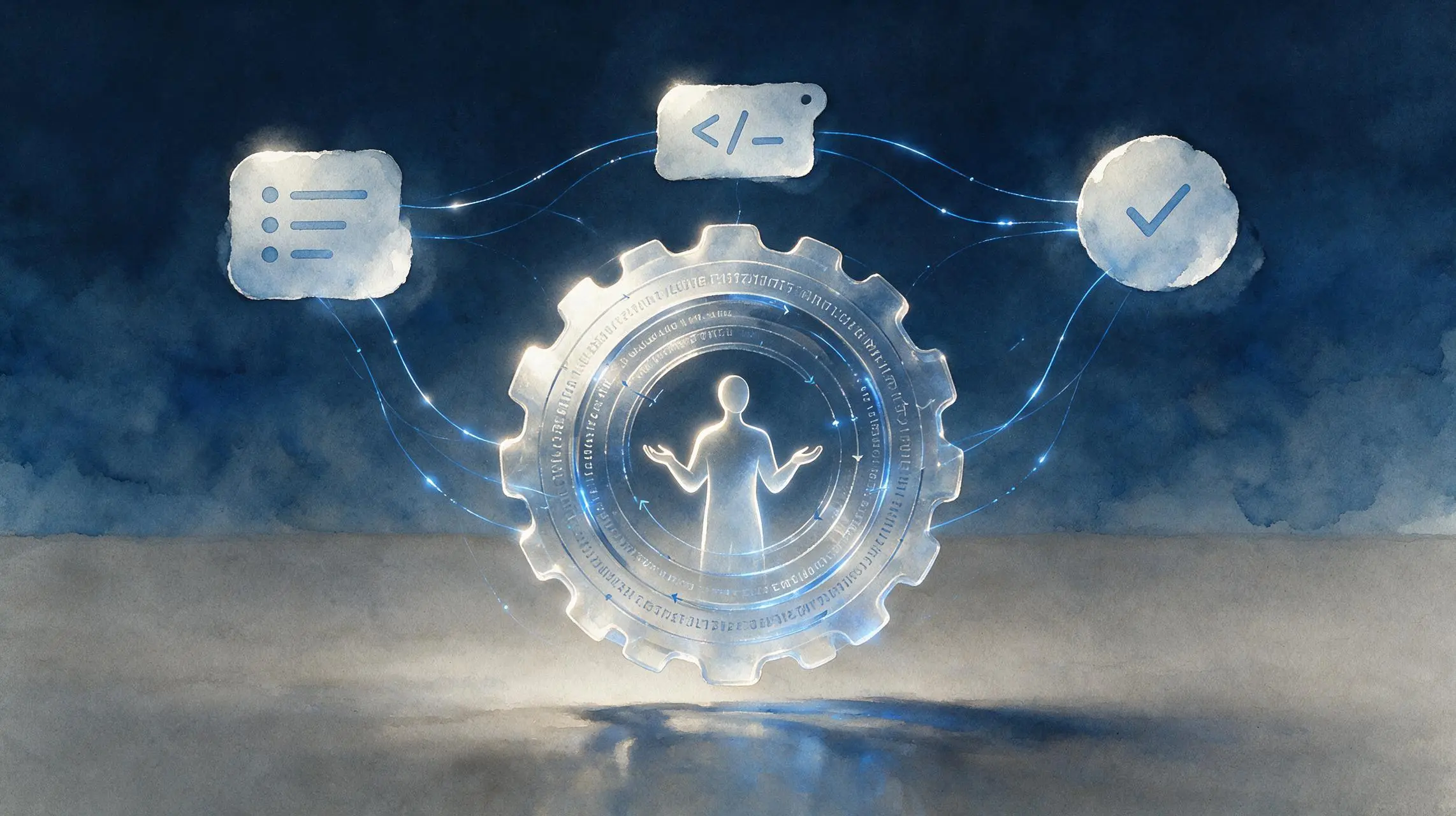
💡See how a mature SaaS team applied Agents across development—not just for autocomplete.
⚡ 30-Second TL;DR
What Changed
Agents were integrated across the software development lifecycle of a mature SaaS company.
Why It Matters
The reported output suggests that Agent adoption can have a measurable effect when applied across an established engineering process. However, engineering quality, review burden, and maintainability still need to be evaluated alongside raw PR volume.
What To Do Next
Pilot an Agent across one repository’s issue-to-PR workflow and track merged PRs, review time, rollback rate, and defect escape rate.
Key Points
- •Agents were integrated across the software development lifecycle of a mature SaaS company.
- •The team reportedly created 64 pull requests in one and a half weeks.
- •The initiative completed 30% of a project refactor.
- •The case study focuses on workflow-level adoption rather than isolated coding assistance.
🧠 Deep Insight
Background and context from public sources — not the original article. 13 sources cited.
🔑 Enhanced Key Takeaways
- •The '64 PRs' figure has emerged as a standardized industry benchmark in 2026 for measuring the throughput of autonomous AI agents in software maintenance and security patching.
- •OpenAI and Trail of Bits utilized AI agents to generate 64 pull requests across 19 critical open-source projects, including cURL and RustCrypto, during a single week in June 2026.
- •Warp Terminal successfully leveraged cloud-based agents to manage documentation updates, resulting in 64 PRs opened and 55 merged, involving over 140,000 lines of code changes.
- •The industry has shifted focus from simple code generation to 'Agentic AI Architecture,' where AI acts as a governance layer for system design and automated security remediation.
- •The primary engineering bottleneck has migrated from code production to the 'Agent Trust Lifecycle,' requiring new frameworks to validate the reliability of high-volume AI-generated PRs.
📊 Competitor Analysis▸ Show
| Feature | GitHub Copilot Workspace | Cursor | Windsurf |
|---|---|---|---|
| Primary Focus | Integrated IDE/Cloud Workflow | Context-Aware Codebase Editing | Agentic Orchestration |
| Pricing | Per-user subscription | Tiered (Pro/Business) | Tiered (Pro/Business) |
| Benchmark (90-day) | ~21 PRs | ~21 PRs | ~22 PRs |
🛠️ Technical Deep Dive
- Implementation of durable execution frameworks, such as Diagrid Catalyst 2.0, allows long-running agent tasks to persist state across failures without re-executing expensive model inference.
- Utilization of multi-agent orchestration where specialized agents handle PRD analysis, implementation, and security verification as distinct, sequential steps.
- Integration of automated validation layers that act as a 'custodian' gatekeeper to assess the validity of agent-generated code before human review.
🔮 Future ImplicationsAI analysis grounded in cited sources
⏳ Timeline
📎 Sources (13)
Factual claims are grounded in the sources below. Forward-looking analysis is AI-generated interpretation.
Weekly AI Recap
Read this week's curated digest of top AI events →
👉Related Updates


AI-curated news aggregator. All content rights belong to original publishers.
Original source: InfoQ中国 ↗
This is a summary, not the original. Read the source, or get the weekly briefing.
Weekly AI briefing
One email a week. Unsubscribe anytime.