6 essential security settings for GitHub maintainers
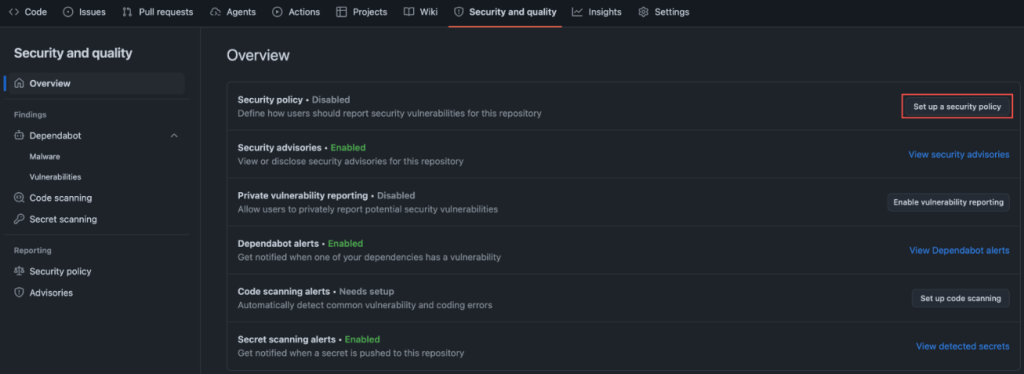
💡Secure your AI codebase by enabling these 6 essential GitHub settings to prevent credential leaks and supply chain hacks
⚡ 30-Second TL;DR
What Changed
Enable branch protection rules to prevent unauthorized code changes
Why It Matters
Implementing these settings reduces the risk of supply chain attacks, which are increasingly common in AI-driven development workflows. It ensures that open-source models and tools remain secure from malicious injections.
What To Do Next
Navigate to your repository settings and enable 'Secret scanning' and 'Dependabot alerts' immediately to protect your AI project credentials.
Key Points
- •Enable branch protection rules to prevent unauthorized code changes
- •Activate Dependabot to automatically detect and patch vulnerable dependencies
- •Configure secret scanning to prevent accidental exposure of API keys and credentials
🧠 Deep Insight
AI-generated analysis for this event — not the original article.
🔑 Enhanced Key Takeaways
- •GitHub's 'Security Advisories' feature allows maintainers to privately discuss and fix vulnerabilities with reporters before disclosing them publicly, preventing zero-day exploitation.
- •The 'CodeQL' analysis engine, integrated into GitHub Advanced Security, uses semantic code analysis to identify security vulnerabilities in source code as if they were data.
- •GitHub's 'Fine-grained personal access tokens' (PATs) allow maintainers to implement the principle of least privilege by restricting token access to specific repositories rather than entire organizations.
- •The 'Security Policy' file (SECURITY.md) enables maintainers to provide clear instructions for security researchers on how to report vulnerabilities, reducing the risk of public disclosure before a patch exists.
- •GitHub's 'Environment protection rules' allow maintainers to require manual approval or specific branch restrictions before secrets are exposed to deployment workflows, mitigating supply chain attacks.
📊 Competitor Analysis▸ Show
| Feature | GitHub (Advanced Security) | GitLab (Ultimate) | Bitbucket (Premium) |
|---|---|---|---|
| Secret Scanning | Native/Integrated | Native/Integrated | Limited/Third-party |
| Dependency Scanning | Dependabot (Native) | Gemnasium (Native) | Snyk Integration |
| Static Analysis | CodeQL (Proprietary) | Semgrep/Custom | Third-party integrations |
| Pricing | Per-user/repo add-on | Per-user/month | Per-user/month |
🛠️ Technical Deep Dive
- CodeQL Architecture: Operates by converting source code into a relational database, allowing security researchers to write queries in a logic-based language to find patterns of insecure code.
- Secret Scanning Implementation: Utilizes pattern matching and entropy analysis to detect high-confidence secrets (e.g., AWS keys, private keys) and integrates with service providers to automatically revoke leaked credentials.
- Branch Protection Logic: Enforced at the Git reference level, preventing force-pushes and requiring status checks (CI/CD pipeline success) before merging into protected branches.
- Dependabot Versioning: Uses a combination of manifest file parsing and the GitHub Advisory Database to map vulnerable package versions to specific CVEs and suggest minimal version bumps.
🔮 Future ImplicationsAI analysis grounded in cited sources
⏳ Timeline
Weekly AI Recap
Read this week's curated digest of top AI events →
👉Related Updates
AI-curated news aggregator. All content rights belong to original publishers.
Original source: GitHub Blog ↗
This is a summary, not the original. Read the source, or get the weekly briefing.
Weekly AI briefing
One email a week. Unsubscribe anytime.