4D Radar Becomes Standard, But Use Cases Unclear
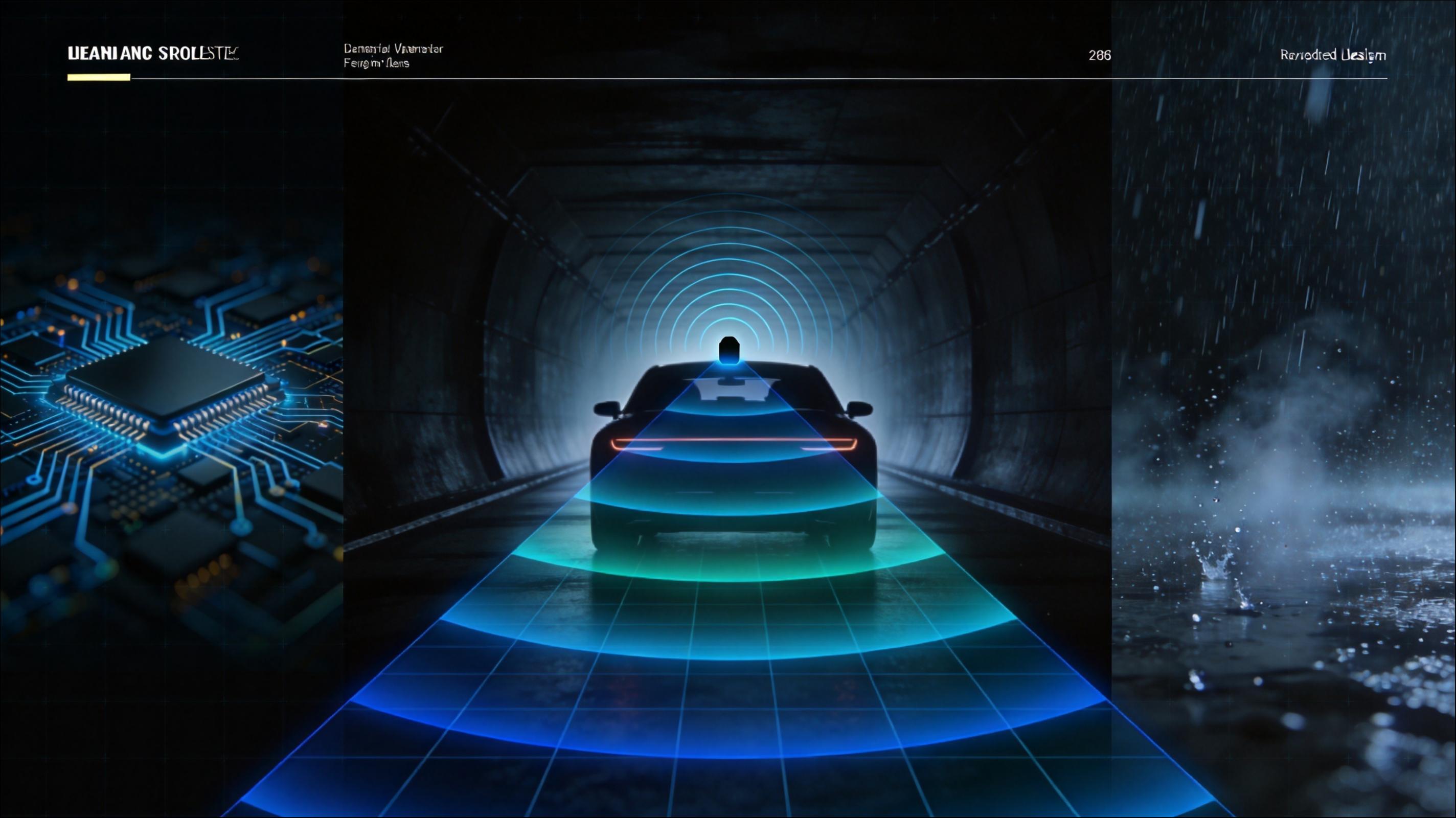
💡4D radar is becoming standard; learn how to integrate this sensor data into your autonomous driving stack.
⚡ 30-Second TL;DR
What Changed
4D radar becomes a standard requirement for next-gen ADAS.
Why It Matters
The shift to 4D radar will force a redesign of sensor fusion algorithms in autonomous driving systems.
What To Do Next
Review your sensor fusion architecture to incorporate 4D radar point cloud data, focusing on edge-case detection in low-visibility environments.
Key Points
- •4D radar becomes a standard requirement for next-gen ADAS.
- •Addresses limitations of cameras and LiDAR in specific scenarios like tunnel obstacles.
- •Automakers lack clear deployment strategies for the technology.
🧠 Deep Insight
Web-grounded analysis with 17 cited sources.
🔑 Enhanced Key Takeaways
- •4D millimeter-wave radar introduces elevation (height) data, enabling the generation of LiDAR-like point clouds at a fraction of the cost while maintaining all-weather reliability.
- •This technology significantly enhances the ability to differentiate static objects, such as overpasses from ground obstacles, and provides more stable geometric information for pedestrian and cyclist recognition, overcoming limitations of traditional 3D radar, cameras, and LiDAR in adverse conditions.
- •China is at the forefront of rapid 4D imaging radar adoption, integrating entry-level systems across entire vehicle lines, contrasting with Europe and the U.S. where the focus is on high-performance systems for premium models.
- •The global market for 4D mmWave radar is projected to grow from approximately USD 1.4 billion in 2026 to nearly USD 3.1 billion by 2033, primarily driven by the increasing integration of ADAS and evolving automotive safety regulations.
- •4D radar is critical for enabling higher levels of autonomous driving (L2+ to L4/L5) by offering comprehensive spatial awareness, precise environmental sensing, and long-range detection capabilities across all weather and lighting conditions.
📊 Competitor Analysis▸ Show
| Feature / Sensor Type | 4D Millimeter-Wave Radar | 3D Millimeter-Wave Radar | LiDAR | Camera |
|---|---|---|---|---|
| Dimensions Detected | Range, Velocity, Azimuth, Elevation (4D) | Range, Velocity, Azimuth (3D) | 3D shape/point cloud | 2D semantic understanding, color information |
| Resolution | High (LiDAR-like point clouds, sub-degree angular resolution) | Low resolution, limited ability to discern small/closely spaced objects | Very High (dense 3D mapping) | High-resolution semantic understanding |
| Weather Performance | Excellent (penetrates rain, fog, snow, dust) | Good (operates in adverse weather) | Poor (affected by rain, snow, fog) | Poor (prone to failure at night, backlight, rain, fog) |
| Cost | Cost-effective (fraction of LiDAR's price) | Cost-effective | High (though prices are falling) | Low |
| Static Object Ambiguity | Low (can differentiate overpasses, road signs, ground obstacles) | High (struggles to differentiate static hazards) | Good | Good (semantic understanding) |
| Velocity Measurement | Direct and highly accurate | Direct | Indirect (derived from sequential frames) | Indirect (derived from sequential frames) |
| Detection Range | Long (exceeds 300m, up to 500m) | Medium (up to 250m for LRR) | Medium to Long | Medium |
🛠️ Technical Deep Dive
- 4D millimeter-wave radar measures four distinct types of target information: range, azimuth, elevation, and velocity.
- It operates primarily in the 76-81 GHz frequency band, utilizing over 4 GHz of contiguous bandwidth for high-resolution applications.
- Technical advancements include multi-antenna architectures, cascaded MMIC (Monolithic Microwave Integrated Circuit) chips, and virtual aperture imaging to significantly boost resolution.
- The technology leverages MIMO (Multiple-Input Multiple-Output) antenna arrays to create hundreds of virtual channels, forming large horizontal and vertical apertures for high-resolution 4D imaging.
- Signal processing often involves powerful digital signal processors (e.g., 360 MHz C66x) combined with hardware accelerators (e.g., HWA 2.1 radar hardware accelerator) for real-time execution of algorithms like FFT (Fast Fourier Transform) and CFAR (Constant False Alarm Rate).
- 4D radar systems can achieve azimuth resolutions under one degree and detection ranges exceeding 300 meters, with some long-range variants reaching up to 500 meters.
- There is a significant research focus on developing single-chip 4D automotive millimeter-wave radar solutions to improve cost-effectiveness for mass adoption.
- Antenna technology is evolving from traditional microstrip antennas to waveguide antennas, with some solutions like Aptiv's FLR7 incorporating air-waveguide technology for improved angular accuracy and point cloud density.
🔮 Future ImplicationsAI analysis grounded in cited sources
⏳ Timeline
📎 Sources (17)
Factual claims are grounded in the sources below. Forward-looking analysis is AI-generated interpretation.
Weekly AI Recap
Read this week's curated digest of top AI events →
👉Related Updates



AI-curated news aggregator. All content rights belong to original publishers.
Original source: 钛媒体 ↗