Source钛媒体•Stalecollected in 27m
3–4 兆美元 AI 算力夢,能否兑现?
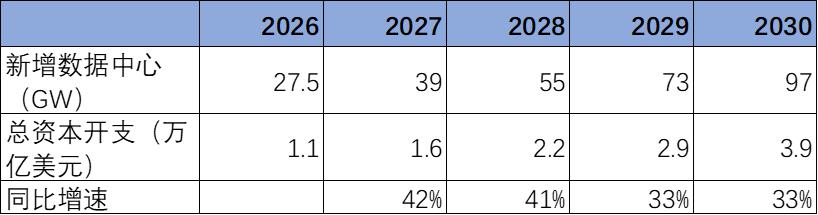
全球-ai-算力資本支出
3–4 兆美元算力投資能否落地,關鍵不在估值,而在能源、需求與回報條件。
30-Second TL;DR
What Changed
全球 AI 資本支出未來可能達到 3–4 萬億美元
Why It Matters
若這類投資規模逐步兌現,AI 算力、資料中心、電力與網路基礎設施將持續成為產業瓶頸。AI 創業者與企業需要更重視單位推理成本、資源利用率與商業回收期,而不只是模型能力。
What To Do Next
為你的下一個 AI 產品建立每次訓練與推理的 GPU 小時、電力、雲端費用及收入回收期模型,並以實際流量壓測校正假設。
Who should care:Founders & Product Leaders
Key Points
- •全球 AI 資本支出未來可能達到 3–4 萬億美元
- •估算結果依賴對算力需求與產業成長的情境推演
- •資本支出能否落地,取決於能源、供應鏈、融資與回報條件
- •超大規模投資不代表所有 AI 基礎設施項目都能獲得合理回報
Deep Insight
AI-generated analysis for this event — not the original article.
Enhanced Key Takeaways
- •Major hyperscalers including Microsoft, Google, Meta, and Amazon have collectively increased their quarterly capital expenditures to record highs, with a significant portion dedicated to AI-specific data center construction and GPU procurement [1].
- •The '3-4 trillion dollar' figure is largely driven by the transition from training-centric compute to inference-centric compute, as companies shift focus from model development to deploying agentic AI applications at scale [2].
- •Energy constraints have emerged as the primary bottleneck, leading to a surge in corporate investments in Small Modular Reactors (SMRs) and direct power purchase agreements with nuclear energy providers to ensure 24/7 baseload power for AI clusters [3].
- •Financial analysts have noted a 'valuation gap' where the massive capital expenditure is currently outpacing the direct revenue growth from AI services, forcing companies to justify spending through long-term productivity gains rather than immediate ROI [4].
- •The semiconductor supply chain is undergoing a structural shift, with increased investment in custom silicon (ASICs) by hyperscalers to reduce dependency on general-purpose GPUs and improve energy efficiency for specific AI workloads [5].
Technical Deep Dive
- Shift toward liquid cooling architectures: Data centers are transitioning from air-cooled to direct-to-chip liquid cooling to manage the thermal design power (TDP) of next-generation AI accelerators exceeding 1000W per chip.
- Interconnect scaling: Implementation of high-bandwidth, low-latency interconnects like NVLink and Ultra Accelerator Link (UALink) is critical to scaling clusters beyond 100,000 GPUs.
- Power density requirements: Modern AI data centers are being designed for rack densities of 100kW+, necessitating advanced power distribution units (PDUs) and substation upgrades.
- Memory bandwidth optimization: Integration of HBM3e and future HBM4 memory stacks to mitigate the memory wall bottleneck in large language model inference.
Future ImplicationsAI analysis grounded in cited sources
AI infrastructure spending will face a 'correction phase' by 2027 if enterprise software revenue does not accelerate.
Current capital expenditure levels are predicated on future productivity gains that have yet to materialize in broad enterprise financial statements.
Nuclear energy will become the dominant power source for hyperscale AI data centers by 2030.
The inability of renewable energy sources to provide consistent baseload power at the scale required for multi-gigawatt AI clusters makes nuclear the only viable long-term solution.
Timeline
2023-05
NVIDIA market cap surpasses $1 trillion, signaling the start of the massive AI infrastructure spending cycle.
2024-02
Sam Altman publicly discusses the need for a multi-trillion dollar investment in global AI infrastructure and chip manufacturing.
2025-01
Hyperscalers report record-breaking quarterly capital expenditures exceeding $50 billion collectively.
2026-04
Major tech firms begin integrating SMR (Small Modular Reactor) energy strategies into their long-term data center roadmaps.
- 2023-05NVIDIA market cap surpasses $1 trillion, signaling the start of the massive AI infrastructure spending cycle.
- 2024-02Sam Altman publicly discusses the need for a multi-trillion dollar investment in global AI infrastructure and chip manufacturing.
- 2025-01Hyperscalers report record-breaking quarterly capital expenditures exceeding $50 billion collectively.
- 2026-04Major tech firms begin integrating SMR (Small Modular Reactor) energy strategies into their long-term data center roadmaps.
Weekly AI Recap
Read this week's curated digest of top AI events →
AI-curated news aggregator. All content rights belong to original publishers.
Original source: 钛媒体 ↗
This is a summary, not the original. Read the source, or get the weekly briefing.
The weekly digest
One email a week. Unsubscribe anytime.