21 Charts Explaining Pakistan's Economic Dilemma
A data-driven look at how fiscal policy and debt cycles impact emerging market stability.
30-Second TL;DR
What Changed
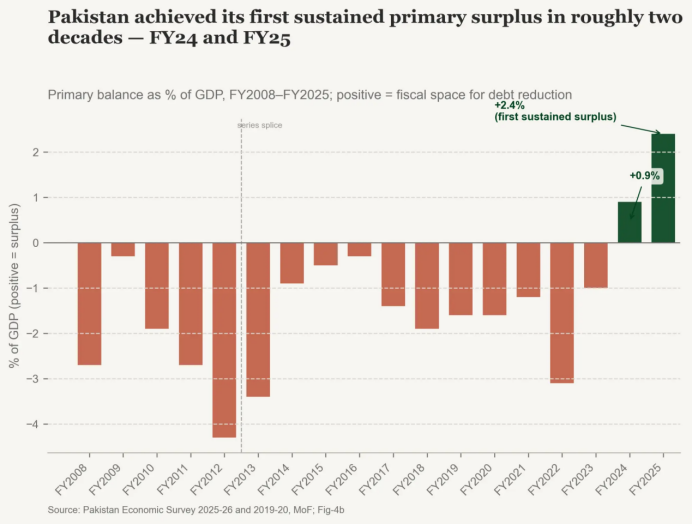
Pakistan achieved basic fiscal surplus, but structural issues remain unresolved.
Why It Matters
The economic instability in Pakistan underscores the risks for businesses operating in emerging markets with high debt-to-GDP ratios.
What To Do Next
Monitor sovereign debt indicators and fiscal policy shifts when evaluating market entry in developing economies.
Key Points
- •Pakistan achieved basic fiscal surplus, but structural issues remain unresolved.
- •Private investment is at a 50-year low due to the 'crowding out' effect of government borrowing.
- •The tax system penalizes formal businesses while exempting large sectors like agriculture and retail.
Deep Insight
AI-generated analysis for this event — not the original article.
Enhanced Key Takeaways
- •Pakistan's debt-to-GDP ratio has frequently exceeded 70%, significantly limiting fiscal space for development spending and social safety nets.
- •The country faces a persistent 'balance of payments' crisis, often necessitating repeated IMF bailout programs, with the 2024-2026 period marked by strict conditionalities.
- •Energy sector circular debt remains a critical structural bottleneck, where inefficiencies in power distribution and collection create massive liabilities for the state.
- •Climate vulnerability, specifically the 2022 catastrophic floods, caused estimated damages exceeding $30 billion, further exacerbating the country's macroeconomic instability.
- •Remittances from the Pakistani diaspora serve as a vital, yet volatile, lifeline for the current account, often offsetting trade deficits but failing to drive long-term industrial productivity.
Future ImplicationsAI analysis grounded in cited sources
Timeline
- 2019-07Pakistan enters a $6 billion IMF Extended Fund Facility program.
- 2022-08Catastrophic floods devastate infrastructure and agricultural output.
- 2023-06Pakistan secures a $3 billion Stand-By Arrangement to avert default.
- 2024-09IMF Executive Board approves a new $7 billion Extended Fund Facility.
Weekly AI Recap
Read this week's curated digest of top AI events →
AI-curated news aggregator. All content rights belong to original publishers.
Original source: 虎嗅 ↗
This is a summary, not the original. Read the source, or get the weekly briefing.
The weekly digest
One email a week. Unsubscribe anytime.